




Black Right & Left Couplings

 --%3E %3Csvg version='1.1' id='No-RB' xmlns='http://www.w3.org/2000/svg' xmlns:xlink='http://www.w3.org/1999/xlink' x='0px' y='0px' viewBox='0 0 100 100' enable-background='new 0 0 100 100' xml:space='preserve'%3E %3Cpath fill='%23CECECE' d='M79.44,0.95H20.56C9.78,0.95,0.95,9.78,0.95,20.56v58.87c0,10.79,8.82,19.61,19.61,19.61h58.87 c10.79,0,19.61-8.83,19.61-19.61V20.56C99.05,9.78,90.22,0.95,79.44,0.95z M65.38,58.24l9.38,29.58L49.69,69.78L24.5,87.82 l9.34-29.6L8.8,39.6l30.73-0.17c0,0,6.98-19.61,10-28.93c0.54,1.36,9.88,29.1,9.88,29.1H91.2L65.38,58.24z'/%3E %3C/svg%3E)

 --%3E %3Csvg version='1.1' id='Fill' xmlns='http://www.w3.org/2000/svg' xmlns:xlink='http://www.w3.org/1999/xlink' x='0px' y='0px' viewBox='0 0 100 100' enable-background='new 0 0 100 100' xml:space='preserve'%3E %3Cpath fill='%23F15C02' d='M79.44,0.95H20.56C9.78,0.95,0.95,9.78,0.95,20.56v58.87c0,10.79,8.82,19.61,19.61,19.61h58.87 c10.79,0,19.61-8.83,19.61-19.61V20.56C99.05,9.78,90.22,0.95,79.44,0.95z M65.38,58.24l9.38,29.58L49.69,69.78L24.5,87.82 l9.34-29.6L8.8,39.6l30.73-0.17c0,0,6.98-19.61,10-28.93c0.54,1.36,9.88,29.1,9.88,29.1H91.2L65.38,58.24z'/%3E %3C/svg%3E)
 --%3E %3Csvg version='1.1' id='With-RB' xmlns='http://www.w3.org/2000/svg' xmlns:xlink='http://www.w3.org/1999/xlink' x='0px' y='0px' viewBox='0 0 100 100' enable-background='new 0 0 100 100' xml:space='preserve'%3E %3Cpath fill='%23FBC8B4' d='M79.44,0.95H20.56C9.78,0.95,0.95,9.78,0.95,20.56v58.87c0,10.79,8.82,19.61,19.61,19.61h58.87 c10.79,0,19.61-8.83,19.61-19.61V20.56C99.05,9.78,90.22,0.95,79.44,0.95z M65.38,58.24l9.38,29.58L49.69,69.78L24.5,87.82 l9.34-29.6L8.8,39.6l30.73-0.17c0,0,6.98-19.61,10-28.93c0.54,1.36,9.88,29.1,9.88,29.1H91.2L65.38,58.24z'/%3E %3C/svg%3E)
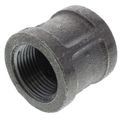
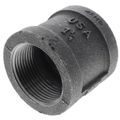
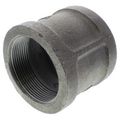


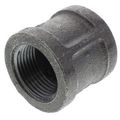
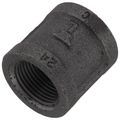
Black right and left couplings are threaded pipe fittings with right-hand threads on one end and left-hand threads on the other, allowing a fixed section of black iron pipe, such as one running between two valves or a meter, to be installed or removed without rotating the entire pipe run. Gas piping installations rely on this fitting whenever a straight run needs to be broken and reconnected in a tight space where turning a full section of pipe isn't practical, since backing out or tightening the coupling itself does the work that would otherwise require disconnecting and rotating pipe at both ends. The black finish refers to the pipe's black iron construction, distinct from galvanized fittings, and is standard for fuel gas and other non-potable applications where corrosion resistance from galvanizing isn't required. Because the two threaded ends run in opposite directions, a right and left coupling must be installed with the correct orientation, and mixing it up with a standard coupling during a repair can make an otherwise simple job impossible to complete without cutting pipe.
Subcategories
- Malleable Iron Right & Left Couplings: Malleable iron is the standard material for right and left couplings used in fuel gas piping, chosen for its strength at threaded connections and compatibility with black iron pipe. A malleable iron coupling holds up to the torque involved in threading a fixed pipe section into place without the coupling failing at the joint. Most gas utility and mechanical codes recognize malleable iron fittings as an approved material for these applications. Contractors keep a small stock of common sizes on hand since a right and left coupling is often needed unexpectedly during a repair rather than planned into a new installation.
- Threaded Right & Left Couplings by Size: Right and left couplings are manufactured in the same nominal pipe sizes as standard black iron fittings, typically ranging from smaller residential gas line sizes up through larger commercial diameters. Matching the coupling's size exactly to the pipe run is necessary since there's no adjustment once the threads are cut. Larger sizes see more use on commercial and industrial gas services where pipe runs are longer and harder to rotate as a whole section. Stocking a range of sizes covers most repair calls without a special order.
- Right & Left Couplings for Meter Sets: Meter sets frequently use right and left couplings to allow the meter or a section of pipe near it to be removed for replacement, testing, or relocation without disturbing the rest of the gas line. Utility crews and contractors doing meter work rely on this fitting specifically because the meter itself typically can't rotate during removal. Positioning the coupling on the correct side of the meter set, following local utility requirements, keeps the installation compliant with inspection standards. Replacing a meter without a right and left coupling in the right spot usually means cutting and re-threading pipe.
Buying Guide
Selecting a right and left coupling starts with confirming pipe size and thread type match the existing black iron pipe exactly, since these couplings can't be field-cut or adjusted the way standard pipe can. Getting the size wrong means either the coupling won't thread on at all or it won't seal properly once torqued down.
Material matters for code compliance as much as durability. Malleable iron is the standard choice for fuel gas applications and is recognized by most plumbing and gas codes, so substituting a different material without checking local code requirements can create an inspection problem later. Black iron pipe and fittings are intended for gas and other non-potable uses, not water distribution, which is worth confirming before specifying a job.
Orientation is the detail that trips up even experienced installers. Because one end threads clockwise and the other threads counterclockwise, installing a right and left coupling backward can jam the connection or leave it unable to tighten fully. Marking the pipe run or double-checking thread direction with a test fitting before final installation avoids a callback.
Stocking common sizes ahead of a service call makes sense given how often a right and left coupling gets discovered as a need mid-repair rather than specified in advance. Keeping a small assortment of the most common gas line sizes on hand covers the majority of meter set and straight-run repair situations a residential or light commercial gas technician runs into.
Frequently Asked Questions
Why can't a standard coupling be used instead of a right and left coupling?
A standard coupling has the same thread direction on both ends, which means the pipe or fitting on one side has to rotate to thread into it. A right and left coupling threads in opposite directions on each end, so tightening the coupling itself pulls the joint together without needing to rotate either connected section, which matters when both ends are already fixed in place.
What material should a right and left coupling be for gas piping?
Malleable iron is the standard material recognized by most fuel gas codes for right and left couplings, chosen for its strength at threaded joints. Checking local code requirements before substituting another material keeps the installation compliant.
How do I tell which end of a right and left coupling is which?
The two ends are usually marked, either stamped or cast into the fitting, but a quick way to check without markings is to thread a piece of scrap pipe into each end by hand and note which direction it turns. Getting this backward before final installation can jam the joint.
Can a right and left coupling be used to remove a gas meter without cutting pipe?
Yes, that's one of its most common uses. Positioning a right and left coupling near a meter set lets a technician back it off to create clearance for meter removal or replacement without disconnecting and rotating the rest of the line.
Are right and left couplings sized the same as standard black iron fittings?
Yes, they're manufactured in the same nominal pipe sizes as standard threaded black iron fittings, so matching the coupling to the existing pipe size works the same way as selecting any other black iron fitting.
