



'/%3E%3C/svg%3E)
 --%3E %3Csvg version='1.1' id='Fill' xmlns='http://www.w3.org/2000/svg' xmlns:xlink='http://www.w3.org/1999/xlink' x='0px' y='0px' viewBox='0 0 100 100' enable-background='new 0 0 100 100' xml:space='preserve'%3E %3Cpath fill='%23F15C02' d='M79.44,0.95H20.56C9.78,0.95,0.95,9.78,0.95,20.56v58.87c0,10.79,8.82,19.61,19.61,19.61h58.87 c10.79,0,19.61-8.83,19.61-19.61V20.56C99.05,9.78,90.22,0.95,79.44,0.95z M65.38,58.24l9.38,29.58L49.69,69.78L24.5,87.82 l9.34-29.6L8.8,39.6l30.73-0.17c0,0,6.98-19.61,10-28.93c0.54,1.36,9.88,29.1,9.88,29.1H91.2L65.38,58.24z'/%3E %3C/svg%3E)
 --%3E %3Csvg version='1.1' id='Half' xmlns='http://www.w3.org/2000/svg' xmlns:xlink='http://www.w3.org/1999/xlink' x='0px' y='0px' viewBox='0 0 100 100' enable-background='new 0 0 100 100' xml:space='preserve'%3E %3Cg%3E %3Cpath fill='%23F15C02' d='M30.05,70.23l3.79-12.01L8.8,39.6l30.73-0.17c0,0,6.98-19.61,10-28.93c0.54,1.36,9.88,29.1,9.88,29.1h1.58 L93.71,7.18c-3.58-3.82-8.66-6.23-14.28-6.23H20.56C9.78,0.95,0.95,9.78,0.95,20.56v58.87c0,5.41,2.22,10.32,5.79,13.88 L30.05,70.23z'/%3E %3C/g%3E %3Cpath fill='%23FBC8B4' d='M93.71,7.18L60.98,39.6H91.2L65.38,58.24l9.38,29.58L49.69,69.78L24.5,87.82l5.55-17.59L6.75,93.32 c3.55,3.54,8.44,5.73,13.82,5.73h58.87c10.79,0,19.61-8.83,19.61-19.61V20.56C99.05,15.4,97.01,10.69,93.71,7.18z'/%3E %3C/svg%3E)


MANUALS (2)
Product Highlights


Specs
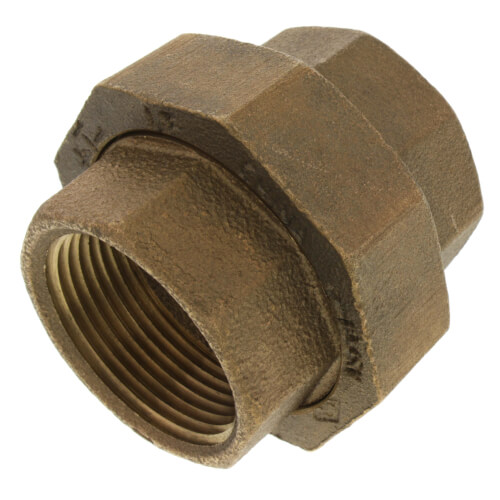
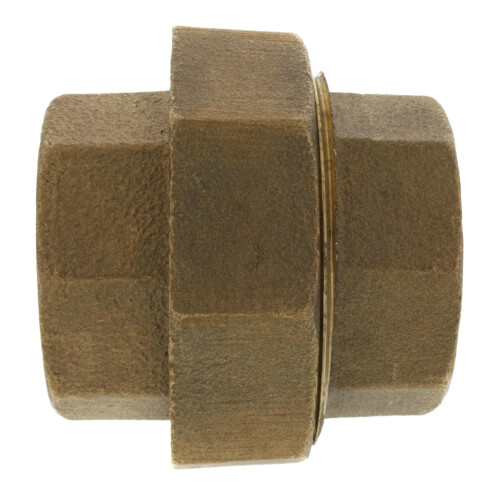
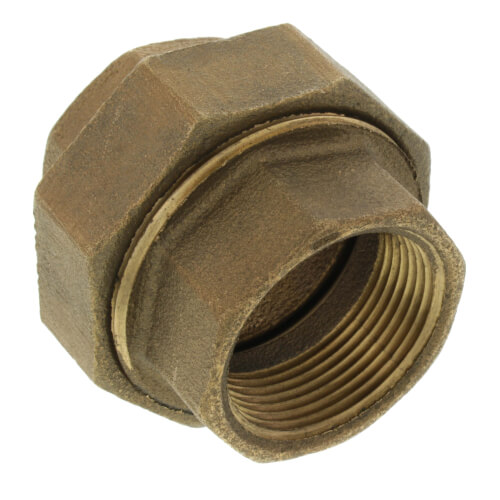
| Size: | 1-1/4" |
|---|---|
| Lead Free: | Yes |
| Material: | Brass |
| Thread Type: | Female |
| Connection Type: | Threaded |


Questions?
You May Also Need
Product Reviews
Most Liked Positive Review
Excellent brass unions
Most Liked Negative Review
 --%3E %3Csvg version='1.1' id='With-RB' xmlns='http://www.w3.org/2000/svg' xmlns:xlink='http://www.w3.org/1999/xlink' x='0px' y='0px' viewBox='0 0 100 100' enable-background='new 0 0 100 100' xml:space='preserve'%3E %3Cpath fill='%23FBC8B4' d='M79.44,0.95H20.56C9.78,0.95,0.95,9.78,0.95,20.56v58.87c0,10.79,8.82,19.61,19.61,19.61h58.87 c10.79,0,19.61-8.83,19.61-19.61V20.56C99.05,9.78,90.22,0.95,79.44,0.95z M65.38,58.24l9.38,29.58L49.69,69.78L24.5,87.82 l9.34-29.6L8.8,39.6l30.73-0.17c0,0,6.98-19.61,10-28.93c0.54,1.36,9.88,29.1,9.88,29.1H91.2L65.38,58.24z'/%3E %3C/svg%3E)
Difficult to get a water tight seal
Exactly what I needed
Garbage, won't seal
Be Cautious
I'm having a lot of trouble with leaks
I would buy from this company again
Excellent products, fast delivery and cost effective.
Female NPT Split
Works as expected.
Hard to find locally, well made
Lead Free Brass Union
Product Q&A
2 QuestionsQ: Does this union require teflon tape to seal properly?
Asked by Mr. Buick 14 years ago
Add your answer
Verified Reply- PexSupply StaffAccording to the manufacturer, teflon tape will prevent it from sealing. The seal is metal-to-metal between the number 1 tail and the number 2 tail. The fluid should never get to the nut. If it does, the sealing face has been compromised somehow.
No, Unions seal metal to metal at the face. The faces are ground to produce a seal, without pipe dope. Teflon tape may help you tighten the connecting nut by reducing the friction at the threads, but it has no effect on the sealing surfaces.
No, wouldn't help at all, might hurt. Recently I researched how to seal unions, and the pros were saying "nothing, dry". A couple said ok to use pipe dope on the mating surfaces. Might help to put something on the threads to lubricate & make it easier to tighten, but that won't affect sealing at all, except you might get it tighter. Be VERY CAREFUL not to get solder on the mating surfaces! I can attest that's almost impossible to fix, you'd have to replace the whole fitting. I went through hell over that mistake. Lots of opinions to be found on this subject!!! Sent from my Verizon Wireless 4G LTE DROID
I used pipe thread compound to seal the threads. Ed
This is an age old question - do you need an additional seal on brass threads? Brass is relatively soft, so you can get away with no seal. I always use tape on brass, because I don't want to go back and re-do it - if it doesn't seal up. I think you may be asking about the retaining not needing tape?? No. This isn't the part of the union that see's any fluid - it simply tightens the inside joint. If you look inside the union, you will see the joint that fits together and the nut just holds it tightly in place. Hope this helps.
Q: What Specification is the Union joint made to? Is there a commercial specification for the joint?
Asked by Malachi 14 years ago
Add your answer
Verified Reply- PexSupply StaffAccording to the manufacturer, the ansi standard for threaded brass is ANSI B16.15. The standard covers material and the number of threads, and general length considerations for the manufacture of fittings including these union fittings.That said there is no specification within the standard for the actual union ground joint. This is also true for copper fittings unions. Each manufacturer is allowed to manufacture this portion as they determine best. This is why you cannot take two different companies unions apart and put them together interchanging the component tailpieces and nuts. Some will be fine thread union joints and some will be coarse thread joints.