




Bray


 --%3E %3Csvg version='1.1' id='No-RB' xmlns='http://www.w3.org/2000/svg' xmlns:xlink='http://www.w3.org/1999/xlink' x='0px' y='0px' viewBox='0 0 100 100' enable-background='new 0 0 100 100' xml:space='preserve'%3E %3Cpath fill='%23CECECE' d='M79.44,0.95H20.56C9.78,0.95,0.95,9.78,0.95,20.56v58.87c0,10.79,8.82,19.61,19.61,19.61h58.87 c10.79,0,19.61-8.83,19.61-19.61V20.56C99.05,9.78,90.22,0.95,79.44,0.95z M65.38,58.24l9.38,29.58L49.69,69.78L24.5,87.82 l9.34-29.6L8.8,39.6l30.73-0.17c0,0,6.98-19.61,10-28.93c0.54,1.36,9.88,29.1,9.88,29.1H91.2L65.38,58.24z'/%3E %3C/svg%3E)
 --%3E %3Csvg version='1.1' id='Fill' xmlns='http://www.w3.org/2000/svg' xmlns:xlink='http://www.w3.org/1999/xlink' x='0px' y='0px' viewBox='0 0 100 100' enable-background='new 0 0 100 100' xml:space='preserve'%3E %3Cpath fill='%23F15C02' d='M79.44,0.95H20.56C9.78,0.95,0.95,9.78,0.95,20.56v58.87c0,10.79,8.82,19.61,19.61,19.61h58.87 c10.79,0,19.61-8.83,19.61-19.61V20.56C99.05,9.78,90.22,0.95,79.44,0.95z M65.38,58.24l9.38,29.58L49.69,69.78L24.5,87.82 l9.34-29.6L8.8,39.6l30.73-0.17c0,0,6.98-19.61,10-28.93c0.54,1.36,9.88,29.1,9.88,29.1H91.2L65.38,58.24z'/%3E %3C/svg%3E)
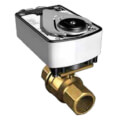
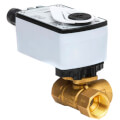

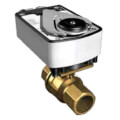
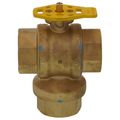
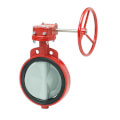

Bray International was founded in 1986 by Craig Brown and Frank Raymond as a manufacturer of butterfly valves, actuators, and related accessories. Headquartered in Houston, Texas, the company built its first valve prototypes by the end of that year and began full production runs in 1987.
Bray expanded into international markets starting in 1990 with the opening of European operations, growing from a single Houston facility into a global flow control manufacturer. Operations now span six continents, supporting HVAC, plumbing, water treatment, oil and gas, and industrial customers.
Product Lines
Bray's valve portfolio covers resilient seated, high performance, and triple offset butterfly valves alongside three piece, threaded, and flanged ball valves built for a range of pressure classes. Knife gate valves, control valves, and check valves round out the flow control lineup for commercial and industrial piping systems.
Actuation options include electric, pneumatic, hydraulic, and electro-hydraulic actuators as well as manual operators, paired with accessories such as positioners, solenoids, proximity sensors, filter regulators, and switch boxes.
Why Contractors Specify Bray
Mechanical contractors and engineers specify Bray valves and actuators when a project calls for dependable shutoff and flow control across HVAC, hydronic, and industrial piping. A single manufacturer offering both valves and matched actuators simplifies specification and reduces compatibility questions on the jobsite.
Bray's range of valve types and sizes allows contractors to standardize on one supplier across multiple system types, from chilled water and condenser water loops to process piping, which can reduce the number of vendors involved in a project.
How to Choose Bray Products
Selecting a Bray valve starts with confirming the pipe size, pressure rating, and temperature range of the system, since these factors determine whether a resilient seated, high performance, or triple offset butterfly valve is appropriate.
Actuation type should match how the valve will be operated: manual operators suit valves that are adjusted infrequently, while electric or pneumatic actuators fit applications that need remote or automated control. Reviewing the media being controlled, such as potable water, chemicals, or process fluids, also helps narrow down valve body and seat materials.
Frequently Asked Questions
What is the difference between a resilient seated and a high performance butterfly valve?
Resilient seated butterfly valves use a flexible elastomer seat suited to lower pressure HVAC and plumbing applications, while high performance butterfly valves use a metal seat designed for higher pressures and temperatures.
Are Bray butterfly valves suitable for potable water systems?
Bray offers butterfly valves with seat and disc materials configured for potable water service; installers should confirm the specific model's certifications match the project's water system requirements.
What actuation types are available for Bray valves?
Bray valves can be paired with manual operators or electric, pneumatic, hydraulic, and electro-hydraulic actuators, depending on how often the valve needs adjustment and whether remote control is required.
Can Bray valves and actuators be ordered as a matched assembly?
Bray manufactures both valves and actuators, so contractors can specify a matched valve and actuator assembly rather than sourcing components from separate suppliers.
What markets do Bray valves serve besides HVAC?
Beyond HVAC and plumbing, Bray valves are used in water treatment, oil and gas, chemical processing, and other industrial piping systems.
