




Breaker Box Covers & Doors


 --%3E %3Csvg version='1.1' id='No-RB' xmlns='http://www.w3.org/2000/svg' xmlns:xlink='http://www.w3.org/1999/xlink' x='0px' y='0px' viewBox='0 0 100 100' enable-background='new 0 0 100 100' xml:space='preserve'%3E %3Cpath fill='%23CECECE' d='M79.44,0.95H20.56C9.78,0.95,0.95,9.78,0.95,20.56v58.87c0,10.79,8.82,19.61,19.61,19.61h58.87 c10.79,0,19.61-8.83,19.61-19.61V20.56C99.05,9.78,90.22,0.95,79.44,0.95z M65.38,58.24l9.38,29.58L49.69,69.78L24.5,87.82 l9.34-29.6L8.8,39.6l30.73-0.17c0,0,6.98-19.61,10-28.93c0.54,1.36,9.88,29.1,9.88,29.1H91.2L65.38,58.24z'/%3E %3C/svg%3E)



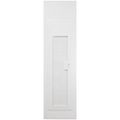

Breaker box covers and doors are the protective panels that enclose a home or building's electrical breaker box, keeping circuit breakers, wiring, and directory labels shielded from dust, moisture, and accidental contact. Electricians and property managers install them on both new panel installations and older boxes that arrived without a finished cover. A cover typically consists of a flat or slightly recessed panel that mounts over the breaker compartment, while a door adds a hinge and latch so the panel can open for regular access without full removal. Property owners in finished basements, utility rooms, and commercial mechanical spaces often prioritize a clean, paintable surface that blends with surrounding walls. Getting the right fit matters: a cover or door sized for the wrong panel leaves gaps that defeat its purpose, so confirming panel dimensions before ordering saves a return trip.
Subcategories
- Surface-Mount Covers: Surface-mount covers attach directly over the face of an existing panel without altering the box itself. Electricians favor them for retrofit jobs where the panel is already set into a finished wall and a flush trim ring is not practical. Most versions snap or screw onto the panel's existing mounting points, so installation takes only a few minutes. Property managers commonly choose this style when standardizing the look of utility rooms across several units.
- Flush-Mount Doors: Flush-mount doors sit inside the wall opening around the panel, giving a finished, trim look for spaces that stay visible, like hallways or finished basements. A hinge lets the door swing open for breaker access while the surrounding frame stays fixed to the wall. New construction projects tend to specify this style because the rough opening can be planned before drywall goes up. Painting the door to match the wall is straightforward since the surface sits flush with the surrounding surface.
- Locking Covers and Doors: Locking covers and doors add a key or combination latch to restrict who can open the breaker panel. Facility managers rely on this option in commercial buildings, schools, and multi-tenant properties where accidental or unauthorized breaker access is a real risk. The lock mechanism mounts to the same hinge and frame hardware as a standard door, so upgrading from a non-locking version does not usually require a different rough opening. Maintenance staff keep a master key on hand for scheduled panel work.
- Directory Card Covers and Blanks: Directory card covers hold the printed circuit list that identifies what each breaker controls, keeping the paper legible and protected from smudging or tearing over time. Electricians fill out the directory during final inspection so future technicians and homeowners can identify circuits without guessing. A clear plastic window over the card lets someone read the list without opening the panel door. Blank directory cards are sold separately for replacing damaged or outdated ones.
Buying Guide
Choosing between breaker box covers and doors starts with how often the panel needs to be reopened. A cover works for boxes that rarely need access beyond an initial installation or an annual inspection, while a door with a hinge and latch suits panels a maintenance team or homeowner opens more regularly. Matching the physical dimensions to the existing panel comes next: panel manufacturers vary slightly in width, height, and mounting hole spacing, so measuring before ordering avoids a mismatched fit. Material choice affects both durability and finish. Steel options hold up well in garages, basements, and other high-traffic mechanical spaces, while some lighter-weight materials are easier to trim or drill for surface-mount conduit runs. For commercial and multi-tenant properties, choosing among locking breaker box covers and doors adds a layer of protection against tampering, particularly in shared hallways or laundry rooms where tenants should not have breaker access. Finish matters for anywhere the panel stays visible: a paintable surface lets the cover disappear into the surrounding wall color, which property managers often specify for finished common areas. Confirm local electrical code requirements before finalizing a choice, since some jurisdictions specify minimum clearance or labeling requirements around an accessible panel. Ordering a directory card cover alongside the main panel cover keeps circuit labeling protected and legible for the life of the installation.
Frequently Asked Questions
What is the difference between a breaker box cover and a breaker box door?
A cover is a fixed panel that stays in place once mounted, typically removed only for major panel work. A door adds a hinge and latch, so it can be opened for routine breaker access without taking the whole panel off the wall. Property managers who expect frequent access usually specify a door instead of a plain cover.
Can a breaker box cover be painted to match the wall?
Yes, most steel and many composite covers accept standard latex or oil-based paint once properly primed. Painting is common in finished basements and hallways where the panel stays visible. Avoid painting over the directory card window or any labeling required by code.
How do I know what size cover or door I need?
Measure the existing panel's outer dimensions and the mounting hole spacing before ordering, since panel manufacturers vary in width and height. A mismatched cover leaves gaps around the edges that defeat its purpose. Checking the panel manufacturer and model helps narrow down compatible sizing.
Are locking breaker box doors required by code?
Requirements vary by jurisdiction and building type, so checking with the local electrical inspector is the safest step before installing one. Locking doors are common in commercial buildings, schools, and multi-tenant housing where unrestricted access is a concern. Residential single-family installations typically do not require a lock.
What is a directory card cover for?
It protects the printed list of circuits and what each breaker controls, keeping the paper legible for the life of the panel. A clear plastic window lets anyone read the directory without opening the panel door. Replacing a damaged card is straightforward since blank directory cards are sold separately.
