



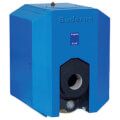
Buderus G115WS Oil Boilers

 --%3E %3Csvg version='1.1' id='Fill' xmlns='http://www.w3.org/2000/svg' xmlns:xlink='http://www.w3.org/1999/xlink' x='0px' y='0px' viewBox='0 0 100 100' enable-background='new 0 0 100 100' xml:space='preserve'%3E %3Cpath fill='%23F15C02' d='M79.44,0.95H20.56C9.78,0.95,0.95,9.78,0.95,20.56v58.87c0,10.79,8.82,19.61,19.61,19.61h58.87 c10.79,0,19.61-8.83,19.61-19.61V20.56C99.05,9.78,90.22,0.95,79.44,0.95z M65.38,58.24l9.38,29.58L49.69,69.78L24.5,87.82 l9.34-29.6L8.8,39.6l30.73-0.17c0,0,6.98-19.61,10-28.93c0.54,1.36,9.88,29.1,9.88,29.1H91.2L65.38,58.24z'/%3E %3C/svg%3E)


Buderus G115WS oil boilers are cast iron, oil-fired boilers built for residential and light commercial hydronic heating systems, available in a range of sizes to match different heating loads. The cast iron heat exchanger design is intended for a long service life and tolerates the mineral content in boiler water better than some lighter-weight alternatives. These boilers pair with an oil burner that atomizes and ignites the fuel, and burner performance depends as much on fuel quality and tank condition as on the boiler itself. Sizing a replacement G115WS boiler against a current heat loss calculation, rather than matching the output of the unit being replaced, helps avoid installing more capacity than the building actually needs. Contractors servicing oil heat in older housing stock often specify this line for straightforward replacements where matching existing piping and burner connections simplifies the installation.
Subcategories
- Boiler Sections by Size: Boiler sections determine the G115WS model's total heating output, with additional sections increasing capacity for larger heating loads. Selecting the correct number of sections depends on the building's heat loss calculation rather than the size of the boiler being replaced, since older systems were frequently installed with more capacity than the space requires. A boiler sized too large for the load can short cycle, which increases wear on the burner and reduces overall efficiency. Contractors should confirm the required output in writing before ordering a specific section count.
- Oil Burners: Oil burners atomize and ignite the fuel oil that fires the boiler, and burner performance depends heavily on fuel quality, nozzle condition, and proper adjustment. A burner that is improperly adjusted can cause sooting inside the heat exchanger, which reduces efficiency over time even if the boiler itself is functioning correctly. Burners are typically serviced on a separate maintenance schedule from the boiler and may need nozzle or electrode replacement well before the boiler requires attention. Technicians should verify burner compatibility with the specific G115WS model before ordering a replacement.
- Boiler Jackets & Insulation: Boiler jackets and insulation panels cover the cast iron sections, reducing standby heat loss and providing a finished exterior appearance. Damaged or missing jacket panels allow heat to escape into the mechanical room rather than into the heating system, which increases fuel use over time. These panels are typically specific to the boiler's section count, since jacket dimensions change with the boiler's overall size. Replacing damaged panels is a low-cost repair compared with the fuel savings from reduced standby loss.
- Tankless Coils & Controls: Tankless coils and control packages add domestic hot water production or automated operation to a G115WS boiler installation. A tankless coil heats domestic water directly from the boiler rather than through a separate storage tank, which can simplify smaller installations where space is limited. Control packages manage burner firing, circulator operation, and safety limits, and mismatched controls can prevent the boiler from firing correctly even when the boiler itself is in good condition. Confirming control compatibility with the specific boiler model avoids wiring and operational issues after installation.
Buying Guide
Selecting a Buderus G115WS Oil Boilers replacement starts with a current heat loss calculation for the building rather than matching the output of the boiler being replaced, since many older oil boilers were installed with more capacity than the space actually needs, leading to short cycling and added wear on the burner. Section count determines the boiler's total heating capacity, and choosing correctly the first time avoids either an undersized boiler that cannot meet peak demand or an oversized one that cycles inefficiently. The oil burner paired with the boiler deserves its own attention during replacement, since burner adjustment and nozzle condition affect efficiency and sooting as much as the boiler's own design, and a burner carried over from an old installation may not be properly matched to a new boiler's firing rate. Jacket panels and insulation should be inspected for damage during any boiler replacement, since missing or damaged panels allow standby heat loss that adds to fuel costs even after installing a new, more efficient boiler. Buyers considering a tankless coil for domestic hot water should weigh the simplicity of a single unit against the more limited hot water output compared with a separate storage-type water heater, particularly in homes with higher simultaneous hot water demand. Confirming control package compatibility with the specific model prevents wiring mismatches that can leave an otherwise correctly installed boiler unable to fire.
Frequently Asked Questions
How should a Buderus G115WS oil boiler be sized for a replacement installation?
Sizing should be based on a current heat loss calculation for the building rather than the output rating of the boiler being replaced, since many older oil boilers were installed with more capacity than the space needs.
Does the oil burner need to be replaced along with the boiler?
A burner carried over from an old installation is not always matched to a new boiler's firing rate, so confirming burner compatibility during replacement helps avoid sooting and efficiency problems.
What causes standby heat loss on an oil boiler installation?
Missing or damaged jacket panels and insulation allow heat to escape into the mechanical room rather than into the heating system, which increases fuel use even on an otherwise well-functioning boiler.
Is a tankless coil a good option for domestic hot water on this boiler?
A tankless coil can simplify smaller installations by heating domestic water directly from the boiler, but its output is more limited than a separate storage-type water heater, which matters in homes with higher simultaneous hot water demand.
Why does control package compatibility matter when replacing this boiler?
Control packages manage burner firing, circulator operation, and safety limits, and a mismatched control package can prevent the boiler from firing correctly even when the boiler itself is in good condition.
