




Filters
SORT
Product Availability –
Review Score –
 --%3E %3Csvg version='1.1' id='Fill' xmlns='http://www.w3.org/2000/svg' xmlns:xlink='http://www.w3.org/1999/xlink' x='0px' y='0px' viewBox='0 0 100 100' enable-background='new 0 0 100 100' xml:space='preserve'%3E %3Cpath fill='%23F15C02' d='M79.44,0.95H20.56C9.78,0.95,0.95,9.78,0.95,20.56v58.87c0,10.79,8.82,19.61,19.61,19.61h58.87 c10.79,0,19.61-8.83,19.61-19.61V20.56C99.05,9.78,90.22,0.95,79.44,0.95z M65.38,58.24l9.38,29.58L49.69,69.78L24.5,87.82 l9.34-29.6L8.8,39.6l30.73-0.17c0,0,6.98-19.61,10-28.93c0.54,1.36,9.88,29.1,9.88,29.1H91.2L65.38,58.24z'/%3E %3C/svg%3E)
Price Range –
Carrier Liquid Line Service Valves


 --%3E %3Csvg version='1.1' id='No-RB' xmlns='http://www.w3.org/2000/svg' xmlns:xlink='http://www.w3.org/1999/xlink' x='0px' y='0px' viewBox='0 0 100 100' enable-background='new 0 0 100 100' xml:space='preserve'%3E %3Cpath fill='%23CECECE' d='M79.44,0.95H20.56C9.78,0.95,0.95,9.78,0.95,20.56v58.87c0,10.79,8.82,19.61,19.61,19.61h58.87 c10.79,0,19.61-8.83,19.61-19.61V20.56C99.05,9.78,90.22,0.95,79.44,0.95z M65.38,58.24l9.38,29.58L49.69,69.78L24.5,87.82 l9.34-29.6L8.8,39.6l30.73-0.17c0,0,6.98-19.61,10-28.93c0.54,1.36,9.88,29.1,9.88,29.1H91.2L65.38,58.24z'/%3E %3C/svg%3E)

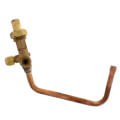
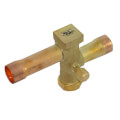
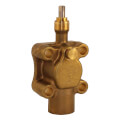

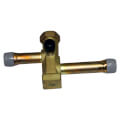
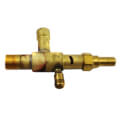
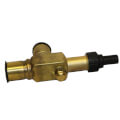
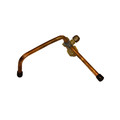
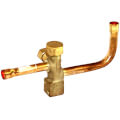
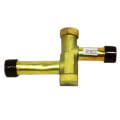

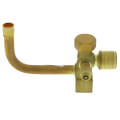
Carrier Liquid Line Service Valves provide the connection point where a technician attaches gauges, evacuates the system, and charges refrigerant during installation or service of a split air conditioning outdoor unit. Carrier builds these valves with brass and copper bodies and nuts, in sizes running from 1/4 inch up through 1-1/8 inch and larger, compatible with R22, R32, and R410 refrigerants. HVAC technicians replace these valves when a factory valve is damaged during brazing, develops a refrigerant leak at the seat, or needs to be swapped to match a different line set diameter during a condenser replacement. A valve that does not seat and seal properly after service can leak refrigerant slowly for months before a technician traces the cause back to a worn valve stem. Matching the replacement valve's size and connection type exactly to the existing line set avoids a leak-prone joint at the brazed connection.
Subcategories
- Small-Diameter Liquid Line Valves (1/4 to 3/8 inch): Smaller diameter valves fit residential split systems and smaller packaged units where the liquid line runs narrower than larger commercial equipment. Technicians reach for this size most often on standard residential condenser replacements. Correct sizing keeps refrigerant velocity and pressure drop within the range the original equipment was designed around.
- Mid-Diameter Liquid Line Valves (1/2 to 7/8 inch): Mid-range sizes cover larger residential systems and light commercial equipment where line sets run longer distances or carry more refrigerant volume. Mounting still uses the same brazed connection method as the smaller sizes. Confirming exact line set diameter with calipers before ordering prevents an oversized or undersized valve from arriving on site.
- Large-Diameter Liquid Line Valves (1-1/8 inch and larger): Larger valves serve higher-capacity commercial split systems where liquid line diameter increases along with equipment size. Technicians working on light commercial Carrier equipment need to confirm both configuration type and line set size, since L type, straight, and multi-port valves are not interchangeable on every model. Service port placement on these larger valves still allows the same gauge and charging access as smaller sizes.
Buying Guide
Replacing a Carrier Liquid Line Service Valves correctly starts with measuring the existing line set's outside diameter rather than assuming a size, since Carrier's lineup spans sizes from 1/4 inch up through 1-1/8 inch and larger across different equipment. A valve that is even slightly undersized for the line forces a technician to either resize the tubing or accept a poor brazed joint that is more likely to develop a slow leak later. Configuration matters just as much as size: Carrier offers L type, straight 2-way, and 3-way valve configurations, and confirming which one the original equipment used avoids ordering a part that will not seat correctly in the existing line run. Refrigerant compatibility is worth double-checking too, since valves rated for R22, R32, and R410 cover most residential and light commercial split systems currently in service, but an older system on a phased-out refrigerant may need a different seat material. Technicians should also check whether the replacement valve includes the same service port configuration as the original, since gauge and charging access needs to remain usable for future maintenance visits. Keeping a small stock of the most common sizes on the truck, rather than special-ordering for every job, cuts down on return visits for what is usually a same-day repair once the correct part is on hand.
Frequently Asked Questions
How do I determine the correct size Carrier liquid line service valve?
Measuring the existing line set's outside diameter with calipers is more reliable than estimating size from the unit alone, since Carrier's valve sizes range from 1/4 inch up through 1-1/8 inch and larger across different equipment. Matching the measured diameter to the replacement valve's rated size avoids a poor brazed connection. Checking the old valve's stamped size, when it is still legible, offers a quick cross-reference.
What refrigerants are Carrier liquid line service valves compatible with?
Carrier's liquid line valves are built for compatibility with R22, R32, and R410 refrigerants, covering the great majority of residential and light commercial split systems currently in service. Confirming which refrigerant the existing system uses before ordering avoids a seat material mismatch. Systems on older or phased-out refrigerants not covered by that range may need a different valve altogether.
Why is my liquid line service valve leaking after a repair?
A leak at the valve after service is often traced to an incomplete braze joint or a valve stem that was not fully reseated after gauges were disconnected. Overheating the valve body during brazing can also damage the internal seal even when the joint itself looks sound from the outside. Pressure testing the joint with nitrogen before charging the system catches most of these issues before refrigerant is lost.
What valve configurations does Carrier offer for liquid line service?
Carrier's lineup includes L type, straight 2-way, and 3-way valve configurations, each suited to a different line layout and service access requirement. Confirming which configuration the original equipment used before ordering avoids a valve that will not seat correctly in the existing line run. A 3-way configuration is common where the design calls for an additional service or charging port.
What is the difference between the liquid line valve and the suction line valve?
The liquid line valve sits on the smaller-diameter tubing carrying refrigerant in its liquid state toward the evaporator coil, while the suction line valve sits on the larger-diameter tubing returning low-pressure vapor to the compressor. Both valves provide service ports for gauges and charging, but they are sized differently and are not interchangeable between the two lines. Confirming which line is being serviced before ordering a replacement avoids installing the wrong valve in the wrong location.
