




Carrier Valves (A/C)

 --%3E %3Csvg version='1.1' id='No-RB' xmlns='http://www.w3.org/2000/svg' xmlns:xlink='http://www.w3.org/1999/xlink' x='0px' y='0px' viewBox='0 0 100 100' enable-background='new 0 0 100 100' xml:space='preserve'%3E %3Cpath fill='%23CECECE' d='M79.44,0.95H20.56C9.78,0.95,0.95,9.78,0.95,20.56v58.87c0,10.79,8.82,19.61,19.61,19.61h58.87 c10.79,0,19.61-8.83,19.61-19.61V20.56C99.05,9.78,90.22,0.95,79.44,0.95z M65.38,58.24l9.38,29.58L49.69,69.78L24.5,87.82 l9.34-29.6L8.8,39.6l30.73-0.17c0,0,6.98-19.61,10-28.93c0.54,1.36,9.88,29.1,9.88,29.1H91.2L65.38,58.24z'/%3E %3C/svg%3E)
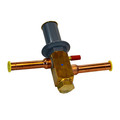
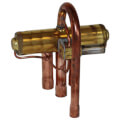
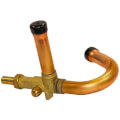
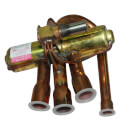
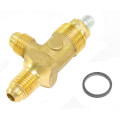

Carrier Valves (A/C) cover the reversing valves and service valves used to service and repair Carrier heat pump and air conditioning systems in the field. A reversing valve redirects refrigerant flow through the system's refrigerant circuit, switching a heat pump between cooling mode, where the system absorbs heat from indoor air and releases it outdoors, and heating mode, where that flow direction reverses to extract heat from outdoor air. A solenoid mounted on the valve responds to a signal from the thermostat, triggering the shift automatically rather than requiring a manual changeover. Carrier's reversing valve lineup includes models such as the EF17BZ113 four-way valve with a 24V coil and the EF17BZ251 sized for 1/2 inch by 3/4 inch ODF connections. Because reversing valve service involves handling refrigerant, replacement work requires EPA-certified technicians rather than a homeowner repair. Matching the exact valve model to the system it's replacing keeps the heat pump's heating and cooling changeover working the way the original equipment manufacturer designed it.
Subcategories
- Reversing Valves: Reversing valves handle the switch between heating and cooling mode on Carrier heat pump systems, changing refrigerant flow direction through the circuit. A solenoid on the valve body responds to a thermostat signal, triggering the shift automatically during a mode change. Carrier's reversing valve lineup includes the EF17BZ113 four-way valve with a 24V coil and the S69172601 valve, which comes with its own 24V coil. Reversing valve replacement requires refrigerant recovery and recharge, work limited to EPA-certified technicians.
- Liquid Line Service Valves: Liquid line service valves provide the access point for gauge connections, refrigerant charging, and system isolation on the liquid side of a Carrier system's refrigerant circuit. Techs use these valves to pump a system down for compressor or coil replacement without losing the full refrigerant charge to recovery. Sizes on Carrier's liquid line service valve lineup cover a range of connection diameters to match different system tonnages. Replacing a liquid line valve with the correct size and connection type keeps the brazed joint properly matched to the existing line set.
- Reversing Valve Coils: Reversing valve coils are the solenoid component that shifts the valve body between heating and cooling positions in response to a thermostat signal. Some Carrier reversing valves, like the S69172601, come with the coil already attached, while other valve bodies ship separately from the coil for cases where only the electrical component needs replacement. A failed coil often shows up as a system stuck in one mode, unable to switch between heating and cooling, even though the valve body itself is mechanically sound. Testing the coil's resistance against the manufacturer's specification helps confirm whether the coil or the valve body caused the failure.
- Specific Connection Sizes: Carrier reversing and service valves come in specific connection sizes to match different system capacities, such as the EF17BZ118 in a 5/8 inch connection with a 24V coil and the EF17BZ251 in a 1/2 inch by 3/4 inch ODF configuration. Matching the exact model number to the failed component keeps compatibility with the existing line set and electrical connections intact without needing adapters. Carrier's parts catalog cross-references these model numbers to the specific equipment models they service. Ordering by the exact replacement model number, rather than by connection size alone, avoids a mismatch in valve port configuration or solenoid voltage.
Buying Guide
Replacing a valve on a Carrier system starts with confirming the exact failure, since reversing valves and service valves fail in different ways and get diagnosed differently. A reversing valve stuck in one position typically shows up as a heat pump that won't switch between heating and cooling, while a failed coil on an otherwise functional valve body causes the same symptom but calls for a different part. Testing coil resistance against the manufacturer's specification before ordering a full valve body assembly saves both time and cost on the repair.
Matching the exact model number matters more with Carrier Valves (A/C) than guessing based on connection size alone, since similar-looking valves can carry different port configurations, coil voltages, or four-way versus three-way body designs. Pulling the model number off the failed component, or cross-referencing the equipment's serial number against Carrier's parts documentation, avoids ordering a valve that looks right but doesn't match the system's refrigerant circuit.
Connection size and type round out the decision once the correct model family is confirmed. Liquid line service valves and reversing valves both use specific braze or flare connection sizes tied to the line set already installed, so checking that dimension against the replacement part before starting brazing work prevents a mismatched joint. Any refrigerant-handling work on these valves requires EPA-certified technicians, since recovery and recharge are part of every reversing or service valve replacement.
Frequently Asked Questions
How can a tech tell if a Carrier reversing valve or its coil failed?
A stuck reversing valve typically keeps a heat pump locked in one mode, unable to switch between heating and cooling even when the thermostat calls for a change. Testing the coil's resistance against the manufacturer's specification helps separate a coil failure from a mechanical problem in the valve body itself. Some Carrier reversing valves, including the S69172601, ship with the coil already attached, while others take a separate replacement coil. Confirming which component failed before ordering parts avoids replacing a functional valve body unnecessarily.
What's the difference between a reversing valve and a liquid line service valve?
A reversing valve switches refrigerant flow direction to change a heat pump between heating and cooling modes, using a solenoid triggered by the thermostat. A liquid line service valve serves a different function, providing the access point for gauge connections and refrigerant charging on the liquid side of the circuit. Both valve types appear on the same heat pump system but serve separate roles in the refrigerant circuit. Replacing either one requires matching the specific model number and connection size to the original component.
Can a homeowner replace a Carrier reversing valve?
Reversing valve replacement involves recovering the system's existing refrigerant charge, brazing in the new valve, evacuating the system, and recharging with refrigerant, all work requiring EPA certification under federal refrigerant handling rules. A licensed HVAC technician carries the recovery equipment, gauges, and certification needed to complete the job safely and legally. Attempting this repair without the proper certification and equipment risks refrigerant release and system damage. Homeowners noticing a heat pump stuck in one mode should schedule a licensed technician rather than attempting the valve swap directly.
What connection sizes do Carrier reversing valves come in?
Carrier reversing valve models cover a range of connection sizes matched to different system tonnages, such as the EF17BZ118 in a 5/8 inch connection and the EF17BZ251 in a 1/2 inch by 3/4 inch ODF configuration. Matching the exact model number, rather than connection size alone, keeps the replacement valve compatible with the system's specific port configuration and coil voltage. Carrier's parts documentation cross-references model numbers against the equipment they service. Pulling the failed valve's model number directly off the component before ordering prevents a mismatched replacement.
Why do reversing valve coils fail separately from the valve body?
A reversing valve coil is an electrical solenoid component, subject to failure from voltage spikes, moisture intrusion, or simple wear over the years a system runs. The valve body itself is a mechanical component, and it can remain functional even after the coil that shifts it fails. Some Carrier reversing valve models, like the S69172601, come with the coil attached as one assembly, which simplifies parts ordering when either component needs replacement. Testing the coil separately from the valve body confirms which part actually caused the system's failure.
