




Filters
SORT
Product Availability –
Size –
Review Score –
 --%3E %3Csvg version='1.1' id='Fill' xmlns='http://www.w3.org/2000/svg' xmlns:xlink='http://www.w3.org/1999/xlink' x='0px' y='0px' viewBox='0 0 100 100' enable-background='new 0 0 100 100' xml:space='preserve'%3E %3Cpath fill='%23F15C02' d='M79.44,0.95H20.56C9.78,0.95,0.95,9.78,0.95,20.56v58.87c0,10.79,8.82,19.61,19.61,19.61h58.87 c10.79,0,19.61-8.83,19.61-19.61V20.56C99.05,9.78,90.22,0.95,79.44,0.95z M65.38,58.24l9.38,29.58L49.69,69.78L24.5,87.82 l9.34-29.6L8.8,39.6l30.73-0.17c0,0,6.98-19.61,10-28.93c0.54,1.36,9.88,29.1,9.88,29.1H91.2L65.38,58.24z'/%3E %3C/svg%3E)
Price Range –
Cast Iron, PVC, or Steel to Tubular Couplings


 --%3E %3Csvg version='1.1' id='Half' xmlns='http://www.w3.org/2000/svg' xmlns:xlink='http://www.w3.org/1999/xlink' x='0px' y='0px' viewBox='0 0 100 100' enable-background='new 0 0 100 100' xml:space='preserve'%3E %3Cg%3E %3Cpath fill='%23F15C02' d='M30.05,70.23l3.79-12.01L8.8,39.6l30.73-0.17c0,0,6.98-19.61,10-28.93c0.54,1.36,9.88,29.1,9.88,29.1h1.58 L93.71,7.18c-3.58-3.82-8.66-6.23-14.28-6.23H20.56C9.78,0.95,0.95,9.78,0.95,20.56v58.87c0,5.41,2.22,10.32,5.79,13.88 L30.05,70.23z'/%3E %3C/g%3E %3Cpath fill='%23FBC8B4' d='M93.71,7.18L60.98,39.6H91.2L65.38,58.24l9.38,29.58L49.69,69.78L24.5,87.82l5.55-17.59L6.75,93.32 c3.55,3.54,8.44,5.73,13.82,5.73h58.87c10.79,0,19.61-8.83,19.61-19.61V20.56C99.05,15.4,97.01,10.69,93.71,7.18z'/%3E %3C/svg%3E)

 --%3E %3Csvg version='1.1' id='No-RB' xmlns='http://www.w3.org/2000/svg' xmlns:xlink='http://www.w3.org/1999/xlink' x='0px' y='0px' viewBox='0 0 100 100' enable-background='new 0 0 100 100' xml:space='preserve'%3E %3Cpath fill='%23CECECE' d='M79.44,0.95H20.56C9.78,0.95,0.95,9.78,0.95,20.56v58.87c0,10.79,8.82,19.61,19.61,19.61h58.87 c10.79,0,19.61-8.83,19.61-19.61V20.56C99.05,9.78,90.22,0.95,79.44,0.95z M65.38,58.24l9.38,29.58L49.69,69.78L24.5,87.82 l9.34-29.6L8.8,39.6l30.73-0.17c0,0,6.98-19.61,10-28.93c0.54,1.36,9.88,29.1,9.88,29.1H91.2L65.38,58.24z'/%3E %3C/svg%3E)

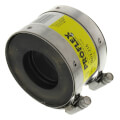

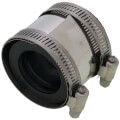
Cast Iron, PVC, or Steel to Tubular Couplings in this category are Fernco drain and trap connectors, built to join a tubular trap, such as under a sink or tub, to a home's cast iron, PVC, or steel drain line. The DTC-150 connector links a 1-1/4 inch or 1-1/2 inch tubular trap to common 1-1/2 inch plastic, cast iron, or steel drain pipe, or to 2 inch copper pipe. The DTC-215 connector performs the same job for 2 inch drain piping, excluding copper. Plumbers rely on these couplings when replacing an aging trap connection or tying new tubular plumbing into an existing cast iron or steel drain stack without cutting and threading pipe. Connectors install without gluing, soldering, or special tools, which speeds up repair and remodel work on older homes where drain pipe material often varies between the trap and the main line. Picking the correct size and compatible drain material keeps the joint watertight and code-compliant.
Subcategories
- DTC-150 Drain and Trap Connectors: DTC-150 connectors join a 1-1/4 inch or 1-1/2 inch tubular trap to common 1-1/2 inch plastic, cast iron, or steel drain pipe, or to 2 inch copper pipe. Plumbers use this connector for the most common residential trap-to-drain transition, such as under a bathroom or kitchen sink. The connector installs without gluing or soldering, relying on a mechanical clamp connection instead. Choosing the DTC-150 over the DTC-215 depends on whether the drain line is 1-1/2 inch or 2 inch.
- DTC-215 Drain and Trap Connectors: DTC-215 connectors join the same 1-1/4 inch or 1-1/2 inch tubular trap to 2 inch drain piping, covering plastic, cast iron, or steel but not copper. Plumbers select this connector when the drain line downstream of the trap is 2 inch rather than 1-1/2 inch. Like the DTC-150, it installs without gluing, soldering, or threading. Confirming the drain pipe's material and diameter before ordering avoids choosing the wrong connector size.
- Material-Compatible End Connections: Material-compatible end connections let a single connector join a tubular trap to cast iron, PVC, or steel drain piping without needing a dedicated coupling for each pipe material. Plumbers use this flexibility when replacing a trap on an older cast iron drain line or tying into newer PVC or steel piping without swapping parts. The DTC-150 connector accepts 1-1/2 inch plastic, cast iron, or steel drain pipe, or 2 inch copper, on one end. Choosing a connector by this spec avoids stocking a separate part for every drain pipe material a job might require.
Buying Guide
Start by measuring the tubular trap size, typically 1-1/4 inch or 1-1/2 inch, and the drain pipe material and diameter it needs to connect to. The DTC-150 connector fits a 1-1/4 inch or 1-1/2 inch trap to 1-1/2 inch plastic, cast iron, or steel pipe, or to 2 inch copper pipe, covering the most common residential drain configurations. The DTC-215 connector steps up to 2 inch drain piping in plastic, cast iron, or steel, but doesn't cover copper on that end. Plumbers sourcing Cast Iron, PVC, or Steel to Tubular Couplings for a remodel should confirm both pipe diameters and materials on each side of the joint before ordering, since choosing the wrong connector size leaves a gap or an overly tight fit that won't seal properly. Drain and trap connectors suit repair and remodel work where the trap and drain line are different ages or materials, a situation common in older homes being updated with new fixtures. Installation without gluing, soldering, or threading makes these couplings a practical choice for a quick trap swap or a tie-in to an existing stack, though local plumbing code should always be checked for approved transition fittings in drain, waste, and vent applications. Confirming code acceptance before the job starts avoids a failed inspection on a visible drain connection.
Frequently Asked Questions
What's the difference between the DTC-150 and DTC-215 connectors?
Cast Iron, PVC, or Steel to Tubular Couplings in the DTC-150 size connect a 1-1/4 inch or 1-1/2 inch tubular trap to 1-1/2 inch plastic, cast iron, or steel pipe, or to 2 inch copper pipe. The DTC-215 connects the same trap sizes to 2 inch drain piping, but doesn't include copper on that end. Choosing between them depends on the drain line's diameter and material. Confirming both measurements before ordering avoids a mismatched fit.
Can these couplings connect a trap to copper drain pipe?
The DTC-150 connector accepts 2 inch copper drain pipe on the non-trap end, in addition to 1-1/2 inch plastic, cast iron, or steel pipe. The DTC-215 connector covers 2 inch plastic, cast iron, or steel, but excludes copper. Confirming the drain line's material before ordering avoids selecting the wrong connector. Cast Iron, PVC, or Steel to Tubular Couplings in this category are built for exactly this kind of mixed-material transition.
Do these connectors require glue or soldering to install?
Fernco drain and trap connectors in this category install without gluing, soldering, or threading, relying instead on a mechanical, clamped connection. Plumbers use this style when a quick trap replacement or tie-in is needed without specialized tools. Cast Iron, PVC, or Steel to Tubular Couplings in this lineup are designed for straightforward field installation. Local plumbing code should still be checked for approved use in drain, waste, and vent applications.
What trap sizes do these couplings fit?
Both the DTC-150 and DTC-215 connectors fit a 1-1/4 inch or 1-1/2 inch tubular trap on one end. The difference between the two models is the drain pipe size and material accepted on the other end. Measuring the trap's outside diameter before ordering confirms the correct fit. Cast Iron, PVC, or Steel to Tubular Couplings in this size range cover most residential sink and tub trap connections.
When would a plumber use this type of coupling instead of a standard same-material coupling?
Cast Iron, PVC, or Steel to Tubular Couplings solve the specific problem of joining a tubular trap, a different pipe style, to a home's rigid cast iron, PVC, or steel drain line. A standard same-material coupling only works when both sides of the joint share the same pipe type and diameter. Plumbers reach for a drain and trap connector when replacing a trap on an older drain stack or remodeling a fixture without matching pipe materials. Doing so avoids cutting into or replacing the existing drain line.
