




Ceiling and Beam Supports
Ceiling and beam supports give installers fixed mounting points for pipe, rod, and conduit runs that hang from an overhead structure. The category covers angle brackets for right-angle mounting, ceiling plates that finish off a penetration, and side beam connectors that clamp to steel beam flanges.
Choosing the right support type depends on what the run is fastening to, whether that is a flat ceiling surface, a threaded rod, or the flange of a structural steel beam. Side beam connectors in particular let installers avoid drilling into a beam, which can affect its structural rating.

Subcategories
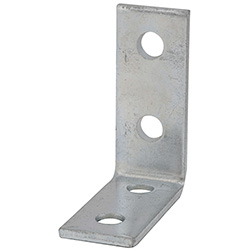
- Angle Brackets: Angle brackets provide a fixed, right angle mounting point for attaching pipe hangers, duct straps, or conduit clips directly to a beam flange or ceiling joist. They come in various steel gauges and finishes to match the load and corrosion exposure of the space, from dry mechanical rooms to damp crawlspaces. Contractors often pair them with all-thread rod when a run needs to be offset below the beam rather than mounted flush.
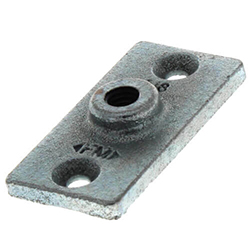
- Ceiling Plates: Ceiling plates cover the penetration where a pipe, rod, or conduit passes through a ceiling, giving installations a finished look while blocking drafts and light gaps around the opening. Most styles split or hinge so they can be installed after the pipe is already in place, which saves a step on retrofit jobs. Finish options range from plain galvanized steel to chrome or paintable plates for spaces where appearance matters.
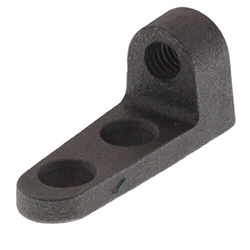
- Side Beam Connectors: Side beam connectors clamp directly to the flange of a steel I beam or channel, giving installers a mounting point without drilling or welding into structural steel. Clamp-style mounting speeds up installation in commercial buildings where beam penetration is restricted, and it lets a run be adjusted or removed later without leaving permanent damage to the beam. Load ratings vary by connector size, so matching the connector to the beam flange width and expected pipe weight keeps the support within its rated capacity.
Buying Guide
Start with the structural member the run will attach to, since beam flange width, joist spacing, and material, wood versus steel, narrow the field to a handful of compatible ceiling and beam supports before anything else is considered.
Next, calculate the total load the support has to carry: the weight of the pipe or duct itself, its fluid or air content, insulation, and enough margin for movement during equipment cycling or seismic activity in the region. Undersizing a support here is the most common cause of sagging runs and noise complaints down the line.
Match the connector style to the access conditions on site. Side beam connectors work well when drilling into structural steel isn't allowed, angle brackets suit standard joist framing, and ceiling plates handle the finish work around any penetration that stays visible after the job is done.
Corrosion exposure determines the finish. Damp basements, mechanical rooms near cooling towers, and outdoor-adjacent runs call for galvanized or stainless hardware, while dry interior installations can use standard plated steel without a meaningful difference in service life.
Finally, confirm local code requirements for support spacing before ordering, since jurisdictions differ on maximum intervals for horizontal pipe and duct runs. Buying a few extra brackets or connectors of each style on a job with mixed framing conditions avoids a second order mid install.
Frequently Asked Questions
What's the difference between an angle bracket and a side beam connector?
An angle bracket bolts or screws to a flat surface like a joist face, while a side beam connector clamps onto the flange of a steel beam without drilling. Side beam connectors are the faster option when beam penetration isn't allowed on the job.
Do ceiling plates carry any of the structural load?
No, ceiling plates are cosmetic and sealing components only. The actual support of the pipe or rod comes from the hanger, bracket, or connector installed above the ceiling line.
How do I know what size angle bracket or connector to order?
Match the bracket or connector size to the beam flange width or joist dimension it will attach to, then check the load rating against the total weight of the pipe, duct, or conduit run it will carry, including insulation and fluid content.
Can these supports be used outdoors or in damp mechanical rooms?
Galvanized and stainless finishes hold up well in damp mechanical rooms, crawlspaces, and other corrosion prone areas. Standard plated steel is better suited to dry interior installations where moisture exposure is minimal.
What's the benefit of side beam connectors over drilling directly into the beam?
Side beam connectors avoid weakening the structural steel and keep the installation reversible, which matters on leased commercial space or any job where the beam can't be modified. They also install faster since there's no drilling or welding involved.
Resources
Subcategories
- Angle Brackets: Angle brackets provide a fixed, right angle mounting point for attaching pipe hangers, duct straps, or conduit clips directly to a beam flange or ceiling joist. They come in various steel gauges and finishes to match the load and corrosion exposure of the space, from dry mechanical rooms to damp crawlspaces. Contractors often pair them with all-thread rod when a run needs to be offset below the beam rather than mounted flush.
- Ceiling Plates: Ceiling plates cover the penetration where a pipe, rod, or conduit passes through a ceiling, giving installations a finished look while blocking drafts and light gaps around the opening. Most styles split or hinge so they can be installed after the pipe is already in place, which saves a step on retrofit jobs. Finish options range from plain galvanized steel to chrome or paintable plates for spaces where appearance matters.
- Side Beam Connectors: Side beam connectors clamp directly to the flange of a steel I beam or channel, giving installers a mounting point without drilling or welding into structural steel. Clamp-style mounting speeds up installation in commercial buildings where beam penetration is restricted, and it lets a run be adjusted or removed later without leaving permanent damage to the beam. Load ratings vary by connector size, so matching the connector to the beam flange width and expected pipe weight keeps the support within its rated capacity.
Buying Guide
Start with the structural member the run will attach to, since beam flange width, joist spacing, and material, wood versus steel, narrow the field to a handful of compatible ceiling and beam supports before anything else is considered.
Next, calculate the total load the support has to carry: the weight of the pipe or duct itself, its fluid or air content, insulation, and enough margin for movement during equipment cycling or seismic activity in the region. Undersizing a support here is the most common cause of sagging runs and noise complaints down the line.
Match the connector style to the access conditions on site. Side beam connectors work well when drilling into structural steel isn't allowed, angle brackets suit standard joist framing, and ceiling plates handle the finish work around any penetration that stays visible after the job is done.
Corrosion exposure determines the finish. Damp basements, mechanical rooms near cooling towers, and outdoor-adjacent runs call for galvanized or stainless hardware, while dry interior installations can use standard plated steel without a meaningful difference in service life.
Finally, confirm local code requirements for support spacing before ordering, since jurisdictions differ on maximum intervals for horizontal pipe and duct runs. Buying a few extra brackets or connectors of each style on a job with mixed framing conditions avoids a second order mid install.
Frequently Asked Questions
What's the difference between an angle bracket and a side beam connector?
An angle bracket bolts or screws to a flat surface like a joist face, while a side beam connector clamps onto the flange of a steel beam without drilling. Side beam connectors are the faster option when beam penetration isn't allowed on the job.
Do ceiling plates carry any of the structural load?
No, ceiling plates are cosmetic and sealing components only. The actual support of the pipe or rod comes from the hanger, bracket, or connector installed above the ceiling line.
How do I know what size angle bracket or connector to order?
Match the bracket or connector size to the beam flange width or joist dimension it will attach to, then check the load rating against the total weight of the pipe, duct, or conduit run it will carry, including insulation and fluid content.
Can these supports be used outdoors or in damp mechanical rooms?
Galvanized and stainless finishes hold up well in damp mechanical rooms, crawlspaces, and other corrosion prone areas. Standard plated steel is better suited to dry interior installations where moisture exposure is minimal.
What's the benefit of side beam connectors over drilling directly into the beam?
Side beam connectors avoid weakening the structural steel and keep the installation reversible, which matters on leased commercial space or any job where the beam can't be modified. They also install faster since there's no drilling or welding involved.