




Class L Power Fuses

 --%3E %3Csvg version='1.1' id='No-RB' xmlns='http://www.w3.org/2000/svg' xmlns:xlink='http://www.w3.org/1999/xlink' x='0px' y='0px' viewBox='0 0 100 100' enable-background='new 0 0 100 100' xml:space='preserve'%3E %3Cpath fill='%23CECECE' d='M79.44,0.95H20.56C9.78,0.95,0.95,9.78,0.95,20.56v58.87c0,10.79,8.82,19.61,19.61,19.61h58.87 c10.79,0,19.61-8.83,19.61-19.61V20.56C99.05,9.78,90.22,0.95,79.44,0.95z M65.38,58.24l9.38,29.58L49.69,69.78L24.5,87.82 l9.34-29.6L8.8,39.6l30.73-0.17c0,0,6.98-19.61,10-28.93c0.54,1.36,9.88,29.1,9.88,29.1H91.2L65.38,58.24z'/%3E %3C/svg%3E)
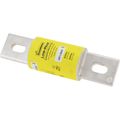

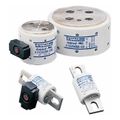
Class L Power Fuses are high-amperage fuses that provide short-circuit protection for electrical circuits. Listings in this category include the Eaton Bussmann KRP-C, an 800 amp, 600V time-delay, current-limiting fuse with an interrupting rating of 300 kA at 600 Vac and 100 kA at 300 Vdc. They also include the Mersen A15QS2000-128, a 2,000 amp fast-acting cylindrical fuse rated 150 VAC and 150 VDC. Eaton notes that its Low-Peak fuses use consistent 2:1 ampacity ratios, which makes selective coordination easier to plan, and that time-delay designs allow close sizing for the load. Contractors and installers compare amperage, voltage, and interrupting rating against the circuit's requirements before choosing a fuse. A correct match keeps protection predictable, supports coordination with other devices, and limits costly rework on the job.
Subcategories
- Time-Delay Fuses: Time-delay fuses combine short-circuit protection with time-delay performance. Eaton describes the Bussmann KRP-C as a time-delay, current-limiting 800 amp fuse rated 600V. Contractors and installers choose this type when the fuse needs to be sized close to the load. Consistent 2:1 ampacity ratios across Low-Peak fuses also make selective coordination easier.
- Fast-Acting Cylindrical Fuses: Fast-acting cylindrical fuses pair a cylindrical body with fast-acting response. The Mersen A15QS2000-128 is rated 2,000 amps at 150 VAC and 150 VDC, with a 2 inch diameter and a 1 7/8 inch overall length. Installers choose this type when the circuit calls for fast-acting protection at high amperage. The listed interrupting ratings for this model are 100 kA at AC and 50 kA at DC.
- High Interrupting Rating Fuses: High interrupting rating fuses suit installations where fault current is high. The Eaton Bussmann KRP-C carries 300 kA at 600 Vac and 100 kA at 300 Vdc. The Mersen A15QS2000-128 carries 100 kA at AC and 50 kA at DC. Electricians and installers compare these ratings with the fault current at the equipment before choosing.
Buying Guide
Start with the circuit's voltage and amperage, then confirm the fuse rating covers both. The Eaton Bussmann KRP-C is listed at 800 amps and 600V, while the Mersen A15QS2000-128 is listed at 2,000 amps and 150 VAC or 150 VDC. Check voltage first, because ratings vary widely between products in this category.
Next, compare the interrupting rating with the fault current at the installation. The KRP-C carries 300 kA at 600 Vac and 100 kA at 300 Vdc, and the A15QS2000-128 carries 100 kA at AC and 50 kA at DC. Match the AC or DC rating to the system type, since the two ratings differ.
When selecting Class L Power Fuses, decide between time-delay and fast-acting designs. Eaton describes the KRP-C as time-delay, which allows close sizing for the load, and the A15QS2000-128 is a fast-acting cylindrical fuse. Choose the design that fits how the circuit behaves under load.
Consider coordination with other protective devices. Eaton states that Low-Peak fuses keep consistent 2:1 ampacity ratios, which makes selective coordination easier. Check physical size as well, since the A15QS2000-128 measures 2 inches in diameter and 1 7/8 inches in overall length. Finally, confirm the exact part number against the equipment documentation or the manufacturer data sheet before ordering.
Frequently Asked Questions
What are Class L Power Fuses used for?
Class L Power Fuses provide short-circuit protection in high-amperage circuits. The Eaton Bussmann KRP-C, for example, is an 800 amp, 600V current-limiting fuse. Contractors choose them by comparing amperage, voltage, and interrupting rating.
What's the difference between time-delay and fast-acting fuses in this category?
Time-delay fuses like the Eaton Bussmann KRP-C allow close sizing for the load. Fast-acting fuses like the Mersen A15QS2000-128 are built for fast-acting protection. The Class L Power Fuses category includes both types, so check the product name before ordering.
What interrupting rating does the Eaton Bussmann KRP-C have?
The Eaton Bussmann KRP-C in the Class L Power Fuses category is rated 300 kA at 600 Vac and 100 kA at 300 Vdc. Eaton describes it as UL Listed and CSA Certified with a 300 kA interrupting rating. Compare the rating with the fault current at the installation.
What are the ratings on the Mersen A15QS2000-128 fuse?
Within Class L Power Fuses listings, the Mersen A15QS2000-128 is a 2,000 amp fast-acting cylindrical fuse rated 150 VAC and 150 VDC. Its listed interrupting ratings are 100 kA at AC and 50 kA at DC. Confirm those ratings fit the circuit before ordering.
How do Low-Peak fuses make selective coordination easier?
Eaton states that all Low-Peak fuses use consistent 2:1 ampacity ratios, which makes selective coordination easy. Time-delay performance also allows close sizing for the load. When specifying Class L Power Fuses, confirm the details against the manufacturer data sheet.
