




Copper Shower Risers

 --%3E %3Csvg version='1.1' id='No-RB' xmlns='http://www.w3.org/2000/svg' xmlns:xlink='http://www.w3.org/1999/xlink' x='0px' y='0px' viewBox='0 0 100 100' enable-background='new 0 0 100 100' xml:space='preserve'%3E %3Cpath fill='%23CECECE' d='M79.44,0.95H20.56C9.78,0.95,0.95,9.78,0.95,20.56v58.87c0,10.79,8.82,19.61,19.61,19.61h58.87 c10.79,0,19.61-8.83,19.61-19.61V20.56C99.05,9.78,90.22,0.95,79.44,0.95z M65.38,58.24l9.38,29.58L49.69,69.78L24.5,87.82 l9.34-29.6L8.8,39.6l30.73-0.17c0,0,6.98-19.61,10-28.93c0.54,1.36,9.88,29.1,9.88,29.1H91.2L65.38,58.24z'/%3E %3C/svg%3E)

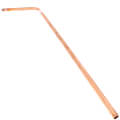
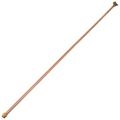
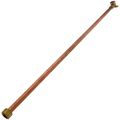


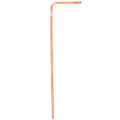
Copper Shower Risers are the vertical pipe sections that carry water from a shower valve up the wall to the shower arm and head, and they're a common replacement item during a bathroom remodel or when an old riser develops a pinhole leak. Made from rigid copper tubing, risers solder into place using standard sweat fittings and hold up to the same pressure and temperature ranges as the rest of a copper supply system. Riser length and outlet height vary by project, so plumbers typically select a length that reaches the desired shower head position without adding an extra coupling inside the wall cavity. Matching riser diameter to the existing valve outlet, most commonly 1/2 inch, keeps flow rate consistent and avoids introducing a reducing fitting into the riser assembly.
Subcategories
- Standard Copper Risers: Plain rigid copper tubing for new construction and remodels where the riser gets covered by tile, a shower surround, or an escutcheon plate at the wall. Sweat-solders to standard copper fittings on both ends. The most common choice for rough-in work behind finished walls.
- Chrome-Plated Copper Risers: Carry a polished chrome finish for installations where the riser stays exposed rather than being hidden inside a wall or surround. Same copper base material and solder connections as standard risers. Common on exposed-pipe or industrial-style bathroom fixtures.
- Extended Length Risers: Run longer than a standard riser to reach rain shower heads or fixtures mounted higher on a wall, including installations with vaulted or raised ceilings. Solder into place the same way as shorter risers. Reduces the need for an added coupling to extend a standard-length riser.
- Riser Elbows and Adapters: Change direction or step down to a different outlet size where a straight riser alone won't reach the shower arm's position. Solder-compatible with standard copper riser stock. Useful for offset installations where the shower arm doesn't line up directly above the valve.
Buying Guide
Selecting a shower riser starts with confirming the outlet size on the existing or new shower valve, since most residential installations use a 1/2 inch connection and introducing a different size mid-run adds an unnecessary reducing joint. Copper Shower Risers come in a range of lengths, and measuring the actual distance from the valve body to the desired shower arm height, rather than assuming a standard length will work, avoids either an awkward extra coupling or a riser that's cut short mid-installation. For exposed installations, such as industrial-style or retrofit bathrooms where the pipe run stays visible, a chrome-plated riser gives a finished look without changing the underlying copper construction or solder connections. Standard, unplated risers are the better fit any time the pipe gets covered by tile, a surround, or an escutcheon, since the finish adds cost without a visible benefit in that case. Extended length risers are worth reaching for on rain shower installations or bathrooms with higher ceilings, where a standard-length riser combined with an added coupling introduces one more joint that could eventually leak. Because risers solder into a copper supply system, standard sweat-fitting technique and lead-free solder apply the same as anywhere else in the system, and pressure-testing the joint after installation catches any leaks before the wall gets closed up.
Frequently Asked Questions
What size shower riser is needed for a standard residential valve?
Most residential shower valves use a 1/2 inch outlet, so a riser matching that diameter avoids adding a reducing fitting into the run.
Should a chrome-plated or standard copper riser be used?
Chrome-plated risers work best where the pipe stays exposed, while standard unplated risers are the better fit any time the riser gets covered by tile or a surround.
How is riser length determined for a specific installation?
Measuring the actual distance from the valve body to the desired shower arm height gives the correct length, rather than assuming a standard riser will reach without an added coupling.
Can a riser be extended if it's cut too short?
An extended length riser sized correctly from the start is the more reliable option, since adding a coupling to lengthen a short riser introduces an additional solder joint and potential leak point.
What solder is used to install a copper shower riser?
Standard lead-free solder used elsewhere in the copper supply system works for riser connections, following the same sweat-fitting technique as any other copper joint.
