



Copper Tubing Coils (Type K)

 --%3E %3Csvg version='1.1' id='No-RB' xmlns='http://www.w3.org/2000/svg' xmlns:xlink='http://www.w3.org/1999/xlink' x='0px' y='0px' viewBox='0 0 100 100' enable-background='new 0 0 100 100' xml:space='preserve'%3E %3Cpath fill='%23CECECE' d='M79.44,0.95H20.56C9.78,0.95,0.95,9.78,0.95,20.56v58.87c0,10.79,8.82,19.61,19.61,19.61h58.87 c10.79,0,19.61-8.83,19.61-19.61V20.56C99.05,9.78,90.22,0.95,79.44,0.95z M65.38,58.24l9.38,29.58L49.69,69.78L24.5,87.82 l9.34-29.6L8.8,39.6l30.73-0.17c0,0,6.98-19.61,10-28.93c0.54,1.36,9.88,29.1,9.88,29.1H91.2L65.38,58.24z'/%3E %3C/svg%3E)
 --%3E %3Csvg version='1.1' id='Fill' xmlns='http://www.w3.org/2000/svg' xmlns:xlink='http://www.w3.org/1999/xlink' x='0px' y='0px' viewBox='0 0 100 100' enable-background='new 0 0 100 100' xml:space='preserve'%3E %3Cpath fill='%23F15C02' d='M79.44,0.95H20.56C9.78,0.95,0.95,9.78,0.95,20.56v58.87c0,10.79,8.82,19.61,19.61,19.61h58.87 c10.79,0,19.61-8.83,19.61-19.61V20.56C99.05,9.78,90.22,0.95,79.44,0.95z M65.38,58.24l9.38,29.58L49.69,69.78L24.5,87.82 l9.34-29.6L8.8,39.6l30.73-0.17c0,0,6.98-19.61,10-28.93c0.54,1.36,9.88,29.1,9.88,29.1H91.2L65.38,58.24z'/%3E %3C/svg%3E)
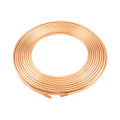
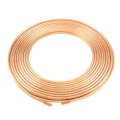
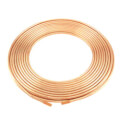
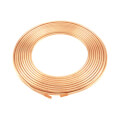
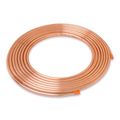

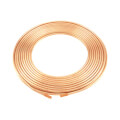

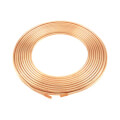

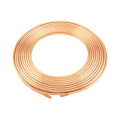
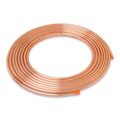
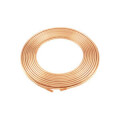
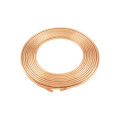
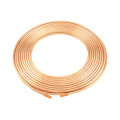
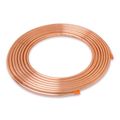
Type K copper tubing coils are flexible, coiled lengths of copper pipe with the thickest wall of the common copper tube types, used where a continuous run without joints is preferred over rigid straight lengths. The coiled format lets installers feed tubing directly from a spool through trenches, walls, or tight routing paths, cutting down on the number of fittings needed compared to piecing together straight sections. Underground water service lines rely heavily on this tubing type because the thicker wall stands up to soil pressure and potential impact better than thinner-walled alternatives, and running a single unbroken coil underground reduces the number of buried joints that could eventually leak. Type K coils also serve fuel oil lines, solar thermal systems, and other applications where flexibility and wall thickness both matter. Contractors typically bend the coil by hand or with a tubing bender for gentle direction changes, reserving fittings for sharper turns or connections to fixtures and equipment.
Subcategories
- Underground Water Service Coils: Coils intended for underground water service runs connect a water main or well to a building's plumbing system in a single continuous length, avoiding buried joints that are difficult to access if a leak develops. Longer coil lengths suit runs between a street main and a building foundation, while shorter coils handle shorter service connections. Local plumbing code typically dictates minimum burial depth and bedding requirements for this application. Because Type K has the thickest wall of the standard copper types, it holds up well to the soil pressure and occasional impact these underground runs experience over time.
- Fuel Oil Line Coils: Coiled Type K tubing routed from an above-ground or buried oil tank to a burner is common in residential and light commercial heating systems using oil-fired equipment. The flexible coil format lets installers snake the line through a basement, crawlspace, or trench without the multiple joints a straight-length installation would require. Local fire and fuel codes typically specify allowable routing, depth, and protective sleeving for buried runs. Fuel oil piping installations generally call for this coil format specifically because of the reduced joint count and the tubing's resistance to physical damage.
- Solar Thermal Coils: Copper coils used in solar thermal systems route fluid between rooftop collectors and a storage tank or heat exchanger, often through attic or wall spaces where a flexible run is easier to install than multiple straight sections and fittings. Type K's thicker wall provides an extra margin of durability for lines that may see higher temperatures and pressure cycling as the system heats and cools throughout the day. Installers commonly insulate these coils along their full length to limit heat loss between the collector and the storage point. Routing a single coil through tight framing cavities is typically easier than fishing rigid pipe through the same space.
- Small-Diameter Coils for Tight Access Runs: Smaller-diameter Type K coils suit retrofit and renovation work where routing a supply line through existing walls, floors, or crawlspaces leaves little room to maneuver rigid pipe. Plumbers feed the coil through framing cavities much like electrical cable, cutting down on the number of access holes needed compared to a straight-length installation. The coil format is common on repiping projects in occupied buildings where minimizing wall and floor damage matters. Shorter coil lengths in smaller diameters are easier to handle in confined mechanical rooms and crawlspaces than a full-size spool.
Buying Guide
Choosing the right coil starts with confirming Type K is actually the correct wall thickness for the application, since copper tube types differ in wall thickness and are often specified explicitly in plumbing code for certain uses. Underground water service lines and fuel oil piping frequently require Type K specifically because of its thicker wall and greater resistance to physical damage compared to thinner-walled alternatives.
Diameter and coil length come next. Copper Tubing Coils (Type K) are available in a range of diameters and coil lengths, and choosing a coil long enough to complete a run without a mid-span joint reduces the number of potential leak points in a buried or hard-to-access installation. Measuring the actual run distance, including any bends, before ordering helps avoid coming up short mid-installation.
Handling and bending equipment matter too. Larger diameter coils require more force to straighten and bend than smaller ones, so contractors doing frequent coil installations often keep a tubing bender sized to the diameters they work with most. Local plumbing and fuel codes should be checked before installation, since they typically specify minimum burial depth, bedding material, and any required protective sleeving for buried copper coils, and confirming these requirements before ordering material and fittings keeps the installation code-compliant from the start.
Frequently Asked Questions
What makes Type K copper different from other copper tube types?
Type K has the thickest wall of the common copper tube types. The added thickness affects both durability and code requirements, with Type K commonly required for underground and other demanding applications. Thinner-walled types are typically limited to interior plumbing or specific low-pressure applications where permitted by code.
Why is coiled tubing preferred over straight lengths for underground runs?
A coil allows a single continuous run from point to point without the joints a straight-length installation would require, and fewer joints mean fewer potential leak points in a location that is difficult to access once buried. Coils also reduce the number of fittings needed for gentle direction changes along a trench route. Straight lengths are still used for aboveground runs where joints are easy to inspect and service.
Can Type K coils be bent by hand?
Smaller diameter coils can often be bent by hand for gentle direction changes, though a tubing bender helps prevent kinking and gives a cleaner, more consistent bend radius. Larger diameter coils generally require a bender due to the increased force needed to shape the tubing. Sharp turns typically call for a fitting rather than an aggressive hand bend, since over-bending can weaken or collapse the tube wall.
Is Type K coil suitable for fuel oil lines?
Yes, Type K coils are commonly used for fuel oil lines between a tank and burner, and local fuel codes often specify this tube type along with requirements for routing, depth, and protective sleeving on buried sections. Confirming local code requirements before installation is standard practice for this application. The coil format reduces the number of joints along the line, which lowers the chance of a fuel leak developing at a connection point.
How is the correct coil length determined for a job?
Coil length should account for the full measured distance of the run, including any bends or elevation changes, plus some allowance for connections at each end. Ordering a coil that falls short mid-installation means adding a joint that a longer coil would have avoided entirely. Measuring the complete route before ordering, rather than estimating, is the most reliable way to select the correct coil length.
