



Filters
SORT
Product Availability –
Brand –
Review Score –
 --%3E %3Csvg version='1.1' id='Fill' xmlns='http://www.w3.org/2000/svg' xmlns:xlink='http://www.w3.org/1999/xlink' x='0px' y='0px' viewBox='0 0 100 100' enable-background='new 0 0 100 100' xml:space='preserve'%3E %3Cpath fill='%23F15C02' d='M79.44,0.95H20.56C9.78,0.95,0.95,9.78,0.95,20.56v58.87c0,10.79,8.82,19.61,19.61,19.61h58.87 c10.79,0,19.61-8.83,19.61-19.61V20.56C99.05,9.78,90.22,0.95,79.44,0.95z M65.38,58.24l9.38,29.58L49.69,69.78L24.5,87.82 l9.34-29.6L8.8,39.6l30.73-0.17c0,0,6.98-19.61,10-28.93c0.54,1.36,9.88,29.1,9.88,29.1H91.2L65.38,58.24z'/%3E %3C/svg%3E)
 --%3E %3Csvg version='1.1' id='With-RB' xmlns='http://www.w3.org/2000/svg' xmlns:xlink='http://www.w3.org/1999/xlink' x='0px' y='0px' viewBox='0 0 100 100' enable-background='new 0 0 100 100' xml:space='preserve'%3E %3Cpath fill='%23FBC8B4' d='M79.44,0.95H20.56C9.78,0.95,0.95,9.78,0.95,20.56v58.87c0,10.79,8.82,19.61,19.61,19.61h58.87 c10.79,0,19.61-8.83,19.61-19.61V20.56C99.05,9.78,90.22,0.95,79.44,0.95z M65.38,58.24l9.38,29.58L49.69,69.78L24.5,87.82 l9.34-29.6L8.8,39.6l30.73-0.17c0,0,6.98-19.61,10-28.93c0.54,1.36,9.88,29.1,9.88,29.1H91.2L65.38,58.24z'/%3E %3C/svg%3E)
Price Range –
Core Removal Tools

 --%3E %3Csvg version='1.1' id='No-RB' xmlns='http://www.w3.org/2000/svg' xmlns:xlink='http://www.w3.org/1999/xlink' x='0px' y='0px' viewBox='0 0 100 100' enable-background='new 0 0 100 100' xml:space='preserve'%3E %3Cpath fill='%23CECECE' d='M79.44,0.95H20.56C9.78,0.95,0.95,9.78,0.95,20.56v58.87c0,10.79,8.82,19.61,19.61,19.61h58.87 c10.79,0,19.61-8.83,19.61-19.61V20.56C99.05,9.78,90.22,0.95,79.44,0.95z M65.38,58.24l9.38,29.58L49.69,69.78L24.5,87.82 l9.34-29.6L8.8,39.6l30.73-0.17c0,0,6.98-19.61,10-28.93c0.54,1.36,9.88,29.1,9.88,29.1H91.2L65.38,58.24z'/%3E %3C/svg%3E)

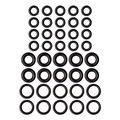
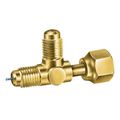

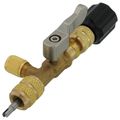

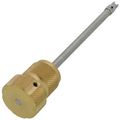
Core removal tools are refrigeration hand tools that let a technician pull and replace the valve core in an access port without releasing the full refrigerant charge from the system. A built-in valve on the tool seals against the port once it threads on, so the core can be backed out, cleared of debris, or swapped for a new one while refrigerant stays contained on the other side of that seal. Techs reach for these tools most often when a core is leaking, clogged with debris, or damaged from a previous gauge connection, since a bad core is a common cause of a system that won't hold pressure during a leak check. Choosing a tool rated for the refrigerant and pressure range on the job, rather than grabbing whichever one is in the truck, keeps the removal process safe and keeps refrigerant loss to a minimum.
Subcategories
- Standard Core Removal Tools: Standard tools cover routine service work on common refrigerants and are the type most techs carry as a daily driver. They handle everyday core swaps without the added cost of a high-pressure-rated body. Most single-port designs fall into this category. They remain the most common tool pulled for a routine leak-check callback.
- High-Pressure Core Removal Tools: These tools use a reinforced body and seal rated for higher-pressure refrigerants, where a standard tool risks failing under load. Matching the tool's pressure rating to the refrigerant actually run on the job matters more here than with lower-pressure systems. Using an under-rated tool on a high-pressure system is a common cause of a tool failure mid-job. Techs working primarily on newer high-pressure equipment often carry this style as their default.
- Core Removal Tools with Vacuum-Rated Seals: These tools hold a tighter seal designed to minimize air intrusion and refrigerant loss during the core swap itself. That tighter seal matters most on jobs where an accurate final charge is critical. Techs doing precision charging work tend to prefer this style over a standard seal. The tighter tolerance also reduces the chance of moisture entering the system during the swap.
- Replacement Cores and Core Removal Tool Kits: These kits bundle a removal tool with an assortment of new valve cores in common sizes. Carrying a stocked kit avoids a second trip to the truck or supply house mid-job. Techs who do frequent core swaps as part of routine maintenance calls tend to favor the kit format over buying the tool and cores separately.
Buying Guide
Pressure rating is the first thing to confirm before buying a core removal tool, since higher-pressure refrigerants put more stress on both the tool body and its internal seal. A tool rated for older, lower-pressure refrigerants can fail or leak when used on a high-pressure system, so matching the tool to the refrigerants actually run on the job is worth checking against the manufacturer's rating rather than assuming.
Seal quality determines how much refrigerant escapes during the actual core swap. Core Removal Tools with a tighter internal seal lose less refrigerant to atmosphere while the core is out, which matters both for environmental compliance and for keeping the system's charge accurate once the new core goes back in.
Port compatibility is worth checking too, since some tools are built for standard quarter-turn access valves while others are sized for different fitting styles found on older equipment. A tool that doesn't thread on cleanly risks damaging the port threads, which turns a simple core swap into a bigger repair.
Kits that bundle a removal tool with a stock of replacement cores save a trip back to the truck mid-job. Keeping a range of core sizes on hand, rather than just the tool, is what actually gets the job finished in one visit rather than two.
Frequently Asked Questions
Why would a technician need to remove a valve core without releasing the refrigerant charge?
Removing a core without dropping the charge saves the time and cost of a full recovery and recharge just to replace a single leaking or clogged core. The tool seals against the port so the rest of the system stays charged while the core is out. This is standard practice for a routine core replacement on an otherwise functioning system.
What's the difference between a standard and high-pressure core removal tool?
A high-pressure tool uses a reinforced body and seal built to handle higher-pressure refrigerants without failing under load. A standard tool is rated for lower-pressure applications and can leak or fail if used outside that rating. Checking the tool's pressure rating against the refrigerant on the job avoids that mismatch.
How do I know when a valve core needs replacing?
A core that won't hold pressure during a leak check, shows visible debris or damage, or has been connected to gauges repeatedly over time is a good candidate for replacement. A slow, unexplained pressure drop on an otherwise sealed system often traces back to a worn core rather than a larger leak.
Can the same core removal tool be used on both high side and low side ports?
Most core removal tools work on either port as long as the port size and thread match, since the tool itself isn't side-specific. The pressure rating of the tool still needs to cover whichever side sees the higher pressure during operation.
What causes a core removal tool itself to leak during use?
A worn or damaged internal seal is the most common cause, often from repeated use past its service life or from being used on pressures beyond its rating. Cross-threading the tool onto the port during a rushed installation is another common cause worth ruling out first.
