




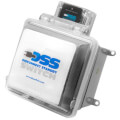
DSSwitch

 --%3E %3Csvg version='1.1' id='No-RB' xmlns='http://www.w3.org/2000/svg' xmlns:xlink='http://www.w3.org/1999/xlink' x='0px' y='0px' viewBox='0 0 100 100' enable-background='new 0 0 100 100' xml:space='preserve'%3E %3Cpath fill='%23CECECE' d='M79.44,0.95H20.56C9.78,0.95,0.95,9.78,0.95,20.56v58.87c0,10.79,8.82,19.61,19.61,19.61h58.87 c10.79,0,19.61-8.83,19.61-19.61V20.56C99.05,9.78,90.22,0.95,79.44,0.95z M65.38,58.24l9.38,29.58L49.69,69.78L24.5,87.82 l9.34-29.6L8.8,39.6l30.73-0.17c0,0,6.98-19.61,10-28.93c0.54,1.36,9.88,29.1,9.88,29.1H91.2L65.38,58.24z'/%3E %3C/svg%3E)

DSSwitch is a line of disconnect standby switches built for HVAC and refrigeration installations that need a code-required disconnect alongside a generator standby option. The line is distributed exclusively through Market Air. DSSwitch units let a homeowner or facility run a single circuit, such as an air conditioner, heat pump, or refrigerator, from a portable generator without routing power through the main electrical panel.
The product family was originally developed for mini-split and ductless HVAC systems, where a compact disconnect with built-in generator input solves a common installation gap. DSSwitch products serve residential and light commercial HVAC applications across North America, wherever a technician needs a single-circuit disconnect that also handles backup power.
Product Lines
SupplyHouse carries the core DSSwitch models covering the range of amperage and voltage a technician is likely to need. The DSS15 handles 120 volt, 15 amp circuits, the DSS25 covers 240 volt, 25 amp applications, and the DSS30 steps up to 240 volt, 30 amp service.
Each model combines a standard disconnect switch with a generator standby input. A single unit performs the disconnect function required by code and gives the system a dedicated port for backup power. Indicator lights on every model show at a glance whether the circuit is running on utility power or generator power, which cuts down on troubleshooting calls after a storm.
Why Contractors Specify DSSwitch
Contractors reach for DSSwitch when a customer wants generator backup for one circuit, like a mini-split or a refrigerator. It avoids the cost and complexity of a whole-house transfer switch and generator. Because the generator input is built into the disconnect itself, the job needs no separate transfer switch. This simplifies the install and keeps the electrical panel untouched.
The single-unit approach also appeals to customers facing zoning or lot-line restrictions that rule out a permanently installed whole-home generator. For ductless and mini-split installations specifically, a DSSwitch gives contractors a disconnect that already accounts for the generator scenario many customers ask about after a power outage.
How to Choose DSSwitch Products
Selecting the right DSSwitch model starts with matching voltage and amperage to the connected equipment. A 120 volt appliance or small single-phase load calls for the DSS15. Larger single-phase HVAC equipment on a 240 volt circuit needs either the DSS25 or DSS30, depending on the amp draw.
Contractors should also confirm the customer's portable generator can supply the voltage and amperage the chosen DSSwitch model is rated for. Undersizing the generator relative to the switch's rating defeats the purpose of the standby input. For mini-split and ductless retrofits, checking the DSSwitch against the outdoor unit's nameplate amperage keeps the installation code-compliant and avoids a return trip to swap the switch.
Frequently Asked Questions
Does a DSSwitch replace a standard disconnect switch?
Yes. A DSSwitch functions as the code-required disconnect switch for the circuit and adds a generator standby input. It takes the place of a standard disconnect rather than adding to it.
What size generator is needed to pair with a DSSwitch?
The generator has to match the voltage and amperage of the DSSwitch model installed. Confirm the generator output against the DSS15, DSS25, or DSS30 rating before connecting it.
Can a DSSwitch power more than one circuit from a single generator connection?
No, each DSSwitch is designed for a single circuit, such as one mini-split condenser or one refrigerator, not a whole-house load.
Where are DSSwitch products distributed?
DSSwitch products are distributed exclusively through Market Air. SupplyHouse carries the core DSSwitch models, including the DSS15, DSS25, and DSS30.
Is a DSSwitch a good fit for mini-split installations?
Yes, the DSSwitch line was originally developed for mini-split and ductless systems, so its disconnect and generator standby functions line up well with those installation requirements.
