




Filters
SORT
Product Availability –
Brand –
Size –
Length (Inches) –
Review Score –
 --%3E %3Csvg version='1.1' id='Fill' xmlns='http://www.w3.org/2000/svg' xmlns:xlink='http://www.w3.org/1999/xlink' x='0px' y='0px' viewBox='0 0 100 100' enable-background='new 0 0 100 100' xml:space='preserve'%3E %3Cpath fill='%23F15C02' d='M79.44,0.95H20.56C9.78,0.95,0.95,9.78,0.95,20.56v58.87c0,10.79,8.82,19.61,19.61,19.61h58.87 c10.79,0,19.61-8.83,19.61-19.61V20.56C99.05,9.78,90.22,0.95,79.44,0.95z M65.38,58.24l9.38,29.58L49.69,69.78L24.5,87.82 l9.34-29.6L8.8,39.6l30.73-0.17c0,0,6.98-19.61,10-28.93c0.54,1.36,9.88,29.1,9.88,29.1H91.2L65.38,58.24z'/%3E %3C/svg%3E)
 --%3E %3Csvg version='1.1' id='With-RB' xmlns='http://www.w3.org/2000/svg' xmlns:xlink='http://www.w3.org/1999/xlink' x='0px' y='0px' viewBox='0 0 100 100' enable-background='new 0 0 100 100' xml:space='preserve'%3E %3Cpath fill='%23FBC8B4' d='M79.44,0.95H20.56C9.78,0.95,0.95,9.78,0.95,20.56v58.87c0,10.79,8.82,19.61,19.61,19.61h58.87 c10.79,0,19.61-8.83,19.61-19.61V20.56C99.05,9.78,90.22,0.95,79.44,0.95z M65.38,58.24l9.38,29.58L49.69,69.78L24.5,87.82 l9.34-29.6L8.8,39.6l30.73-0.17c0,0,6.98-19.61,10-28.93c0.54,1.36,9.88,29.1,9.88,29.1H91.2L65.38,58.24z'/%3E %3C/svg%3E)
Price Range –
Dielectric Nipples



 --%3E %3Csvg version='1.1' id='Half' xmlns='http://www.w3.org/2000/svg' xmlns:xlink='http://www.w3.org/1999/xlink' x='0px' y='0px' viewBox='0 0 100 100' enable-background='new 0 0 100 100' xml:space='preserve'%3E %3Cg%3E %3Cpath fill='%23F15C02' d='M30.05,70.23l3.79-12.01L8.8,39.6l30.73-0.17c0,0,6.98-19.61,10-28.93c0.54,1.36,9.88,29.1,9.88,29.1h1.58 L93.71,7.18c-3.58-3.82-8.66-6.23-14.28-6.23H20.56C9.78,0.95,0.95,9.78,0.95,20.56v58.87c0,5.41,2.22,10.32,5.79,13.88 L30.05,70.23z'/%3E %3C/g%3E %3Cpath fill='%23FBC8B4' d='M93.71,7.18L60.98,39.6H91.2L65.38,58.24l9.38,29.58L49.69,69.78L24.5,87.82l5.55-17.59L6.75,93.32 c3.55,3.54,8.44,5.73,13.82,5.73h58.87c10.79,0,19.61-8.83,19.61-19.61V20.56C99.05,15.4,97.01,10.69,93.71,7.18z'/%3E %3C/svg%3E)
 --%3E %3Csvg version='1.1' id='No-RB' xmlns='http://www.w3.org/2000/svg' xmlns:xlink='http://www.w3.org/1999/xlink' x='0px' y='0px' viewBox='0 0 100 100' enable-background='new 0 0 100 100' xml:space='preserve'%3E %3Cpath fill='%23CECECE' d='M79.44,0.95H20.56C9.78,0.95,0.95,9.78,0.95,20.56v58.87c0,10.79,8.82,19.61,19.61,19.61h58.87 c10.79,0,19.61-8.83,19.61-19.61V20.56C99.05,9.78,90.22,0.95,79.44,0.95z M65.38,58.24l9.38,29.58L49.69,69.78L24.5,87.82 l9.34-29.6L8.8,39.6l30.73-0.17c0,0,6.98-19.61,10-28.93c0.54,1.36,9.88,29.1,9.88,29.1H91.2L65.38,58.24z'/%3E %3C/svg%3E)
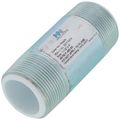
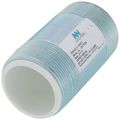
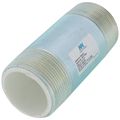
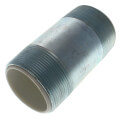
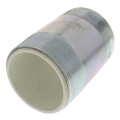

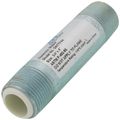
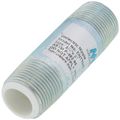
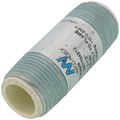
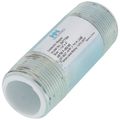
Dielectric nipples are threaded pipe fittings that isolate a length of copper or brass piping from a length of steel or iron piping to stop the galvanic corrosion that occurs when dissimilar metals sit in direct electrical contact inside a water line. A dielectric nipple accomplishes this with a non-conductive lining or gasket built into the fitting body, breaking the electrical path between the two metals while still allowing water to pass through. Water heaters are the most common installation point, since a steel or iron supply line often connects directly to a copper heat exchanger or copper distribution piping just above the tank. Skipping a dielectric connection at a dissimilar-metal joint can lead to pinhole leaks and fitting failure well before the rest of the piping system shows wear, so plumbers treat this fitting as standard practice rather than an optional upgrade.
Subcategories
- Copper x MIP Dielectric Nipples: Copper by male iron pipe dielectric nipples connect a sweat or press copper line to a threaded steel or iron fitting, most commonly at a water heater's cold and hot connections. The copper end accepts standard soldering or press techniques, while the threaded end seals into the tank or steel pipe. Plumbers specify this configuration most frequently on residential water heater installations.
- Steel x Copper Dielectric Nipples: Steel by copper dielectric nipples reverse the connection, giving a threaded steel pipe end on one side and a copper-compatible end on the other, useful when the existing supply piping is steel and needs to transition to copper distribution. Matching the correct thread size to the existing pipe avoids a mismatched connection at the transition point. The transition style shows up often in older homes being repiped in stages.
- Lead-Free Dielectric Nipples: Lead-free dielectric nipples meet the reduced-lead requirements now standard for fittings in potable water systems. Specifying a lead-free fitting is required on any installation feeding drinking water, and most current dielectric nipple production has shifted to lead-free compliant materials as a result. Checking a fitting's certification marking confirms it meets the applicable lead-free standard before installation.
- Dielectric Unions: Dielectric unions perform the same corrosion-isolating function as a dielectric nipple but use a union connection instead of a fixed nipple body, which allows the joint to be disconnected without cutting pipe. The union style is useful anywhere future serviceability matters more than a permanent connection, such as at a water heater that will eventually need replacement. A union's gasket or lining needs periodic inspection since it does the same electrical isolation work as a nipple's internal lining.
Buying Guide
Selecting a dielectric nipple starts with identifying the two pipe materials being joined and confirming which end of the fitting needs to be threaded versus copper-compatible. Getting this orientation backward means ordering a second fitting once the mismatch shows up on the job.
Thread size and pipe size need to match the existing connections exactly, which is straightforward on new construction but worth double-checking on a repair or replacement where the original fitting may have been swapped previously for a different size.
For any installation on a potable water line, confirming lead-free certification on the dielectric nipple isn't optional under current plumbing code in most jurisdictions. Checking the certification marking stamped on the fitting body confirms compliance before it goes into the wall or behind a water heater.
Choosing between a fixed dielectric nipple and a dielectric union comes down to future serviceability. A union costs a bit more but allows the connection to be broken without cutting pipe, which is worth the extra expense at a connection point like a water heater that will need replacement down the road.
Frequently Asked Questions
Why do I need a dielectric nipple at a water heater connection?
A water heater typically joins a steel or iron supply line to copper piping, and those dissimilar metals in direct contact cause galvanic corrosion. A dielectric nipple breaks the electrical path between the two metals while still allowing water flow.
What happens if a dielectric nipple isn't installed at a dissimilar-metal joint?
Galvanic corrosion can develop at the joint, leading to pinhole leaks and fitting failure well before the surrounding piping shows any wear, since the corrosion concentrates right at the point of metal-to-metal contact.
Is a dielectric nipple the same as a dielectric union?
Both isolate dissimilar metals from electrical contact, but a nipple is a fixed fitting while a union can be disconnected without cutting pipe, making the union a better choice where future serviceability matters.
Do dielectric nipples need to be lead-free?
Yes, for any potable water application. Current plumbing code in most jurisdictions requires lead-free certified fittings on drinking water lines, and checking the certification marking confirms compliance before installation.
How do I know which end of a dielectric nipple goes where?
Identify which pipe material is on each side of the connection first. Most dielectric nipples have one threaded end for steel or iron pipe and one copper-compatible end, and getting the orientation backward means the fitting won't seat correctly on either side.
