




'/%3E%3C/svg%3E)
Hover image to zoom
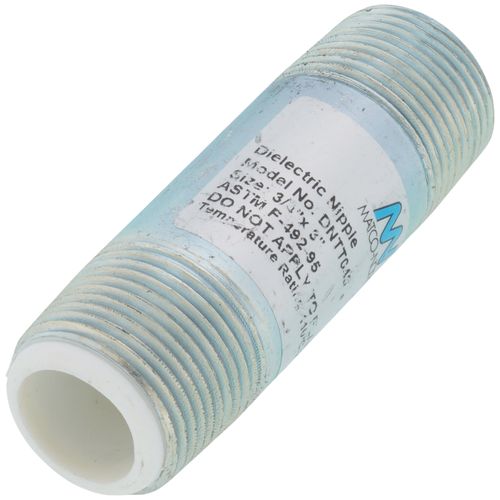
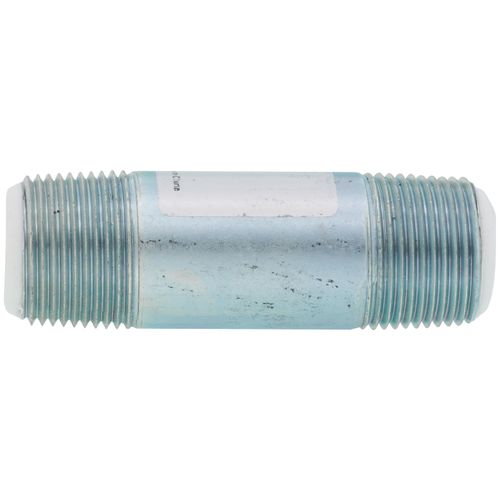
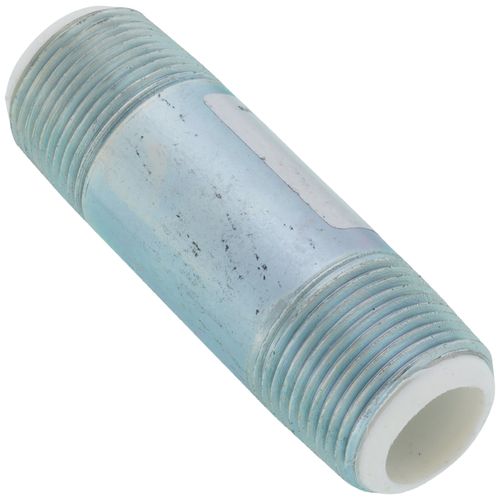
3/4" x 3" Galvanized Steel Dielectric Nipple w/ Pex Insulator
 --%3E %3Csvg version='1.1' id='Fill' xmlns='http://www.w3.org/2000/svg' xmlns:xlink='http://www.w3.org/1999/xlink' x='0px' y='0px' viewBox='0 0 100 100' enable-background='new 0 0 100 100' xml:space='preserve'%3E %3Cpath fill='%23F15C02' d='M79.44,0.95H20.56C9.78,0.95,0.95,9.78,0.95,20.56v58.87c0,10.79,8.82,19.61,19.61,19.61h58.87 c10.79,0,19.61-8.83,19.61-19.61V20.56C99.05,9.78,90.22,0.95,79.44,0.95z M65.38,58.24l9.38,29.58L49.69,69.78L24.5,87.82 l9.34-29.6L8.8,39.6l30.73-0.17c0,0,6.98-19.61,10-28.93c0.54,1.36,9.88,29.1,9.88,29.1H91.2L65.38,58.24z'/%3E %3C/svg%3E)
Hover image to zoom
$5.59 each
BOX UP & SAVE 5%
$132.75 box of 25
$5.31 each

In Stock

Order by today, receive Monday
MANUALS (1)
This item replaces: DEN075-300
Free Shipping On orders over $99
Easy Returns No restocking fee for 90 days
Product Highlights
–

3/4" x 3"

Galvanized Steel

180°F @ 250 psi

250 MAX PSI
Description
–
Features:
- Galvanized
- Dielectric nipple
- Thread x Thread
- 3/4" x 3"
- Used to properly connect different metal piping
- Prevents the deterioration of the pipe connections and stray induced electrical currents
- ASTM A-53 Galvanized steel schedule 40 nipples available in thread x thread, groove x groove, and thread x groove.
- Meets ASTM F-492-95 and are temperature rated 110 C. / 230 F.
Specs
–
| Size: | 3/4" x 3" |
|---|---|
| Material: | Galvanized Steel |
| Application: | Schedule 40 |
| Product Type: | Dielectric Nipple |
| Pressure Rating: | 180°F @ 250 psi |
| Max Pressure (PSI): | 250 |


Questions?
Speak with a real person who will go out of the way to help!
Call or text 888-757-4774
Monday – Thursday
8am–7:45pm
Friday
9am–7:45pm
Saturday – Sunday
9am–5:45pm
You May Also Need
Product Reviews
5 out of 2 reviews
100% would recommend this product
5 star
100%
4 star
0%
3 star
0%
2 star
0%
1 star
0%
Showing 1-2 of 2 reviews
Perfect nipple to prevent corrosion at water heater connect
My stepson's electric water heater is over 20 years old and he and I tuned it up. We cut the existing CPVC piping that was piped directly into the water heater and installed these dielectric nipples on the cold and hot water inlet and outlet on the water heater. We then installed two FIP stainless steel flex hoses onto these new dielectric nipples. The flex hoses were then connected to two new stainless steel-to-CPVC adapters that we installed on the cut CPVC pipes. All these new parts were purchased from SupplyHouse and all work perfectly!
Fishman
Conway, SC
2 years ago
Verified Buyer
Was this review helpful to you?
Nipple isolates steel from copper
I researched water heaters and how to avoid corrosion and electrolisis, and learned that dielectric nipples are a good way (better way) to go. In the past I had used dielectric unions, but they do corrode. I like that these nipples have a sturdy-looking pex insulator inside them. The nipple went into the port on the water heater, I used it on both hot and cold, and on the drain port. Next, I used a threaded brass coupling (or if I wanted an elbow, I used a threaded brass elbow). Then I used a copper male adaptor and ran the copper lines. I soldered the copper pipe to the male adaptor before screwing it to the brass fittings. I feel that I will not have a problem with electrolisis or corrosion since the pex insulator separates dis-similar metals. There is separation (and insulation) of the electrical charge generated by having dis-similar metals in water and any corosion will be away from the water heater. I like that you use this nipple at the water heater tank,then brass, then copper. (I am talking about common glass-lined steel tanks) No need for this if you have a stainless steel tank.
For the drain of the water heater, I removed the hose bib drain which comes with the tank, but has a small diameter opening, and replaced it with a full-port ball valve. I used a dielectric nipple for the same reason already mentioned.
I also plan to use these nipples when plumbing hose bibs in my garden where I use galvanized pipes to support the hose bib. I am in coastal california, and I don't need a frost-proof-hydrant. My underground pipe is PVC, burried 18 inches, and where the pvc attaches to galvanized pipe for the riser, this is what I do. I use a glue pvc to male adapter, then I use a threaded galv coupling, then a 12 inch or longer galv nipple, then a galv 90 elbow, then a 4 foot long galv pipe which is the riser that sticks out of the ground and holds the hose bib, then I use a galv coupling, then the dielectric nipple, then a brass T, then I install a hose bib on the t port of the T, and on the straight port of the T, I use a brass nipple, and a hose bib that has a downward pointing bib (called garden hose bib). Maybe the dielectric nipple isn't necessary here, but in the future I will use them whenever it makes sence. I have seen plenty of corroded galvanized pipes, so when plumbing with galvanized, it makes sence to use dielectric nipples
solar hot water
San Francisco, CA
14 years ago
Verified Buyer
Was this review helpful to you?
Free Shipping
On orders over $99
We offer flexible shipping and scheduling options, up-to-date delivery estimates, and free ground shipping on any order over $99 to make sure your order gets to you on-time, for less.
Shipping PolicyEasy Returns
Returning items is as simple as 1-2-3
Ordered the wrong product? Item damaged in transit? Our 3-step process makes returning products easy – even up to a year after purchase – with no restocking fees on returns made within 90 days.
Return Policy