




Electric Baseboard Heaters
Electric baseboard heaters are self-contained heating units installed along the base of a wall. They use electric resistance elements to warm a room, without needing a central furnace, boiler, or duct system. They're commonly used as the primary heat source in additions, sunrooms, and other spaces where extending existing ductwork or hydronic piping isn't practical. They also serve as supplemental heat in rooms that run cold relative to the rest of a building.
Because each unit heats independently, a room's heater can be sized to that room's square footage and insulation level without affecting heating elsewhere in the building. Thermostats can be set per room or per zone. This category includes the heating units themselves along with the smart and standard thermostats used to control them.


Subcategories
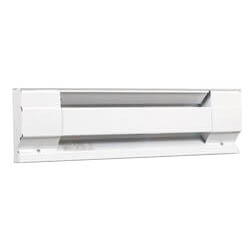
- Cadet Electric Baseboard Heaters: Cadet electric baseboard heaters are self-contained 120-volt or 240-volt units sized by wattage to match a room's heating load. Longer units generally provide more heat output for larger rooms. They mount along the wall at floor level and connect to a dedicated circuit sized for the unit's electrical draw. Compatible thermostats, whether built into the unit or wired separately, control room temperature by cycling the heating element on and off.
- Mysa Smart Electric Baseboard Thermostats: Mysa smart electric baseboard thermostats replace a standard mechanical or digital thermostat with a Wi-Fi connected model. The thermostat can be controlled from a smartphone app and scheduled by room or by time of day. They're designed to work with line-voltage electric baseboard and convector heaters rather than low-voltage systems, so confirming voltage compatibility with the existing heater is a necessary step before installation. Multi-room scheduling lets a homeowner or property manager set different temperatures across several zones from a single app.
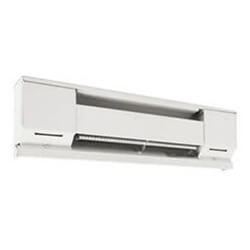
- QMark Electric Baseboard Heaters: QMark electric baseboard heaters are line-voltage units built for both residential and light commercial applications. They are available in a range of lengths and wattages to match different room sizes and heat load calculations. Many models include a built-in thermostat option in addition to compatibility with separately wired wall thermostats. Commercial-grade options in this line are built to hold up under more frequent use than a typical residential heater sees.
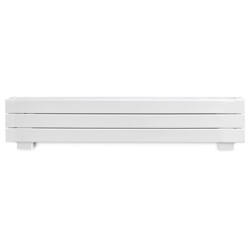
- Runtal Electric Baseboard Heaters: Runtal electric baseboard heaters use a hydronic-style cast aluminum or steel element heated electrically rather than by circulating hot water. This gives them a similar heat output profile to a hydronic baseboard without the piping. Because the heating element retains warmth after the electrical element cycles off, they provide a steadier, less fluctuating heat than some standard electric resistance units. They're sized by length and wattage to match room heat load calculations, the same way other baseboard heaters in this category are.
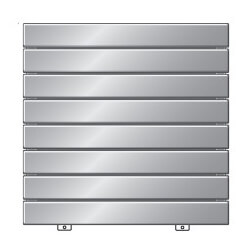
- Runtal Electric Wall Panel Radiators: Runtal electric wall panel radiators mount flat against a wall rather than along the floor at baseboard height. This gives them a different installation profile and aesthetic than standard baseboard units, while they still use electric resistance heating. Their panel design radiates heat across a broader surface area than a baseboard unit of similar wattage. They're specified where a homeowner or designer wants a lower-profile, wall-mounted heating fixture instead of a traditional baseboard unit.
Buying Guide
Sizing electric baseboard heaters starts with a heat load calculation for the room. The calculation accounts for square footage, ceiling height, insulation level, and window area. An undersized unit will run constantly without reaching the target temperature, and an oversized one cycles more than necessary.
Voltage matters before length or wattage: 120-volt and 240-volt units aren't interchangeable on the same circuit. Confirming which voltage the existing wiring supports avoids ordering a unit that can't be installed without rewiring.
Thermostat choice affects day-to-day comfort and control as much as the heater itself. A smart, Wi-Fi-connected thermostat allows remote scheduling and per-room adjustment, while a standard line-voltage thermostat offers simpler, more straightforward operation without an app or network dependency.
Wall panel radiators are worth considering as an alternative to a standard baseboard unit where floor-level clearance is limited or a lower-profile, wall-mounted fixture better suits the room's layout.
For a whole-home installation with multiple rooms and zones, standardizing on one heater line simplifies thermostat compatibility. It also makes future replacements or repairs more straightforward.
Frequently Asked Questions
How is an electric baseboard heater sized for a room?
Sizing is based on a heat load calculation. The calculation factors in square footage, ceiling height, insulation level, and window area. The result is matched to a heater length and wattage rated to cover that load.
Can any thermostat control any electric baseboard heater?
Not always. Voltage compatibility between the thermostat and heater needs to be confirmed first, since line-voltage thermostats like Mysa's are built for line-voltage baseboard and convector heaters rather than low-voltage systems.
What's the difference between a baseboard heater and a wall panel radiator?
Both use electric resistance heat. A baseboard heater mounts at floor level along the wall, while a wall panel radiator mounts flat against the wall higher up. This gives the wall panel radiator a different installation profile and heat distribution pattern.
Do electric baseboard heaters need a dedicated circuit?
Most units require a dedicated circuit sized to the heater's electrical draw, which depends on its voltage and wattage. Checking the unit's electrical specifications against the available circuit capacity is a necessary step before installation.
Can a smart thermostat control multiple baseboard heaters at once?
Smart thermostats like Mysa are typically installed one per heating zone. Their companion apps let a user schedule and adjust multiple thermostats across different rooms from a single interface.
Resources

 --%3E %3C!DOCTYPE svg PUBLIC '-//W3C//DTD SVG 1.1//EN' 'http://www.w3.org/Graphics/SVG/1.1/DTD/svg11.dtd'%3E %3Csvg version='1.1' id='Layer_1' xmlns='http://www.w3.org/2000/svg' xmlns:xlink='http://www.w3.org/1999/xlink' x='0px' y='0px' width='90px' height='90px' viewBox='0 0 90 90' enable-background='new 0 0 90 90' xml:space='preserve'%3E %3Crect x='27' y='23' fill='%23FFFFFF' width='43' height='44'/%3E %3Cg%3E %3Cdefs%3E %3Crect id='SVGID_1_' width='90' height='90'/%3E %3C/defs%3E %3CclipPath id='SVGID_2_'%3E %3Cuse xlink:href='%23SVGID_1_' overflow='visible'/%3E %3C/clipPath%3E %3Cpath clip-path='url(%23SVGID_2_)' fill='%234186AD' d='M45,0C20.1,0,0,20.1,0,45c0,24.9,20.1,45,45,45c24.9,0,45-20.1,45-45 C90,20.1,69.9,0,45,0'/%3E %3C/g%3E %3Cpath fill='%23FFFFFF' d='M60.6,47.4l-22.5,14c-0.5,0.3-1,0.399-1.5,0.399s-0.9-0.1-1.4-0.399c-0.9-0.5-1.4-1.4-1.4-2.5v-28 c0-1,0.6-2,1.4-2.5c0.9-0.5,2-0.5,2.9,0.1l22.5,14.1C61.4,43.1,61.9,44,61.9,45S61.4,46.9,60.6,47.4'/%3E %3C/svg%3E)
Subcategories
- Cadet Electric Baseboard Heaters: Cadet electric baseboard heaters are self-contained 120-volt or 240-volt units sized by wattage to match a room's heating load. Longer units generally provide more heat output for larger rooms. They mount along the wall at floor level and connect to a dedicated circuit sized for the unit's electrical draw. Compatible thermostats, whether built into the unit or wired separately, control room temperature by cycling the heating element on and off.
- Mysa Smart Electric Baseboard Thermostats: Mysa smart electric baseboard thermostats replace a standard mechanical or digital thermostat with a Wi-Fi connected model. The thermostat can be controlled from a smartphone app and scheduled by room or by time of day. They're designed to work with line-voltage electric baseboard and convector heaters rather than low-voltage systems, so confirming voltage compatibility with the existing heater is a necessary step before installation. Multi-room scheduling lets a homeowner or property manager set different temperatures across several zones from a single app.
- QMark Electric Baseboard Heaters: QMark electric baseboard heaters are line-voltage units built for both residential and light commercial applications. They are available in a range of lengths and wattages to match different room sizes and heat load calculations. Many models include a built-in thermostat option in addition to compatibility with separately wired wall thermostats. Commercial-grade options in this line are built to hold up under more frequent use than a typical residential heater sees.
- Runtal Electric Baseboard Heaters: Runtal electric baseboard heaters use a hydronic-style cast aluminum or steel element heated electrically rather than by circulating hot water. This gives them a similar heat output profile to a hydronic baseboard without the piping. Because the heating element retains warmth after the electrical element cycles off, they provide a steadier, less fluctuating heat than some standard electric resistance units. They're sized by length and wattage to match room heat load calculations, the same way other baseboard heaters in this category are.
- Runtal Electric Wall Panel Radiators: Runtal electric wall panel radiators mount flat against a wall rather than along the floor at baseboard height. This gives them a different installation profile and aesthetic than standard baseboard units, while they still use electric resistance heating. Their panel design radiates heat across a broader surface area than a baseboard unit of similar wattage. They're specified where a homeowner or designer wants a lower-profile, wall-mounted heating fixture instead of a traditional baseboard unit.
Buying Guide
Sizing electric baseboard heaters starts with a heat load calculation for the room. The calculation accounts for square footage, ceiling height, insulation level, and window area. An undersized unit will run constantly without reaching the target temperature, and an oversized one cycles more than necessary.
Voltage matters before length or wattage: 120-volt and 240-volt units aren't interchangeable on the same circuit. Confirming which voltage the existing wiring supports avoids ordering a unit that can't be installed without rewiring.
Thermostat choice affects day-to-day comfort and control as much as the heater itself. A smart, Wi-Fi-connected thermostat allows remote scheduling and per-room adjustment, while a standard line-voltage thermostat offers simpler, more straightforward operation without an app or network dependency.
Wall panel radiators are worth considering as an alternative to a standard baseboard unit where floor-level clearance is limited or a lower-profile, wall-mounted fixture better suits the room's layout.
For a whole-home installation with multiple rooms and zones, standardizing on one heater line simplifies thermostat compatibility. It also makes future replacements or repairs more straightforward.
Frequently Asked Questions
How is an electric baseboard heater sized for a room?
Sizing is based on a heat load calculation. The calculation factors in square footage, ceiling height, insulation level, and window area. The result is matched to a heater length and wattage rated to cover that load.
Can any thermostat control any electric baseboard heater?
Not always. Voltage compatibility between the thermostat and heater needs to be confirmed first, since line-voltage thermostats like Mysa's are built for line-voltage baseboard and convector heaters rather than low-voltage systems.
What's the difference between a baseboard heater and a wall panel radiator?
Both use electric resistance heat. A baseboard heater mounts at floor level along the wall, while a wall panel radiator mounts flat against the wall higher up. This gives the wall panel radiator a different installation profile and heat distribution pattern.
Do electric baseboard heaters need a dedicated circuit?
Most units require a dedicated circuit sized to the heater's electrical draw, which depends on its voltage and wattage. Checking the unit's electrical specifications against the available circuit capacity is a necessary step before installation.
Can a smart thermostat control multiple baseboard heaters at once?
Smart thermostats like Mysa are typically installed one per heating zone. Their companion apps let a user schedule and adjust multiple thermostats across different rooms from a single interface.