




Baseboard Heaters (Hydronic & Electric)
Baseboard heaters run along the base of a wall to provide zone heating for a room, either through hydronic hot water elements or self-contained electric units. The category spans hydronic lines like SlantFin and Buderus alongside electric baseboard heaters that need no boiler or piping.
Choosing between hydronic and electric baseboard heat usually comes down to whether a hot water system already serves the building, since hydronic units need a connection to an existing boiler loop. Electric units install faster in additions or rooms without existing hydronic piping, at the tradeoff of higher electricity use.
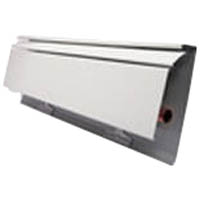


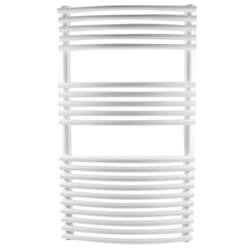

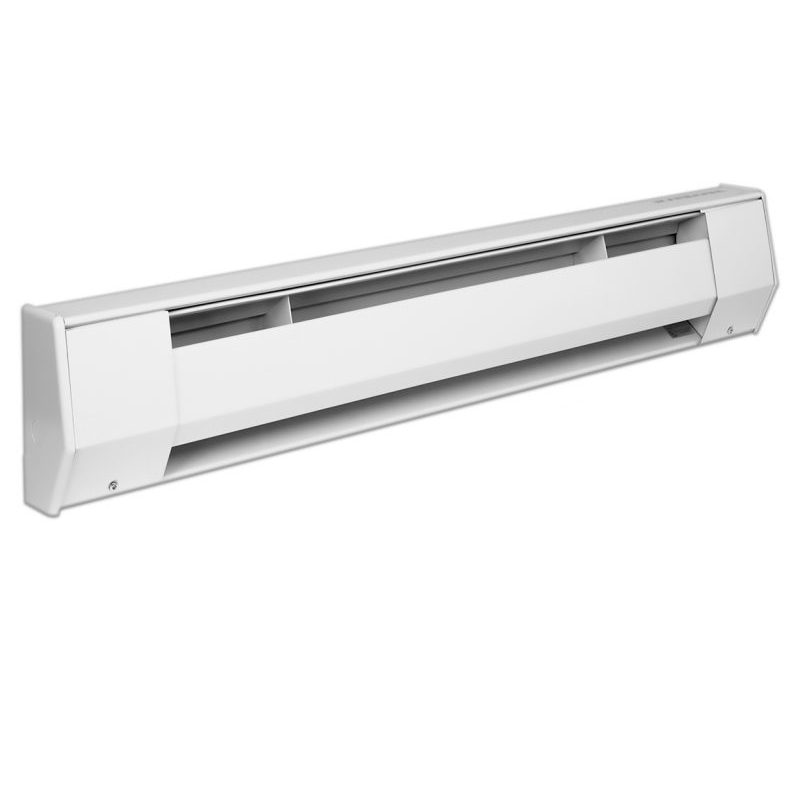

SlantFin Baseboard Heaters are hydronic units designed for hot water and steam systems, built around a finned copper heating element enclosed in an 18-gauge steel cabinet. SlantFin produces several product lines suited to different installation tiers: the Baseline 2000 for tract housing and renovations, the Fine/Line 30A for residential and light commercial applications, and the Multi/Pak 80 for deluxe residential and broader commercial use. End caps are sold separately on all SlantFin baseboard heater models. Available lengths max out at 8 feet due to shipping constraints.
Electric Baseboard Heaters are self-contained units that require no boiler or piping, making them the standard choice for additions, apartments, and spaces without existing hydronic infrastructure. Electric baseboard heaters use a sheathed heating element immersed in heat-transfer liquid inside a sealed copper tube, which prolongs heat output after the element cycles off. QMark and Cadet electric baseboard heaters are used across residential homes, apartments, mobile homes, and light commercial and institutional applications.
Runtal Baseboard Radiators are hydronic panel radiators designed as attractive, low-profile replacements for fin-tube or cast iron baseboards. Runtal baseboard radiators can supplement or replace electric, radiant, or hydronic floor heating systems, and their slim profile makes them a common choice for retrofit and design-conscious applications. Runtal panel construction runs hot water through steel panels rather than finned copper tubes, producing radiant warmth in addition to convection.
Buderus Panel Radiators are European-style hydronic steel panel radiators that connect to hot water heating systems and deliver heat through a combination of radiation and convection. Panel radiators operate efficiently at lower water temperatures than fin-tube baseboard heaters, making them a compatible choice for condensing boiler systems. Buderus panel radiators are available in a range of heights and widths, allowing output to be matched to room load without running baseboard along every wall.
Baseboard Heater Covers are replacement enclosures for existing hydronic baseboard heating elements that no longer need to be replaced but whose covers are dented, discolored, or outdated. Covers are available in standard lengths and painted finishes to match or update existing trim. SlantFin cover-only models do not include a heating element and are suited for situations where the existing element is still functional.
King Electric Baseboard Heaters are 240V and 120V electric units designed for residential and light commercial use, sized by wattage to heat rooms based on square footage. King electric baseboard heaters are available in multiple wattages and lengths, with built-in or separate thermostat options. King products are commonly specified for additions, bedrooms, and supplemental zone heating where running new hydronic piping isn't practical.
The first decision is heat source: hydronic or electric. Hydronic baseboard heaters require a boiler and piping already in place. Electric baseboard heaters need only a dedicated circuit. For additions or spaces without existing hydronic infrastructure, electric is almost always the practical choice.
For hydronic systems, match the baseboard heater to the existing distribution setup. SlantFin hydronic baseboard heaters work with both hot water and steam. Runtal baseboard radiators and Buderus panel radiators are hot-water-only but operate well at lower supply temperatures common with condensing boilers, typically 140°F or below.
Electric baseboard heaters are sized by wattage. A common rule of thumb is 10 watts per square foot in a well-insulated space, though rooms with large windows or multiple exterior walls need more. King and QMark electric baseboard heaters are available in multiple wattage options. Thermostat compatibility matters: 240V units require a double-pole thermostat.
Hydronic vs. electric also affects operating cost. Hydronic baseboard heaters tied to an efficient boiler typically cost less to run than resistance electric heat, particularly in colder climates with long heating seasons. Electric baseboard heaters have lower upfront installation cost but higher per-BTU energy costs in most regions.
For replacement or renovation work, consider whether the enclosure or the element needs replacing. Baseboard heater covers let installers refresh the look of an existing system without replacing the heating element. SlantFin cover-only models are sized to fit over existing Fine/Line and Multi/Pak elements when the element is still functional.
What's the difference between hydronic and electric baseboard heaters?
Hydronic baseboard heaters use hot water circulated from a boiler to heat a finned copper tube inside the enclosure, warming the room through convection. Electric baseboard heaters use a resistance element immersed in heat-transfer fluid inside a sealed copper tube, drawing power directly from a dedicated electrical circuit. Hydronic baseboard heaters generally cost less to operate in cold climates with efficient boilers; electric baseboard heaters cost less to install and work in spaces without existing piping.
How do I size an electric baseboard heater for a room?
Electric baseboard heaters are sized in watts based on room square footage. A standard starting point is 10 watts per square foot for a well-insulated room. Rooms with multiple exterior walls, large windows, or high ceilings may need 12 to 15 watts per square foot. King and QMark electric baseboard heaters are available in multiple wattages so output can be matched to the calculated room load.
Can Runtal baseboard radiators replace fin-tube baseboard heaters?
Runtal baseboard radiators are specifically designed as replacements for fin-tube or cast iron baseboard heaters. Runtal panel radiators connect to the same hydronic supply and return piping as a standard fin-tube system and can often be retrofitted without major piping changes. Runtal baseboard radiators produce heat through both radiation and convection, which can deliver more even comfort than fin-tube convection alone.
Do SlantFin baseboard heaters come with end caps?
SlantFin baseboard heaters do not include end caps. End caps must be purchased separately for all SlantFin baseboard heater models, including the Baseline 2000, Fine/Line 30A, and Multi/Pak 80 series. SlantFin also offers cover-only models that replace the enclosure without the heating element, suited for situations where the existing element is still functional.
Are Buderus panel radiators compatible with condensing boilers?
Buderus panel radiators are well-suited for use with condensing boilers because they operate efficiently at lower supply water temperatures, typically 120°F to 140°F. Condensing boilers achieve their highest efficiency when return water temperatures stay below approximately 130°F, and panel radiators can be sized to deliver the required output at those temperatures. Fin-tube baseboard heaters typically require higher supply temperatures to deliver the same BTU output, which can reduce condensing boiler efficiency.
Resources
SlantFin Baseboard Heaters are hydronic units designed for hot water and steam systems, built around a finned copper heating element enclosed in an 18-gauge steel cabinet. SlantFin produces several product lines suited to different installation tiers: the Baseline 2000 for tract housing and renovations, the Fine/Line 30A for residential and light commercial applications, and the Multi/Pak 80 for deluxe residential and broader commercial use. End caps are sold separately on all SlantFin baseboard heater models. Available lengths max out at 8 feet due to shipping constraints.
Electric Baseboard Heaters are self-contained units that require no boiler or piping, making them the standard choice for additions, apartments, and spaces without existing hydronic infrastructure. Electric baseboard heaters use a sheathed heating element immersed in heat-transfer liquid inside a sealed copper tube, which prolongs heat output after the element cycles off. QMark and Cadet electric baseboard heaters are used across residential homes, apartments, mobile homes, and light commercial and institutional applications.
Runtal Baseboard Radiators are hydronic panel radiators designed as attractive, low-profile replacements for fin-tube or cast iron baseboards. Runtal baseboard radiators can supplement or replace electric, radiant, or hydronic floor heating systems, and their slim profile makes them a common choice for retrofit and design-conscious applications. Runtal panel construction runs hot water through steel panels rather than finned copper tubes, producing radiant warmth in addition to convection.
Buderus Panel Radiators are European-style hydronic steel panel radiators that connect to hot water heating systems and deliver heat through a combination of radiation and convection. Panel radiators operate efficiently at lower water temperatures than fin-tube baseboard heaters, making them a compatible choice for condensing boiler systems. Buderus panel radiators are available in a range of heights and widths, allowing output to be matched to room load without running baseboard along every wall.
Baseboard Heater Covers are replacement enclosures for existing hydronic baseboard heating elements that no longer need to be replaced but whose covers are dented, discolored, or outdated. Covers are available in standard lengths and painted finishes to match or update existing trim. SlantFin cover-only models do not include a heating element and are suited for situations where the existing element is still functional.
King Electric Baseboard Heaters are 240V and 120V electric units designed for residential and light commercial use, sized by wattage to heat rooms based on square footage. King electric baseboard heaters are available in multiple wattages and lengths, with built-in or separate thermostat options. King products are commonly specified for additions, bedrooms, and supplemental zone heating where running new hydronic piping isn't practical.
The first decision is heat source: hydronic or electric. Hydronic baseboard heaters require a boiler and piping already in place. Electric baseboard heaters need only a dedicated circuit. For additions or spaces without existing hydronic infrastructure, electric is almost always the practical choice.
For hydronic systems, match the baseboard heater to the existing distribution setup. SlantFin hydronic baseboard heaters work with both hot water and steam. Runtal baseboard radiators and Buderus panel radiators are hot-water-only but operate well at lower supply temperatures common with condensing boilers, typically 140°F or below.
Electric baseboard heaters are sized by wattage. A common rule of thumb is 10 watts per square foot in a well-insulated space, though rooms with large windows or multiple exterior walls need more. King and QMark electric baseboard heaters are available in multiple wattage options. Thermostat compatibility matters: 240V units require a double-pole thermostat.
Hydronic vs. electric also affects operating cost. Hydronic baseboard heaters tied to an efficient boiler typically cost less to run than resistance electric heat, particularly in colder climates with long heating seasons. Electric baseboard heaters have lower upfront installation cost but higher per-BTU energy costs in most regions.
For replacement or renovation work, consider whether the enclosure or the element needs replacing. Baseboard heater covers let installers refresh the look of an existing system without replacing the heating element. SlantFin cover-only models are sized to fit over existing Fine/Line and Multi/Pak elements when the element is still functional.
What's the difference between hydronic and electric baseboard heaters?
Hydronic baseboard heaters use hot water circulated from a boiler to heat a finned copper tube inside the enclosure, warming the room through convection. Electric baseboard heaters use a resistance element immersed in heat-transfer fluid inside a sealed copper tube, drawing power directly from a dedicated electrical circuit. Hydronic baseboard heaters generally cost less to operate in cold climates with efficient boilers; electric baseboard heaters cost less to install and work in spaces without existing piping.
How do I size an electric baseboard heater for a room?
Electric baseboard heaters are sized in watts based on room square footage. A standard starting point is 10 watts per square foot for a well-insulated room. Rooms with multiple exterior walls, large windows, or high ceilings may need 12 to 15 watts per square foot. King and QMark electric baseboard heaters are available in multiple wattages so output can be matched to the calculated room load.
Can Runtal baseboard radiators replace fin-tube baseboard heaters?
Runtal baseboard radiators are specifically designed as replacements for fin-tube or cast iron baseboard heaters. Runtal panel radiators connect to the same hydronic supply and return piping as a standard fin-tube system and can often be retrofitted without major piping changes. Runtal baseboard radiators produce heat through both radiation and convection, which can deliver more even comfort than fin-tube convection alone.
Do SlantFin baseboard heaters come with end caps?
SlantFin baseboard heaters do not include end caps. End caps must be purchased separately for all SlantFin baseboard heater models, including the Baseline 2000, Fine/Line 30A, and Multi/Pak 80 series. SlantFin also offers cover-only models that replace the enclosure without the heating element, suited for situations where the existing element is still functional.
Are Buderus panel radiators compatible with condensing boilers?
Buderus panel radiators are well-suited for use with condensing boilers because they operate efficiently at lower supply water temperatures, typically 120°F to 140°F. Condensing boilers achieve their highest efficiency when return water temperatures stay below approximately 130°F, and panel radiators can be sized to deliver the required output at those temperatures. Fin-tube baseboard heaters typically require higher supply temperatures to deliver the same BTU output, which can reduce condensing boiler efficiency.