




Equipment Pad Brackets


 --%3E %3Csvg version='1.1' id='Fill' xmlns='http://www.w3.org/2000/svg' xmlns:xlink='http://www.w3.org/1999/xlink' x='0px' y='0px' viewBox='0 0 100 100' enable-background='new 0 0 100 100' xml:space='preserve'%3E %3Cpath fill='%23F15C02' d='M79.44,0.95H20.56C9.78,0.95,0.95,9.78,0.95,20.56v58.87c0,10.79,8.82,19.61,19.61,19.61h58.87 c10.79,0,19.61-8.83,19.61-19.61V20.56C99.05,9.78,90.22,0.95,79.44,0.95z M65.38,58.24l9.38,29.58L49.69,69.78L24.5,87.82 l9.34-29.6L8.8,39.6l30.73-0.17c0,0,6.98-19.61,10-28.93c0.54,1.36,9.88,29.1,9.88,29.1H91.2L65.38,58.24z'/%3E %3C/svg%3E)
 --%3E %3Csvg version='1.1' id='With-RB' xmlns='http://www.w3.org/2000/svg' xmlns:xlink='http://www.w3.org/1999/xlink' x='0px' y='0px' viewBox='0 0 100 100' enable-background='new 0 0 100 100' xml:space='preserve'%3E %3Cpath fill='%23FBC8B4' d='M79.44,0.95H20.56C9.78,0.95,0.95,9.78,0.95,20.56v58.87c0,10.79,8.82,19.61,19.61,19.61h58.87 c10.79,0,19.61-8.83,19.61-19.61V20.56C99.05,9.78,90.22,0.95,79.44,0.95z M65.38,58.24l9.38,29.58L49.69,69.78L24.5,87.82 l9.34-29.6L8.8,39.6l30.73-0.17c0,0,6.98-19.61,10-28.93c0.54,1.36,9.88,29.1,9.88,29.1H91.2L65.38,58.24z'/%3E %3C/svg%3E)

 --%3E %3Csvg version='1.1' id='No-RB' xmlns='http://www.w3.org/2000/svg' xmlns:xlink='http://www.w3.org/1999/xlink' x='0px' y='0px' viewBox='0 0 100 100' enable-background='new 0 0 100 100' xml:space='preserve'%3E %3Cpath fill='%23CECECE' d='M79.44,0.95H20.56C9.78,0.95,0.95,9.78,0.95,20.56v58.87c0,10.79,8.82,19.61,19.61,19.61h58.87 c10.79,0,19.61-8.83,19.61-19.61V20.56C99.05,9.78,90.22,0.95,79.44,0.95z M65.38,58.24l9.38,29.58L49.69,69.78L24.5,87.82 l9.34-29.6L8.8,39.6l30.73-0.17c0,0,6.98-19.61,10-28.93c0.54,1.36,9.88,29.1,9.88,29.1H91.2L65.38,58.24z'/%3E %3C/svg%3E)



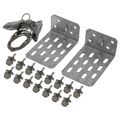


Equipment Pad Brackets are structural mounts that lift outdoor HVAC equipment such as condensers, heat pumps, and packaged units off the ground or a rooftop surface, keeping the unit clear of standing water, debris, and frame corrosion. Modular frame systems like Big Foot use hot-dipped galvanized steel paired with recycled rubber pads, and rated versions support equipment loads up to 1,102 pounds without penetrating the roof membrane. Ground-mount styles bolt directly to a poured pad or set on adjustable feet, while rooftop styles spread the load across a wider footprint to protect membrane roofing and meet wind-load requirements. Because outdoor condensing units generate real vibration during operation, bracket selection affects both equipment life and roof integrity over time. Contractors match bracket capacity to the equipment's operating weight, plus a margin for wind and seismic loading in the installation region, and account for local code requirements on minimum clearance and rooftop attachment methods. The category spans ground-level stands, rooftop frames, and wall-mounted brackets, giving installers options across new construction, replacement, and mini-split retrofit work alike.
Subcategories
- Ground-Mount Pad Stands: Ground-mount pad brackets bolt directly to a poured concrete pad or rest on adjustable feet set on gravel or a paver base. Installers use them to lift residential condensers and heat pumps clear of standing water, mulch, and lawn debris. Adjustable-leg versions typically span a 12 to 16 inch or 12 to 24 inch height range to level equipment on uneven ground.
- Rooftop Mounting Frames: Modular rooftop frames like Multi-Frame and Multi-Frame XL spread equipment load across a wider footprint without penetrating the roof membrane, using hot-dipped galvanized steel construction. Rated versions support equipment loads up to 1,102 pounds, covering most packaged rooftop and VRF condensing units. Extendable sides let one frame size fit a range of equipment footprints on a retrofit.
- Vibration-Isolated Riser Brackets: Fix-it-Foot style brackets raise rooftop equipment on risers paired with weather-resistant recycled rubber pads that isolate operating vibration from the roof membrane. Contractors use them on rooftop condensing units and package units where vibration transfer risks damaging membrane roofing over time. The riser design keeps equipment elevated without penetrating the roof surface.
- Ancillary Equipment Brackets: H-Frame style brackets support ductwork, refrigerant piping, and conduit runs alongside the main equipment mount rather than the condenser or heat pump itself. Customizable strut fittings let installers configure the frame to match the specific piping and conduit layout on a given roof. The brackets typically pair with the same hot-dip galvanized steel used across the rest of a rooftop mounting system.
Buying Guide
Start with the equipment's operating weight, then add a margin for wind and seismic loading based on the installation region before selecting a bracket rated to handle the combined load. Ground-mount pad brackets suit most residential condensers and heat pumps, bolting to a poured pad or resting on adjustable feet that span a 12 to 16 inch or 12 to 24 inch height range to level equipment on uneven ground. Rooftop installs need a different approach: modular frames that spread load across a wider footprint protect membrane roofing and avoid the leaks that come with penetrating the surface for anchors. Equipment Pad Brackets rated for rooftop use, like hot-dipped galvanized Multi-Frame systems, commonly support loads up to 1,102 pounds, covering most packaged rooftop and VRF condensing units without custom fabrication. Vibration matters as much as static weight on rooftop jobs; brackets built with recycled rubber isolation pads cut down on vibration transfer that can wear through membrane roofing faster than static load alone. Clearance requirements come from local code and manufacturer instructions, with a minimum of a few inches of clearance under most outdoor units and considerably more in regions that see heavy snow or flooding. Matching bracket material to the environment matters too. Galvanized steel resists corrosion in coastal or humid regions better than uncoated finishes, extending service life on equipment expected to stay in place for a decade or more.
Frequently Asked Questions
How much weight can a rooftop equipment bracket handle?
Rated rooftop frame systems like hot-dipped galvanized Multi-Frame brackets commonly support equipment loads up to 1,102 pounds. Matching bracket capacity to the unit's actual operating weight, plus a margin for wind and seismic load, keeps the mount within its rated range. Manufacturer load charts confirm capacity for a specific frame configuration before installation.
Do rooftop equipment brackets need to penetrate the roof membrane?
Modular rooftop frame systems spread equipment load across a wide footprint specifically to avoid penetrating the roof membrane for anchors. Avoiding penetrations protects the roof warranty and reduces the chance of leaks around the mounting points. Ballasted, non-penetrating designs suit most low-slope commercial roofs.
What's the difference between ground-mount and rooftop equipment pad brackets?
Ground-mount pad brackets bolt to a poured concrete pad or rest on adjustable feet set on gravel or a paver base, typically spanning a 12 to 16 inch or 12 to 24 inch height range. Rooftop brackets instead spread load across a wide footprint and often add vibration isolation to protect membrane roofing. Application, not just equipment type, drives the choice between the two styles.
How do vibration-isolated brackets protect a roof?
Vibration-isolated riser brackets pair a raised support with recycled rubber pads that absorb operating vibration from the equipment above. Reducing vibration transfer protects membrane roofing from the wear that comes with constant equipment movement. The vibration-isolated style suits rooftop condensing units and package units running continuously through a cooling season.
What clearance does an outdoor unit need above grade?
Outdoor equipment typically needs a minimum of a few inches of clearance above grade, with considerably more required in regions prone to snow accumulation or flooding. Local code and manufacturer instructions set the specific clearance requirement for a given installation. Equipment pad brackets provide that clearance while also keeping the unit level on uneven ground.
