




Filters
SORT
Product Availability –
Review Score –
 --%3E %3Csvg version='1.1' id='Fill' xmlns='http://www.w3.org/2000/svg' xmlns:xlink='http://www.w3.org/1999/xlink' x='0px' y='0px' viewBox='0 0 100 100' enable-background='new 0 0 100 100' xml:space='preserve'%3E %3Cpath fill='%23F15C02' d='M79.44,0.95H20.56C9.78,0.95,0.95,9.78,0.95,20.56v58.87c0,10.79,8.82,19.61,19.61,19.61h58.87 c10.79,0,19.61-8.83,19.61-19.61V20.56C99.05,9.78,90.22,0.95,79.44,0.95z M65.38,58.24l9.38,29.58L49.69,69.78L24.5,87.82 l9.34-29.6L8.8,39.6l30.73-0.17c0,0,6.98-19.61,10-28.93c0.54,1.36,9.88,29.1,9.88,29.1H91.2L65.38,58.24z'/%3E %3C/svg%3E)
 --%3E %3Csvg version='1.1' id='With-RB' xmlns='http://www.w3.org/2000/svg' xmlns:xlink='http://www.w3.org/1999/xlink' x='0px' y='0px' viewBox='0 0 100 100' enable-background='new 0 0 100 100' xml:space='preserve'%3E %3Cpath fill='%23FBC8B4' d='M79.44,0.95H20.56C9.78,0.95,0.95,9.78,0.95,20.56v58.87c0,10.79,8.82,19.61,19.61,19.61h58.87 c10.79,0,19.61-8.83,19.61-19.61V20.56C99.05,9.78,90.22,0.95,79.44,0.95z M65.38,58.24l9.38,29.58L49.69,69.78L24.5,87.82 l9.34-29.6L8.8,39.6l30.73-0.17c0,0,6.98-19.61,10-28.93c0.54,1.36,9.88,29.1,9.88,29.1H91.2L65.38,58.24z'/%3E %3C/svg%3E)
Price Range –
Fast-Stat Wiring Extenders


 --%3E %3Csvg version='1.1' id='No-RB' xmlns='http://www.w3.org/2000/svg' xmlns:xlink='http://www.w3.org/1999/xlink' x='0px' y='0px' viewBox='0 0 100 100' enable-background='new 0 0 100 100' xml:space='preserve'%3E %3Cpath fill='%23CECECE' d='M79.44,0.95H20.56C9.78,0.95,0.95,9.78,0.95,20.56v58.87c0,10.79,8.82,19.61,19.61,19.61h58.87 c10.79,0,19.61-8.83,19.61-19.61V20.56C99.05,9.78,90.22,0.95,79.44,0.95z M65.38,58.24l9.38,29.58L49.69,69.78L24.5,87.82 l9.34-29.6L8.8,39.6l30.73-0.17c0,0,6.98-19.61,10-28.93c0.54,1.36,9.88,29.1,9.88,29.1H91.2L65.38,58.24z'/%3E %3C/svg%3E)
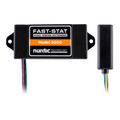
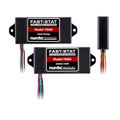
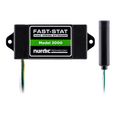
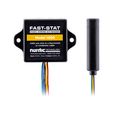

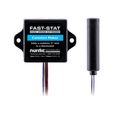
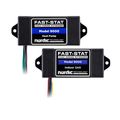
Fast-Stat wiring extenders are modules that let installers add conductors to an existing low-voltage thermostat cable without pulling new wire through walls, ceilings, or masonry chases. Contractors reach for them most often on retrofit and zoning jobs, where the original thermostat cable has fewer conductors than a modern multi-stage or communicating thermostat needs. A typical extender splices in near the equipment end and adds a pair or two of usable conductors to the run, borrowing capacity that the original installation never included. Techs favor this approach because fishing new line through a finished wall or a masonry chase can turn a straightforward thermostat swap into a multi-hour demolition job. On zoning retrofits, the extenders also make it practical to bring damper and relay wiring back to a central panel from thermostats that were installed years apart, on cable runs of different vintages and conductor counts. For anyone upgrading an older single-stage system to a smart or multi-stage thermostat, a wiring extender is often the difference between a same-day swap and a wall-opening project.
Subcategories
- Two-Wire Extenders: Two-wire extenders add a single pair of conductors to an existing thermostat cable, enough to bring a constant power wire or a single relay signal to a thermostat that the original wiring cannot support. Residential HVAC contractors use them most often when swapping a mechanical thermostat for a battery-free smart model that needs a dedicated common wire. Installation involves splicing the extender into the existing cable near the furnace or air handler rather than running an entirely new line. Because the added conductors ride the same jacket path as the original cable, the fix stays hidden behind the existing wall plate.
- Multi-Wire Extenders: Multi-wire extenders add several conductors at once, which suits multi-stage furnaces, heat pumps, or zoning panels that need more control signals than a legacy two- or three-wire thermostat cable provides. Zoning contractors use these when converting a single-zone system to multiple zones, since each additional damper motor and relay needs its own conductor pair back to the panel. The extender splices into the existing run at the equipment cabinet, so the added capacity is available at both ends of the cable without cutting into walls. This makes multi-zone conversions practical in finished basements and slab-on-grade homes where fishing new cable is not an option.
- Splice and Termination Kits: Splice and termination kits provide the connectors, wire nuts, and weatherproofing components needed to join an extender module cleanly to the existing thermostat cable. Contractors keep these on hand for jobs where the existing cable insulation or conductor gauge does not match the extender's factory leads. A secure splice matters here because a loose or corroded connection on a low-voltage control circuit can cause intermittent lockouts that are difficult to diagnose after the wall is closed back up. These kits are typically used alongside either wiring extender type rather than sold as a standalone repair for damaged cable.
Buying Guide
The first question on any Fast-Stat wiring extenders purchase is how many additional conductors the new thermostat or zoning panel actually needs. Count the terminals on the replacement equipment and compare that to the conductors already present in the wall, then add one extra pair if the job might later need a common wire or a second stage. Buying for the actual terminal count avoids a return trip when a technician discovers mid-install that a two-wire extender does not cover a four-stage heat pump control board.
Cable gauge and jacket compatibility matter as much as conductor count. Extenders are built to splice into 18- or 20-gauge thermostat cable, and mixing gauges at a splice point without the right connector can create a weak connection that fails months later, well after the wall has been closed up. Contractors doing zoning retrofits across multiple thermostats installed in different years should expect to find several cable vintages in the same house and should stock extenders and splice kits that cover more than one gauge.
Access matters too. Where the splice point sits inside a wall cavity, boxes, or an accessible equipment closet changes whether the job is a quick five-minute fix or a wall-opening project. Confirming the splice location and testing continuity on the extended run before closing anything up saves a second visit if a conductor was miscounted or a connection was not seated fully.
Frequently Asked Questions
How do I know how many extra wires my thermostat swap needs?
Count the labeled terminals on the new thermostat or zoning control board and compare that number to the conductors already present at the existing thermostat location. If the new equipment needs a common wire, second stage, or humidity control that the old wiring never carried, budget for at least one extra conductor pair beyond the immediate requirement.
Can a wiring extender be used with any thermostat cable gauge?
Extenders are designed for standard 18- or 20-gauge low-voltage thermostat cable, which covers most residential runs. Older homes sometimes have heavier or lighter gauge cable, so checking gauge compatibility before splicing avoids a weak connection at the joint.
Where should the splice be made on a zoning retrofit?
Splices are typically made at the equipment end, inside the furnace or air handler cabinet or in an accessible zoning panel enclosure, rather than inside a finished wall. Keeping the splice at an accessible point makes future troubleshooting straightforward without opening drywall.
Do wiring extenders work for both single-zone and multi-zone systems?
Yes. A single-zone thermostat swap usually only needs one or two additional conductors, while a multi-zone conversion typically calls for a multi-wire extender to carry damper and relay signals for each added zone back to the control panel.
What happens if a splice connection is loose after the wall is closed?
A loose or corroded splice on a low-voltage control circuit tends to cause intermittent lockouts or a thermostat that loses communication with the equipment, problems that are hard to diagnose once the wall is finished. Testing continuity on every added conductor before closing up the wall avoids this callback.
