




Filters
SORT
Product Availability –
Review Score –
 --%3E %3Csvg version='1.1' id='Fill' xmlns='http://www.w3.org/2000/svg' xmlns:xlink='http://www.w3.org/1999/xlink' x='0px' y='0px' viewBox='0 0 100 100' enable-background='new 0 0 100 100' xml:space='preserve'%3E %3Cpath fill='%23F15C02' d='M79.44,0.95H20.56C9.78,0.95,0.95,9.78,0.95,20.56v58.87c0,10.79,8.82,19.61,19.61,19.61h58.87 c10.79,0,19.61-8.83,19.61-19.61V20.56C99.05,9.78,90.22,0.95,79.44,0.95z M65.38,58.24l9.38,29.58L49.69,69.78L24.5,87.82 l9.34-29.6L8.8,39.6l30.73-0.17c0,0,6.98-19.61,10-28.93c0.54,1.36,9.88,29.1,9.88,29.1H91.2L65.38,58.24z'/%3E %3C/svg%3E)
Price Range –
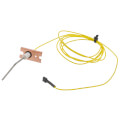
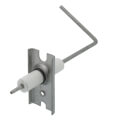
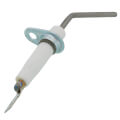
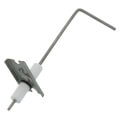
Flame Sensors


 --%3E %3Csvg version='1.1' id='No-RB' xmlns='http://www.w3.org/2000/svg' xmlns:xlink='http://www.w3.org/1999/xlink' x='0px' y='0px' viewBox='0 0 100 100' enable-background='new 0 0 100 100' xml:space='preserve'%3E %3Cpath fill='%23CECECE' d='M79.44,0.95H20.56C9.78,0.95,0.95,9.78,0.95,20.56v58.87c0,10.79,8.82,19.61,19.61,19.61h58.87 c10.79,0,19.61-8.83,19.61-19.61V20.56C99.05,9.78,90.22,0.95,79.44,0.95z M65.38,58.24l9.38,29.58L49.69,69.78L24.5,87.82 l9.34-29.6L8.8,39.6l30.73-0.17c0,0,6.98-19.61,10-28.93c0.54,1.36,9.88,29.1,9.88,29.1H91.2L65.38,58.24z'/%3E %3C/svg%3E)
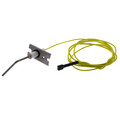
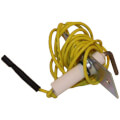
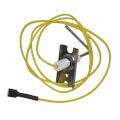
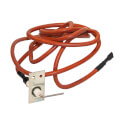

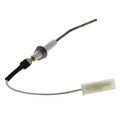
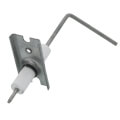
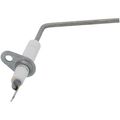
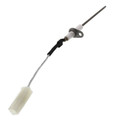
Flame sensors are safety components in gas furnaces, boilers, and water heaters that confirm a flame is actually burning after the igniter lights the burner. They work through flame rectification: the sensor rod sits in the flame and the control board reads a tiny electrical signal that only flows when the rod is actually in contact with fire. If that signal doesn't show up within a few seconds of ignition, the control board shuts off the gas valve rather than letting unburned gas keep flowing into the appliance. This is one of the smaller, less expensive parts in a gas appliance, but a dirty or failing sensor is one of the most common reasons a furnace or boiler locks out and won't stay lit, which is why it's a frequent replacement part for HVAC technicians.
Subcategories
- Universal Flame Sensors: Universal sensors are designed to fit a range of furnace and boiler models rather than one specific unit, often with an adjustable or trimmable rod length. Technicians carry these on service calls since they cover more equipment with fewer part numbers stocked on the truck. Fit still needs to be checked against the mounting bracket and rod placement in the burner assembly before installation.
- OEM-Specific Flame Sensors: These sensors are built to match a particular manufacturer's furnace or boiler model, with the exact bracket, rod length, and wire connector the original part used. They're the safer choice when an exact replacement is available, since rod position relative to the flame affects how reliably the sensor reads the flame signal. Contractors typically pull the old part's model number to cross-reference the correct OEM replacement.
- Flame Sensor Wires and Connectors: The wire connecting the sensor to the control board is a common failure point on its own, separate from the sensor rod itself. A cracked or corroded connector can cause the same lockout symptoms as a dirty sensor, so replacement wires and connectors are stocked alongside the sensors. Checking connector condition is a standard step before condemning the sensor itself as the problem.
- Flame Sensor Cleaning Tools: Since a light coating of carbon or oxidation on the rod is the single most common cause of a weak flame signal, cleaning tools like fine emery cloth or sensor-specific cleaning pads are sold alongside replacement sensors. Many service calls resolve with a cleaning rather than a full replacement. Technicians typically try cleaning first since it takes less time and cost than swapping the part.
Buying Guide
The first step in replacing flame sensors is confirming the fault is actually the sensor and not the wire, connector, or a grounding issue elsewhere in the ignition circuit. A weak or corroded connection can produce the same lockout symptoms as a failing sensor rod, so ruling that out first avoids buying a part that doesn't fix the problem.
Once the sensor itself is confirmed as the issue, matching rod length and mounting style to the existing burner assembly is the main technical requirement. An OEM-specific replacement is the more reliable option when the exact part is available, since rod position in the flame affects signal strength. A universal sensor with an adjustable or trimmable rod is a reasonable substitute when the OEM part isn't readily available, but it still needs to seat correctly against the burner's mounting bracket.
Cost and lead time also factor in: flame sensors are inexpensive relative to most other furnace or boiler parts, so stocking a small range of universal sensors on a service truck is common practice for handling same-day calls without waiting on an OEM part. For a scheduled replacement rather than an emergency call, ordering the exact OEM part is usually worth the extra day.
Before finishing the job, technicians typically clean the new sensor's rod contact point and check that the ground path for the burner assembly is solid, since a poor ground can mimic a bad sensor and lead to a callback.
Frequently Asked Questions
How can you tell a flame sensor is failing versus another ignition problem?
A furnace or boiler that lights briefly and then shuts off, or that locks out after a few ignition attempts, is a common sign of a weak flame sensor signal. Cleaning the rod first and retesting is the usual diagnostic step before replacing the part.
Can a flame sensor be cleaned instead of replaced?
Yes, and it's often the first thing technicians try, since a light coating of carbon or oxidation on the rod is the most common cause of a weak signal. If cleaning doesn't resolve the lockout, replacement is the next step.
Does a universal flame sensor work as well as an OEM replacement?
A universal sensor with an adjustable rod can work well when it's properly trimmed and seated in the burner assembly, but an OEM-specific sensor is generally more reliable since it matches the original rod length and mounting position exactly.
What else should be checked before replacing a flame sensor?
Check the wire and connector running to the control board, along with the ground path for the burner assembly, since problems in either can produce the same lockout symptoms as a failing sensor.
Is a flame sensor the same part as an igniter?
No. The igniter lights the burner, while the flame sensor separately confirms the flame is present after ignition. They're both small parts near the burner assembly but serve different functions in the ignition sequence.
