



GC Valves

 --%3E %3Csvg version='1.1' id='No-RB' xmlns='http://www.w3.org/2000/svg' xmlns:xlink='http://www.w3.org/1999/xlink' x='0px' y='0px' viewBox='0 0 100 100' enable-background='new 0 0 100 100' xml:space='preserve'%3E %3Cpath fill='%23CECECE' d='M79.44,0.95H20.56C9.78,0.95,0.95,9.78,0.95,20.56v58.87c0,10.79,8.82,19.61,19.61,19.61h58.87 c10.79,0,19.61-8.83,19.61-19.61V20.56C99.05,9.78,90.22,0.95,79.44,0.95z M65.38,58.24l9.38,29.58L49.69,69.78L24.5,87.82 l9.34-29.6L8.8,39.6l30.73-0.17c0,0,6.98-19.61,10-28.93c0.54,1.36,9.88,29.1,9.88,29.1H91.2L65.38,58.24z'/%3E %3C/svg%3E)


GC Valves traces its lineage to General Controls, a combustion controls maker founded in Glendale, California, in the 1930s. The GC Valves name itself dates to 1990, when the company assumed the North American license for ITT-General Controls. DEMA Engineering acquired GC Valves in 2016 and consolidated manufacturing in Charlotte, North Carolina.
GC Valves is now headquartered in Charlotte. It also has manufacturing and sales presence in Missouri, Pennsylvania, the Netherlands, and Australia. Sales representation extends across Central and South America and Asia.
Product Lines
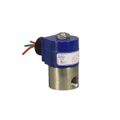
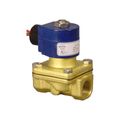
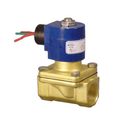
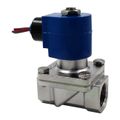
GC Valves manufactures solenoid valves and valve manifolds in more than 35,000 variations, covering pipe sizes from 10-32 up to 2 inches. The catalog includes single-valve and manifold configurations along with explosion-proof and intrinsically safe designs for hazardous locations.
Products serve a wide span of trades and industries. These include car wash equipment, construction, cryogenics, dust and odor control, energy, and fire suppression. Others include food and beverage, healthcare, commercial laundry, misting systems, temperature control, and water quality equipment.
Why Contractors Specify GC Valves
GC Valves' True Union solenoid valve designs and NSF-61 approved, no-lead construction meet the requirements of the Safe Drinking Water Act. This matters directly on potable water jobs, where the valve material has to be verified rather than assumed. The company also holds a UL Safety Shutoff rating for combustible fluid control applications.
For hazardous locations, GC Valves' NEMA 7 and NEMA 9 explosion-proof enclosures give contractors a documented rating to point to on inspection. This avoids relying on a general-purpose valve in a location that calls for a specific classification.
How to Choose GC Valves Products
Matching a GC Valves solenoid valve to the job starts with the fluid and pressure requirements. Standard water and air applications typically call for the NSF-61 approved, no-lead valve lines. High-pressure applications can draw on designs rated up to 2,400 psi.
For hazardous or classified locations, the NEMA 7 and NEMA 9 explosion-proof and intrinsically safe lines are the starting point rather than a standard enclosure. Where multiple valves need to operate together, GC Valves' manifold assemblies consolidate several valve positions into a single unit instead of piping individual valves separately.
Frequently Asked Questions
When was GC Valves founded?
The GC Valves name dates to 1990, though the company's roots trace back to General Controls, founded in Glendale, California, in the 1930s.
Where are GC Valves products manufactured?
GC Valves consolidated manufacturing in Charlotte, North Carolina, where the company is headquartered. It also has manufacturing and sales presence in Missouri, Pennsylvania, the Netherlands, and Australia.
Are GC Valves solenoid valves rated for drinking water use?
Yes. GC Valves offers NSF-61 approved, no-lead solenoid valve designs that meet the requirements of the Safe Drinking Water Act.
Does GC Valves make explosion-proof valves?
Yes. The company manufactures explosion-proof and intrinsically safe solenoid valves for hazardous locations, including NEMA 7 and NEMA 9 explosion-proof enclosures.
What pipe sizes does GC Valves cover?
GC Valves manufactures solenoid valves and manifolds across more than 35,000 variations, covering pipe sizes from 10-32 up to 2 inches.
