




Galvanized S and Drive Cleats

 --%3E %3Csvg version='1.1' id='No-RB' xmlns='http://www.w3.org/2000/svg' xmlns:xlink='http://www.w3.org/1999/xlink' x='0px' y='0px' viewBox='0 0 100 100' enable-background='new 0 0 100 100' xml:space='preserve'%3E %3Cpath fill='%23CECECE' d='M79.44,0.95H20.56C9.78,0.95,0.95,9.78,0.95,20.56v58.87c0,10.79,8.82,19.61,19.61,19.61h58.87 c10.79,0,19.61-8.83,19.61-19.61V20.56C99.05,9.78,90.22,0.95,79.44,0.95z M65.38,58.24l9.38,29.58L49.69,69.78L24.5,87.82 l9.34-29.6L8.8,39.6l30.73-0.17c0,0,6.98-19.61,10-28.93c0.54,1.36,9.88,29.1,9.88,29.1H91.2L65.38,58.24z'/%3E %3C/svg%3E)
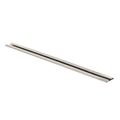

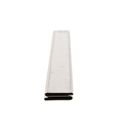
Galvanized S and drive cleats are sheet metal connectors used to join transverse joints in rectangular ductwork without welding or additional fasteners at every seam. An S cleat locks two duct sections together at a joint by slipping over both edges, while a drive cleat is hammered into place along the top and bottom of a duct joint to complete the connection. Galvanized steel construction resists corrosion in the humid or condensation-prone environments common inside ductwork, which helps the joint hold up over the life of the system. These cleats are a standard method for connecting rectangular duct sections in both residential and commercial installations, valued for being quick to install without specialized tools beyond a mallet or hammer. For a crew fabricating ductwork on site, keeping a range of cleat sizes on hand covers most standard duct dimensions encountered on a typical job.
Subcategories
- S Cleats: S cleats get their name from their S-shaped cross section, which slips over the folded edges of two adjoining duct sections to lock them together at a transverse joint. Installers use S cleats on straight duct runs where a simple, fast connection is needed without welding or screws at the seam. The cleat's shape holds the two duct edges in alignment while also providing some resistance to air leakage at the joint.
- Drive Cleats: Drive cleats are installed by sliding the cleat over the top and bottom edges of a duct joint and driving it into place with a mallet, which locks the two sections together along that edge. Installers typically pair drive cleats with S cleats on the same joint, using drive cleats on the top and bottom and S cleats on the sides, to fully secure a rectangular duct connection. This combination is one of the most common transverse joint methods in standard duct fabrication.
- Cleat Sizes & Gauges: Cleat sizes and gauges vary to match different duct dimensions and sheet metal thicknesses used across residential and commercial projects. Selecting a cleat gauge that matches or exceeds the duct's own gauge helps maintain joint strength and prevents the cleat from deforming under normal duct movement. Crews fabricating a range of duct sizes typically stock several cleat sizes on the truck to avoid a mid-installation supply run for a size that wasn't on hand.
Buying Guide
Match cleat size to the duct dimensions being joined, since cleats are sized to match specific duct width and gauge combinations rather than being universal. A cleat that's too small won't fully engage the duct edges, while one that's too large won't seat properly against the joint.
Confirm the gauge of the cleat against the gauge of the duct itself. Galvanized S and drive cleats should generally match or exceed the duct's sheet metal thickness, since a cleat that's too thin can deform or loosen over time under normal duct expansion and contraction from temperature changes.
Consider the joint type being fabricated. S cleats and drive cleats are typically used together on a standard transverse joint, with drive cleats securing the top and bottom edges and S cleats securing the sides, so ordering both in matching sizes for a given duct dimension avoids a mismatched joint.
Check galvanized coating quality, since the coating is what protects the cleat from corrosion inside ductwork where condensation can form, particularly on cooling-only or mixed-use systems. A thin or inconsistent coating shortens the cleat's service life compared to a properly galvanized part.
Finally, factor in crew fabrication speed. Standard cleat connections install faster than welded or flanged joints, which matters on larger jobs where duct fabrication time adds up across dozens of joints.
Frequently Asked Questions
What's the difference between an S cleat and a drive cleat?
An S cleat has an S-shaped cross section that slips over two duct edges to join them, typically used on the sides of a rectangular joint. A drive cleat is hammered into place along the top and bottom of the same joint. The two work together to fully secure a standard transverse duct connection.
Do galvanized cleats need to match the duct's gauge?
Yes, cleat gauge should generally match or exceed the duct's own sheet metal thickness. A cleat that's thinner than the duct can deform or loosen over time as the duct expands and contracts with temperature changes.
Can S and drive cleats be used on any duct shape?
They're designed for standard rectangular ductwork joints and aren't a fit for round duct, which uses different connection methods like crimped or coupled joints. Rectangular systems are where these cleats see the most common use.
What tools are needed to install drive cleats?
A mallet or hammer is typically all that's needed to drive the cleat into place along a duct joint. No specialized tools or fasteners are required beyond what's used to fold and align the duct edges beforehand.
Why use galvanized cleats instead of plain steel?
Galvanized coating resists corrosion from the condensation that commonly forms inside ductwork, especially on cooling systems. Plain steel cleats are more prone to rust over time in that environment, which can weaken the joint and shorten its service life.
