




Gas Controls/Valves


 --%3E %3Csvg version='1.1' id='No-RB' xmlns='http://www.w3.org/2000/svg' xmlns:xlink='http://www.w3.org/1999/xlink' x='0px' y='0px' viewBox='0 0 100 100' enable-background='new 0 0 100 100' xml:space='preserve'%3E %3Cpath fill='%23CECECE' d='M79.44,0.95H20.56C9.78,0.95,0.95,9.78,0.95,20.56v58.87c0,10.79,8.82,19.61,19.61,19.61h58.87 c10.79,0,19.61-8.83,19.61-19.61V20.56C99.05,9.78,90.22,0.95,79.44,0.95z M65.38,58.24l9.38,29.58L49.69,69.78L24.5,87.82 l9.34-29.6L8.8,39.6l30.73-0.17c0,0,6.98-19.61,10-28.93c0.54,1.36,9.88,29.1,9.88,29.1H91.2L65.38,58.24z'/%3E %3C/svg%3E)
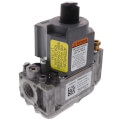

Gas Controls/Valves are the safety and regulation components that manage fuel delivery on gas-fired furnaces, boilers, water heaters, and commercial cooking equipment, combining a manual shutoff, a pilot safety mechanism, and a main gas pressure regulator into one assembly. Robertshaw's combination valve line, for example, covers capacities ranging up to 720,000 BTU across models built for standing pilot, intermittent pilot, direct spark, and hot surface ignition systems. Inlet and outlet screens filter debris before it reaches the regulator diaphragm, and a pilot safety magnet shuts gas flow automatically if the pilot flame goes out, preventing unburned gas from accumulating in the appliance. Because a gas valve sits between the supply line and the burner, matching the exact ignition type, inlet pressure, and BTU capacity to the appliance keeps the safety lockout sequence working the way the manufacturer designed it. Technicians replacing a failed valve treat this matching step as the most important part of the job, since a mismatched valve can leave a furnace or water heater without its intended safety shutoff response.
Subcategories
- Standing Pilot Combination Valves: Standing pilot valves keep a small pilot flame burning continuously, using a thermocouple or pilot safety magnet to hold the main valve open only while that flame is present. Robertshaw's standing pilot combination models bundle the pilot safety function with a manual shutoff and pressure regulator in one body. Older furnaces, boilers, and water heaters built before electronic ignition became standard typically use this valve type. Technicians servicing legacy equipment replace like for like with a standing pilot valve rated for the same BTU capacity as the original.
- Intermittent Pilot Valves: Intermittent pilot valves light the pilot flame only when the thermostat calls for heat, then shut the pilot off along with the main burner once the call ends. This design cuts the standing gas consumption that a constantly lit pilot uses. Robertshaw's intermittent pilot combination valves still include the same manual shutoff and regulator components as the standing pilot line. Furnace and boiler manufacturers moved toward this ignition type as an efficiency improvement over always-on pilots.
- Direct Spark and Hot Surface Ignition Valves: Direct spark ignition (DSI) valves use an electronic spark to light the main burner directly, with no pilot flame at all, while hot surface ignition (HSI) valves rely on an electrically heated element to ignite the gas. Robertshaw manufactures combination valves for both ignition types, built around the same core shutoff and regulator components as pilot style valves. Modern residential furnaces and many commercial cooking appliances use one of these two ignition methods. Replacement valves must match the appliance's specific ignition control board, since DSI and HSI systems aren't interchangeable with each other or with pilot style valves.
- High-Capacity Commercial Gas Valves: Some combination gas valves handle capacities well above typical residential furnace demand, with Robertshaw's catalog covering models rated up to 720,000 BTU. Commercial kitchens, pool heaters, and larger boilers need this higher capacity range to match their burner output. The same manual shutoff, pilot safety, and regulator components found in residential valves scale up to the larger body size. Selecting a valve rated below the appliance's BTU input can starve the burner and prevent proper operation.
Buying Guide
Replacing a gas valve starts with matching the ignition type exactly: a standing pilot, intermittent pilot, direct spark, or hot surface ignition valve isn't interchangeable with another type, since each works with a different set of safety and ignition controls on the appliance. Confirm the BTU capacity next, since Gas Controls/Valves are rated for a maximum gas flow, and installing a valve rated below the appliance's burner input can starve the flame and trigger nuisance shutdowns, while a valve rated well above the appliance's needs may not regulate pressure accurately at low demand. Check the inlet and outlet pipe size and thread pattern against the existing gas line, along with the pilot gas connection size on pilot style valves, so the replacement threads in without adding extra fittings. Verify the regulator's pressure adjustment range matches the fuel type in use, since natural gas and LP systems need different regulator settings, and some valves convert between the two while others don't. Look at the control voltage too: many valves operate on millivolt systems powered by a thermocouple or thermopile, while others need a 24 volt signal from a transformer, and connecting the wrong valve to the wrong control circuit means the valve won't open at all. Because a gas valve is one of the most safety-critical parts on any appliance, match the exact manufacturer and model whenever possible rather than substituting a universal replacement, and always shut off gas supply and test for leaks after installation.
Frequently Asked Questions
What's the difference between a standing pilot and an intermittent pilot gas valve?
A standing pilot valve keeps a small flame burning continuously and uses a thermocouple or pilot safety magnet to hold the main valve open. An intermittent pilot valve lights the pilot only when the thermostat calls for heat, then shuts it off with the main burner afterward. Furnaces and boilers built for efficiency generally use intermittent pilot or electronic ignition instead of a continuously burning pilot.
Can a gas valve be replaced with any universal model?
Matching the exact ignition type, BTU capacity, and control voltage to the original valve matters more than finding a universal substitute, since a gas valve is one of the safety-critical components on the appliance. Direct spark, hot surface, standing pilot, and intermittent pilot valves aren't interchangeable with each other. Confirming the manufacturer and model number before ordering a replacement keeps the appliance's safety lockout sequence working as designed.
What does a combination gas valve actually combine?
A combination gas valve bundles a manual shutoff, a pilot safety mechanism, and a main gas pressure regulator into a single body. Older valve setups used separate components wired and piped together for the same functions. Gas Controls/Valves built this way simplify both installation and troubleshooting since fewer separate parts are involved.
How is a gas valve's BTU capacity determined?
A gas valve's BTU capacity reflects the maximum gas flow it can regulate safely at a given inlet pressure, and Robertshaw's combination valve catalog covers models ranging up to 720,000 BTU for larger commercial applications. Matching the valve's rated capacity to the appliance's burner input keeps the flame properly sized. A valve rated below the appliance's demand can starve the burner and cause nuisance shutdowns.
What's the difference between millivolt and 24 volt gas valves?
Millivolt valves run on the small electrical current generated by a thermocouple or thermopile in the pilot flame, so they work without external electrical power. Valves needing 24 volts pull that signal from a transformer connected to the appliance's control board. Connecting a valve to the wrong voltage type keeps it from opening at all, so confirming the control system type before ordering a replacement avoids that problem.
