




Filters
SORT
Product Availability –
Review Score –
 --%3E %3Csvg version='1.1' id='Fill' xmlns='http://www.w3.org/2000/svg' xmlns:xlink='http://www.w3.org/1999/xlink' x='0px' y='0px' viewBox='0 0 100 100' enable-background='new 0 0 100 100' xml:space='preserve'%3E %3Cpath fill='%23F15C02' d='M79.44,0.95H20.56C9.78,0.95,0.95,9.78,0.95,20.56v58.87c0,10.79,8.82,19.61,19.61,19.61h58.87 c10.79,0,19.61-8.83,19.61-19.61V20.56C99.05,9.78,90.22,0.95,79.44,0.95z M65.38,58.24l9.38,29.58L49.69,69.78L24.5,87.82 l9.34-29.6L8.8,39.6l30.73-0.17c0,0,6.98-19.61,10-28.93c0.54,1.36,9.88,29.1,9.88,29.1H91.2L65.38,58.24z'/%3E %3C/svg%3E)
Price Range –
Goodman Amana Valves

 --%3E %3Csvg version='1.1' id='Half' xmlns='http://www.w3.org/2000/svg' xmlns:xlink='http://www.w3.org/1999/xlink' x='0px' y='0px' viewBox='0 0 100 100' enable-background='new 0 0 100 100' xml:space='preserve'%3E %3Cg%3E %3Cpath fill='%23F15C02' d='M30.05,70.23l3.79-12.01L8.8,39.6l30.73-0.17c0,0,6.98-19.61,10-28.93c0.54,1.36,9.88,29.1,9.88,29.1h1.58 L93.71,7.18c-3.58-3.82-8.66-6.23-14.28-6.23H20.56C9.78,0.95,0.95,9.78,0.95,20.56v58.87c0,5.41,2.22,10.32,5.79,13.88 L30.05,70.23z'/%3E %3C/g%3E %3Cpath fill='%23FBC8B4' d='M93.71,7.18L60.98,39.6H91.2L65.38,58.24l9.38,29.58L49.69,69.78L24.5,87.82l5.55-17.59L6.75,93.32 c3.55,3.54,8.44,5.73,13.82,5.73h58.87c10.79,0,19.61-8.83,19.61-19.61V20.56C99.05,15.4,97.01,10.69,93.71,7.18z'/%3E %3C/svg%3E)

 --%3E %3Csvg version='1.1' id='No-RB' xmlns='http://www.w3.org/2000/svg' xmlns:xlink='http://www.w3.org/1999/xlink' x='0px' y='0px' viewBox='0 0 100 100' enable-background='new 0 0 100 100' xml:space='preserve'%3E %3Cpath fill='%23CECECE' d='M79.44,0.95H20.56C9.78,0.95,0.95,9.78,0.95,20.56v58.87c0,10.79,8.82,19.61,19.61,19.61h58.87 c10.79,0,19.61-8.83,19.61-19.61V20.56C99.05,9.78,90.22,0.95,79.44,0.95z M65.38,58.24l9.38,29.58L49.69,69.78L24.5,87.82 l9.34-29.6L8.8,39.6l30.73-0.17c0,0,6.98-19.61,10-28.93c0.54,1.36,9.88,29.1,9.88,29.1H91.2L65.38,58.24z'/%3E %3C/svg%3E)
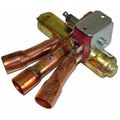
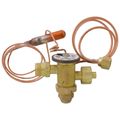
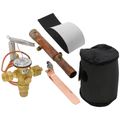
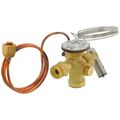
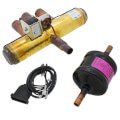
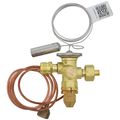
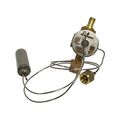
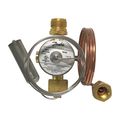
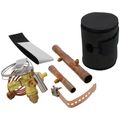

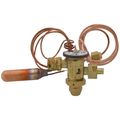
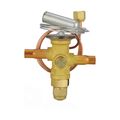
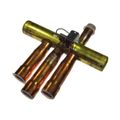
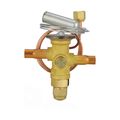
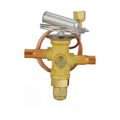
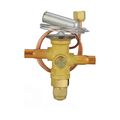
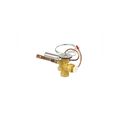
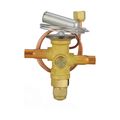
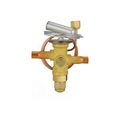
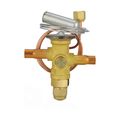
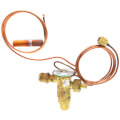
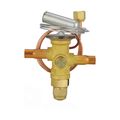
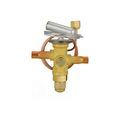
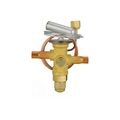
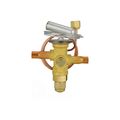

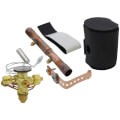
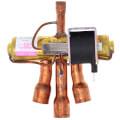
Goodman Amana valves are the reversing, expansion, and service valves used to service Goodman and Amana heat pumps, air conditioners, and refrigeration components. A reversing valve redirects refrigerant flow so a heat pump can switch between heating and cooling modes, while an expansion valve regulates refrigerant flow into the evaporator coil to control cooling capacity. Technicians replace these valves when a heat pump gets stuck in one mode, a system loses cooling or heating capacity, or a valve tests as stuck or leaking during diagnostics. Matching the replacement valve to the equipment's tonnage and refrigerant type is necessary, since a valve sized for a different capacity will not regulate flow correctly. Because these valves sit directly in the refrigerant circuit, replacing one requires recovering refrigerant, verifying the new valve's fit, and confirming the system holds vacuum before recharging.
Subcategories
- Reversing Valves: Reversing valves redirect refrigerant flow through a heat pump's circuit, allowing the system to switch between heating and cooling by reversing which coil acts as the condenser and which acts as the evaporator. A stuck reversing valve is a common cause of a heat pump that will not switch modes even though the thermostat calls for the change. Replacement valves need to match the system's tonnage and refrigerant type.
- Expansion Valves: Expansion valves regulate the amount of refrigerant entering the evaporator coil, controlling superheat and cooling capacity as conditions change. Thermostatic expansion valves adjust automatically based on evaporator temperature, while fixed orifice types provide a set flow rate. Matching the valve to the system's tonnage keeps superheat within the range the equipment was designed for.
- Service Valves: Service valves provide the access points technicians use to charge, evacuate, and gauge a system during installation or maintenance. They typically combine a shutoff function with a port for connecting refrigerant gauges or a recovery machine. A leaking or damaged service valve compromises a technician's ability to accurately charge or diagnose the system.
Buying Guide
Replacing a Goodman Amana valve starts with confirming exactly which valve type the job requires, since reversing valves, expansion valves, and service valves each play a different role and are not interchangeable. A heat pump stuck in one mode points toward a reversing valve, while reduced cooling capacity with abnormal superheat readings points toward the expansion valve.
Matching tonnage and refrigerant type to the existing equipment is essential for any of these valves, since a valve sized for a different capacity will not regulate flow correctly even if it physically fits the connections. Checking the equipment's nameplate or service manual confirms both figures before ordering.
Connection type and size also need to match the existing line set or component, particularly on expansion valves where fixed orifice and thermostatic types are not interchangeable without other system changes. Confirming which type the original equipment used avoids a valve that does not regulate superheat correctly once installed.
Because these valves sit in a sealed, pressurized refrigerant circuit, planning for refrigerant recovery, system evacuation, and an accurate recharge is part of the job, not just the part swap itself. Budgeting time and recovery equipment for that process, in addition to the valve itself, keeps the job from running into an unplanned second trip.
Frequently Asked Questions
What does a reversing valve do in a heat pump?
A reversing valve redirects refrigerant flow so the outdoor and indoor coils can swap roles, letting the system provide heating in one mode and cooling in the other. A valve that sticks in one position is a common reason a heat pump will not respond to a mode change at the thermostat.
What are the signs that an expansion valve has failed?
A failing expansion valve often shows up as reduced cooling capacity, unusual frost patterns on the evaporator coil, or superheat readings well outside the manufacturer's specified range during diagnostics. A valve stuck fully open or closed will produce noticeably abnormal pressure readings on the gauges.
Can a universal valve replace a Goodman Amana factory valve?
A universal valve can work as a replacement as long as it matches the original valve's tonnage, refrigerant type, and connection size, but confirming those specifications against the equipment's service manual avoids a mismatch that hurts performance. Some technicians prefer an OEM-matched valve specifically to avoid that extra verification step.
What is required to replace a valve in a sealed refrigerant system?
Replacing any valve in a sealed system requires recovering the existing refrigerant charge first, since the system cannot be opened while pressurized. After the new valve is installed, the system needs to be evacuated to remove air and moisture and hold vacuum before it is recharged to specification.
Why would a heat pump get stuck in one mode?
A heat pump stuck in one mode is most often caused by a reversing valve that has failed to shift, either from a stuck valve body or a failed solenoid coil that controls it. Testing the valve's coil for continuity and checking for proper voltage at the coil helps narrow down whether the valve or its control is the actual problem.
