




Filters
SORT
Product Availability –
Used With –
Review Score –
 --%3E %3Csvg version='1.1' id='Fill' xmlns='http://www.w3.org/2000/svg' xmlns:xlink='http://www.w3.org/1999/xlink' x='0px' y='0px' viewBox='0 0 100 100' enable-background='new 0 0 100 100' xml:space='preserve'%3E %3Cpath fill='%23F15C02' d='M79.44,0.95H20.56C9.78,0.95,0.95,9.78,0.95,20.56v58.87c0,10.79,8.82,19.61,19.61,19.61h58.87 c10.79,0,19.61-8.83,19.61-19.61V20.56C99.05,9.78,90.22,0.95,79.44,0.95z M65.38,58.24l9.38,29.58L49.69,69.78L24.5,87.82 l9.34-29.6L8.8,39.6l30.73-0.17c0,0,6.98-19.61,10-28.93c0.54,1.36,9.88,29.1,9.88,29.1H91.2L65.38,58.24z'/%3E %3C/svg%3E)
 --%3E %3Csvg version='1.1' id='With-RB' xmlns='http://www.w3.org/2000/svg' xmlns:xlink='http://www.w3.org/1999/xlink' x='0px' y='0px' viewBox='0 0 100 100' enable-background='new 0 0 100 100' xml:space='preserve'%3E %3Cpath fill='%23FBC8B4' d='M79.44,0.95H20.56C9.78,0.95,0.95,9.78,0.95,20.56v58.87c0,10.79,8.82,19.61,19.61,19.61h58.87 c10.79,0,19.61-8.83,19.61-19.61V20.56C99.05,9.78,90.22,0.95,79.44,0.95z M65.38,58.24l9.38,29.58L49.69,69.78L24.5,87.82 l9.34-29.6L8.8,39.6l30.73-0.17c0,0,6.98-19.61,10-28.93c0.54,1.36,9.88,29.1,9.88,29.1H91.2L65.38,58.24z'/%3E %3C/svg%3E)
Price Range –
H-10 Leak Detector Parts & Accessories



 --%3E %3Csvg version='1.1' id='No-RB' xmlns='http://www.w3.org/2000/svg' xmlns:xlink='http://www.w3.org/1999/xlink' x='0px' y='0px' viewBox='0 0 100 100' enable-background='new 0 0 100 100' xml:space='preserve'%3E %3Cpath fill='%23CECECE' d='M79.44,0.95H20.56C9.78,0.95,0.95,9.78,0.95,20.56v58.87c0,10.79,8.82,19.61,19.61,19.61h58.87 c10.79,0,19.61-8.83,19.61-19.61V20.56C99.05,9.78,90.22,0.95,79.44,0.95z M65.38,58.24l9.38,29.58L49.69,69.78L24.5,87.82 l9.34-29.6L8.8,39.6l30.73-0.17c0,0,6.98-19.61,10-28.93c0.54,1.36,9.88,29.1,9.88,29.1H91.2L65.38,58.24z'/%3E %3C/svg%3E)

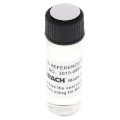


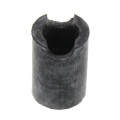

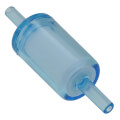
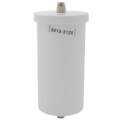

H-10 Series parts and accessories keep Bacharach's H-10 line of refrigerant leak detectors accurate and ready for daily field use. Technicians rely on these heated diode detectors to locate small refrigerant leaks in HVAC and refrigeration systems, and like any sensitive electronic instrument, the detector itself depends on a handful of consumable and replaceable components to stay calibrated. This category covers the sensor tips, probes, batteries, and chargers that wear out or drain with regular use, letting technicians keep an existing detector in service rather than replacing the whole unit. Because heated diode sensors respond to trace amounts of refrigerant, a worn or contaminated sensor tip is one of the more common reasons a leak detector starts giving inconsistent readings in the field. Keeping spare sensors and a charged battery on hand also protects against downtime during a busy service day.
Subcategories
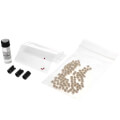
- Replacement Sensors: Replacement sensors are the heated diode tips that do the actual refrigerant detection work inside an H-10 Series unit. These sensors degrade with exposure to contaminants and general wear, and a technician will typically notice reduced sensitivity or false alarms before a sensor fails completely. Swapping the sensor tip restores original detection performance without replacing the detector body.
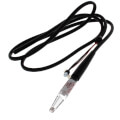
- Probes and Extensions: Probes and extensions let a technician reach tight or awkward spaces, such as behind a coil or inside a cabinet, without bending or straining the detector body itself. Extension probes are especially useful on rooftop and packaged equipment where refrigerant lines are recessed or hard to access directly. Matching the probe's connector type to the specific H-10 model is necessary for a secure fit.
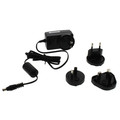
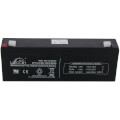
- Batteries and Chargers: Batteries and chargers keep a leak detector powered through a full day of service calls, and a detector with a weak or aging battery can produce less reliable readings well before it shuts off entirely. Technicians who rely on their leak detector daily often keep a spare charged battery in the truck to avoid a mid-call power interruption. Genuine replacement batteries and chargers are sized to the specific voltage and charging profile the H-10 Series electronics expect.
Buying Guide
Confirm the exact model within the H-10 Series lineup before ordering sensors or probes, since sensor tip design and connector style have been updated across different generations of the product. A sensor that looks similar but doesn't match the exact model can seat incorrectly or fail to communicate properly with the detector's internal electronics.
Pay attention to how often the detector is used in the field when deciding how many spare sensors to keep on hand, since heated diode sensors have a finite service life that shortens with heavy daily use. When browsing H-10 Series parts and accessories, technicians who service refrigeration equipment in contaminated or oily environments should expect to replace sensors more frequently than those working primarily on cleaner residential HVAC systems.
Battery condition affects detection reliability just as much as sensor condition, so replacing an aging battery on a set schedule rather than waiting for a failure is good practice for anyone relying on the detector daily. Stocking a spare sensor, a charged battery, and the correct probe extension for the jobs typically encountered avoids downtime during an active leak search.
Frequently Asked Questions
How do I know when a sensor tip needs replacement?
A sensor that has become less sensitive, takes longer to respond, or triggers false alarms in clean air is typically nearing the end of its service life. Most technicians replace the sensor as routine maintenance once response time noticeably slows rather than waiting for complete failure.
Can H-10 Series sensors be used on other Bacharach detector models?
Sensors are designed to match the specific detector model's internal electronics and connector, so a sensor built for the H-10 Series generally won't fit or calibrate correctly on a different Bacharach model. Always confirm compatibility against the specific detector model before ordering.
How often should the battery be replaced?
Battery life varies with daily usage, but a battery that no longer holds a charge through a full workday is a sign it needs replacement. Keeping a spare charged battery on hand covers gaps between scheduled replacements.
Do these detectors need to be sent out for calibration?
Some jurisdictions and quality programs require periodic calibration verification for leak detection equipment used in regulated refrigerant work. Checking local requirements and the equipment's documentation is the best way to confirm what applies to a specific use case.
What causes false alarms on a heated diode leak detector?
Common causes include a contaminated sensor tip, residual refrigerant in the surrounding air from a recent repair, or cleaning solvents and other chemicals near the work area. Allowing the area to air out and cleaning or replacing the sensor tip usually resolves persistent false alarms.
