



Filters
SORT
Product Availability –
Brand –
Max Humidity –
Min Humidity –
Mount –
Review Score –
 --%3E %3Csvg version='1.1' id='Fill' xmlns='http://www.w3.org/2000/svg' xmlns:xlink='http://www.w3.org/1999/xlink' x='0px' y='0px' viewBox='0 0 100 100' enable-background='new 0 0 100 100' xml:space='preserve'%3E %3Cpath fill='%23F15C02' d='M79.44,0.95H20.56C9.78,0.95,0.95,9.78,0.95,20.56v58.87c0,10.79,8.82,19.61,19.61,19.61h58.87 c10.79,0,19.61-8.83,19.61-19.61V20.56C99.05,9.78,90.22,0.95,79.44,0.95z M65.38,58.24l9.38,29.58L49.69,69.78L24.5,87.82 l9.34-29.6L8.8,39.6l30.73-0.17c0,0,6.98-19.61,10-28.93c0.54,1.36,9.88,29.1,9.88,29.1H91.2L65.38,58.24z'/%3E %3C/svg%3E)
 --%3E %3Csvg version='1.1' id='With-RB' xmlns='http://www.w3.org/2000/svg' xmlns:xlink='http://www.w3.org/1999/xlink' x='0px' y='0px' viewBox='0 0 100 100' enable-background='new 0 0 100 100' xml:space='preserve'%3E %3Cpath fill='%23FBC8B4' d='M79.44,0.95H20.56C9.78,0.95,0.95,9.78,0.95,20.56v58.87c0,10.79,8.82,19.61,19.61,19.61h58.87 c10.79,0,19.61-8.83,19.61-19.61V20.56C99.05,9.78,90.22,0.95,79.44,0.95z M65.38,58.24l9.38,29.58L49.69,69.78L24.5,87.82 l9.34-29.6L8.8,39.6l30.73-0.17c0,0,6.98-19.61,10-28.93c0.54,1.36,9.88,29.1,9.88,29.1H91.2L65.38,58.24z'/%3E %3C/svg%3E)
Price Range –
Humidistats and Dehumidistats

 --%3E %3Csvg version='1.1' id='No-RB' xmlns='http://www.w3.org/2000/svg' xmlns:xlink='http://www.w3.org/1999/xlink' x='0px' y='0px' viewBox='0 0 100 100' enable-background='new 0 0 100 100' xml:space='preserve'%3E %3Cpath fill='%23CECECE' d='M79.44,0.95H20.56C9.78,0.95,0.95,9.78,0.95,20.56v58.87c0,10.79,8.82,19.61,19.61,19.61h58.87 c10.79,0,19.61-8.83,19.61-19.61V20.56C99.05,9.78,90.22,0.95,79.44,0.95z M65.38,58.24l9.38,29.58L49.69,69.78L24.5,87.82 l9.34-29.6L8.8,39.6l30.73-0.17c0,0,6.98-19.61,10-28.93c0.54,1.36,9.88,29.1,9.88,29.1H91.2L65.38,58.24z'/%3E %3C/svg%3E)

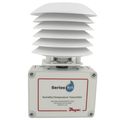
Humidistats and dehumidistats are humidity controls that switch a humidifier or dehumidifier on and off based on a relative humidity setpoint. A humidistat calls for humidity when indoor air is too dry. A dehumidistat calls for moisture removal when indoor air is too wet.
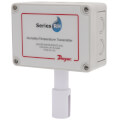
Controls in this category cover common install styles, including duct-mounted, wall-mounted, and vertical or horizontal mounting options. Setpoint ranges vary by model, with options spanning low setpoints and high setpoints into the 90% relative humidity range. Some dehumidistats in this category list a 20% to 80% relative humidity range.
Humidity control usually sits between equipment and comfort. A whole-house humidifier does the adding, and a humidistat does the deciding.
Whole-house humidifiers live here:
https://www.supplyhouse.com/Humidifiers-1380000
When troubleshooting a humidifier that stopped producing moisture, replacement parts and water panels tend to get pulled into the same cart as the control.
Humidifier replacement parts live here:
https://www.supplyhouse.com/Humidifier-Replacement-Parts-31462000
A dehumidistat plays the same role on the opposite side of the problem.
Whole-house and ducted dehumidifiers live here:
https://www.supplyhouse.com/Dehumidifiers-14881000
For systems where humidity control is part of a larger comfort strategy, thermostats and HVAC controls often get reviewed at the same time.
Thermostats live here:
https://www.supplyhouse.com/Thermostats-327000
How to narrow the right control fast
Start with where the control mounts.
Wall-mounted controls make sense when the goal is easy access and a living-space reference point. Duct-mounted controls make sense when the goal is sensing within the air stream and keeping wiring near the equipment.
Match the control type to the equipment.
Manual humidifier controls fit simple setups. Digital and automatic controls add tighter setpoint control, and some models use outdoor sensing to help adjust target humidity when outdoor temperature swings.
Confirm the humidity range needed.
Basement and crawlspace dehumidification often calls for higher humidity setpoints than winter humidification. A quick range check prevents buying a control that cannot be set where the system actually needs to run.
Keep serviceability in mind.
A control that is easy to access tends to get adjusted correctly and maintained. A control buried near equipment tends to get ignored until the next comfort complaint.
FAQs
What is the difference between a humidistat and a dehumidistat?
A humidistat calls for humidity when indoor air drops below the setpoint. A dehumidistat calls for moisture removal when indoor air rises above the setpoint. Both are humidity controllers, and the difference is which direction the control logic goes.
What is a realistic indoor humidity target?
Many homes aim for roughly 30% to 50% relative humidity for everyday comfort. Cold-weather operation often runs lower to reduce condensation risk on windows and exterior walls. Humid climates and basements often run higher, and dehumidification brings that number back down.
What is the advantage of an outdoor sensor on a humidistat?
Outdoor sensing helps automatic controls lower the target humidity when outdoor temperatures drop. That adjustment helps limit condensation on glass and cold surfaces while still maintaining comfort.
Should humidity be controlled from the wall or from the duct?
Wall mounting reads conditions where people live. Duct mounting reads conditions in the air stream. The better choice depends on system layout and the goal for control, but either approach works when placement avoids drafts, supply registers, and direct equipment discharge.
Can one control run both a humidifier and a dehumidifier?
Some controls are designed as combination humidistat and dehumidistat units. Combination controls are useful when one interface is preferred for both humidification and dehumidification logic.
Why do some dehumidistats list a 20% to 80% range?
A dehumidistat needs a humidity range that matches common moisture-control use cases, including basements and mechanical rooms. A range like 20% to 80% covers low humidity settings for tighter control and higher settings for spaces that only need occasional moisture removal.
What else usually gets replaced with a humidistat?
On humidifier systems, pads, panels, or other consumables often get replaced around the same time as a control.
Humidifier replacement parts live here:
https://www.supplyhouse.com/Humidifier-Replacement-Parts-31462000
When is a dehumidistat the wrong tool?
If humidity issues are caused by standing water, bulk water intrusion, poor drainage, or missing vapor barriers, the control is not the fix. A dehumidistat can switch equipment correctly, but it cannot solve the root moisture source.
