




Filters
SORT
Product Availability –
Brand –
BTU (Min) –
BTU (Max) –
Review Score –
 --%3E %3Csvg version='1.1' id='Fill' xmlns='http://www.w3.org/2000/svg' xmlns:xlink='http://www.w3.org/1999/xlink' x='0px' y='0px' viewBox='0 0 100 100' enable-background='new 0 0 100 100' xml:space='preserve'%3E %3Cpath fill='%23F15C02' d='M79.44,0.95H20.56C9.78,0.95,0.95,9.78,0.95,20.56v58.87c0,10.79,8.82,19.61,19.61,19.61h58.87 c10.79,0,19.61-8.83,19.61-19.61V20.56C99.05,9.78,90.22,0.95,79.44,0.95z M65.38,58.24l9.38,29.58L49.69,69.78L24.5,87.82 l9.34-29.6L8.8,39.6l30.73-0.17c0,0,6.98-19.61,10-28.93c0.54,1.36,9.88,29.1,9.88,29.1H91.2L65.38,58.24z'/%3E %3C/svg%3E)
 --%3E %3Csvg version='1.1' id='With-RB' xmlns='http://www.w3.org/2000/svg' xmlns:xlink='http://www.w3.org/1999/xlink' x='0px' y='0px' viewBox='0 0 100 100' enable-background='new 0 0 100 100' xml:space='preserve'%3E %3Cpath fill='%23FBC8B4' d='M79.44,0.95H20.56C9.78,0.95,0.95,9.78,0.95,20.56v58.87c0,10.79,8.82,19.61,19.61,19.61h58.87 c10.79,0,19.61-8.83,19.61-19.61V20.56C99.05,9.78,90.22,0.95,79.44,0.95z M65.38,58.24l9.38,29.58L49.69,69.78L24.5,87.82 l9.34-29.6L8.8,39.6l30.73-0.17c0,0,6.98-19.61,10-28.93c0.54,1.36,9.88,29.1,9.88,29.1H91.2L65.38,58.24z'/%3E %3C/svg%3E)
Price Range –
Hydronic Toe Kick Heaters

 --%3E %3Csvg version='1.1' id='Half' xmlns='http://www.w3.org/2000/svg' xmlns:xlink='http://www.w3.org/1999/xlink' x='0px' y='0px' viewBox='0 0 100 100' enable-background='new 0 0 100 100' xml:space='preserve'%3E %3Cg%3E %3Cpath fill='%23F15C02' d='M30.05,70.23l3.79-12.01L8.8,39.6l30.73-0.17c0,0,6.98-19.61,10-28.93c0.54,1.36,9.88,29.1,9.88,29.1h1.58 L93.71,7.18c-3.58-3.82-8.66-6.23-14.28-6.23H20.56C9.78,0.95,0.95,9.78,0.95,20.56v58.87c0,5.41,2.22,10.32,5.79,13.88 L30.05,70.23z'/%3E %3C/g%3E %3Cpath fill='%23FBC8B4' d='M93.71,7.18L60.98,39.6H91.2L65.38,58.24l9.38,29.58L49.69,69.78L24.5,87.82l5.55-17.59L6.75,93.32 c3.55,3.54,8.44,5.73,13.82,5.73h58.87c10.79,0,19.61-8.83,19.61-19.61V20.56C99.05,15.4,97.01,10.69,93.71,7.18z'/%3E %3C/svg%3E)

 --%3E %3Csvg version='1.1' id='No-RB' xmlns='http://www.w3.org/2000/svg' xmlns:xlink='http://www.w3.org/1999/xlink' x='0px' y='0px' viewBox='0 0 100 100' enable-background='new 0 0 100 100' xml:space='preserve'%3E %3Cpath fill='%23CECECE' d='M79.44,0.95H20.56C9.78,0.95,0.95,9.78,0.95,20.56v58.87c0,10.79,8.82,19.61,19.61,19.61h58.87 c10.79,0,19.61-8.83,19.61-19.61V20.56C99.05,9.78,90.22,0.95,79.44,0.95z M65.38,58.24l9.38,29.58L49.69,69.78L24.5,87.82 l9.34-29.6L8.8,39.6l30.73-0.17c0,0,6.98-19.61,10-28.93c0.54,1.36,9.88,29.1,9.88,29.1H91.2L65.38,58.24z'/%3E %3C/svg%3E)

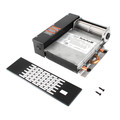
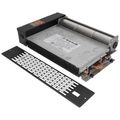
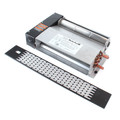
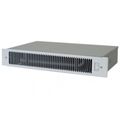
Hydronic toe kick heaters are compact fan-driven units installed inside the toe kick space beneath cabinetry to add supplemental heat to rooms where standard baseboard or radiator space is not available, such as kitchens and bathrooms. Hot water from a boiler loop circulates through a small finned coil inside the unit, and an integrated fan pushes warm air out through a low grille rather than relying on natural convection alone. Because they tie into an existing hydronic heating loop rather than needing electric resistance elements, these heaters work well as a zone extension on a home that already runs a boiler system. Contractors typically spec them for spaces where floor space is at a premium and a wall-mounted radiator or baseboard run is not practical. Sized correctly, a toe kick heater keeps a kitchen or bath comfortable without competing for cabinet or counter space.
Subcategories
- Recessed Toe Kick Heater Units: Recessed units install fully inside the cabinet toe kick cavity, with only the grille visible at floor level once the installation is complete. They require enough depth in the toe kick space to house the coil, fan, and housing together, so measuring available cavity depth before ordering is a necessary first step. Recessed units are the more common choice in new kitchen construction where the cabinet layout can be planned around the heater. A dedicated shutoff and balancing valve on the supply line makes future service easier without draining the whole loop.
- Surface-Mounted Toe Kick Heater Units: Surface-mounted units sit against the wall or cabinet base rather than recessing into it, which suits retrofit installations where cutting into an existing cabinet is not practical. These units still tie into the same hydronic supply and return piping as a recessed model but trade a slightly larger visible footprint for a much simpler installation. Contractors often choose this style for renovation work where the cabinetry is already in place. Fan noise level is worth checking on surface-mounted models since they sit closer to occupied floor space.
- Replacement Fan Motors and Coils: Fan motors in toe kick heaters run more hours than a typical baseboard unit because they cycle whenever the zone calls for heat, which makes them a common wear item over the life of the installation. Replacement coils are needed less often but do fail from mineral buildup or a pinhole leak after years of service, particularly in areas with hard water in the loop. Matching a replacement motor's voltage and CFM rating to the original unit keeps airflow and noise levels consistent. Keeping a spare motor on hand is common practice for properties with several toe kick heaters installed.
- Grilles and Housings: Grilles cover the heater opening at floor level and are sized to match the specific heater model's housing dimensions. Housings protect the coil and fan assembly and, on recessed models, also frame the opening cut into the cabinet base. Replacing a damaged or corroded grille is a straightforward repair that does not require draining the hydronic loop. Matching grille finish to the surrounding cabinetry or flooring is mostly an aesthetic decision left to the homeowner or designer.
Buying Guide
Start with available cavity depth and width in the toe kick space, since this dimension determines whether a recessed unit will fit or whether a surface-mounted model is the more practical choice. Measure the opening before ordering rather than after the cabinets are already installed, particularly on new construction jobs where the heater location should be planned into the cabinet layout from the start.
Match the heater's heating output to the room's heat loss rather than defaulting to whatever unit was used on a previous job. A kitchen with a large exterior wall and several windows loses heat faster than an interior bathroom of the same size, so a single toe kick heater size does not fit every application. Confirm the supply water temperature available from the boiler loop as well, since output drops as loop temperature drops on a lower-temperature system.
Check electrical requirements for the fan motor alongside the hydronic connections, since Hydronic Toe Kick Heaters still need a power feed even though the heat itself comes from hot water rather than resistance elements. Plan for isolation valves on the supply and return lines so the unit can be serviced or removed without draining the entire zone. Finally, confirm fan noise ratings if the heater will sit in a bathroom or bedroom area where a quieter operation matters more than in a kitchen.
Frequently Asked Questions
Can a hydronic toe kick heater run off the same boiler loop as baseboard heat?
Yes, toe kick heaters are designed to tie into an existing hydronic loop and can share a zone with baseboard or radiator heat as long as the combined load is within the boiler and circulator's capacity. Some installations give the toe kick heater its own zone valve so it can be controlled independently of the rest of the loop. Checking total system capacity before adding a unit avoids undersizing the boiler for the added load.
Do toe kick heaters need electrical power in addition to hot water?
Yes, the fan that pushes air across the coil requires a standard electrical connection even though the heat source itself is hot water rather than resistance elements. Most units run on a standard household circuit, but the exact requirement varies by model and should be checked before installation. Running both the hydronic piping and an electrical feed to the cabinet location needs to be planned together.
Why is my toe kick heater not putting out much heat?
The most common causes are a partially closed isolation valve restricting water flow, a fan motor that has slowed or failed, or a coil that has scaled up internally over years of service. Checking loop water temperature at the unit is also worthwhile, since a heater fed by lukewarm supply water will underperform even with everything else working correctly. Isolating each of these possibilities in order usually narrows down the cause quickly.
How much clearance does a toe kick heater need for installation?
Clearance requirements vary by model, but a recessed unit needs enough cavity depth and width to house the coil, fan, and housing together, plus a bit of extra room for the supply and return connections. Surface-mounted units generally need less cutting into the cabinet but still require enough floor space to sit flush against the base. Checking the specific unit's installation instructions before finalizing cabinet plans avoids a fit problem later.
Can a toe kick heater replace baseboard heat entirely in a kitchen?
It can, provided the unit is sized correctly for the room's heat loss, since kitchens often lose more wall space to cabinetry than other rooms, leaving little room for traditional baseboard. Many kitchens use a toe kick heater as the primary heat source specifically because standard baseboard has nowhere to go along cabinet runs. A proper heat loss calculation for the room confirms whether one unit is sufficient or whether a second is needed.
