




Filters
SORT
Product Availability –
Brand –
Size –
Series –
Equipped –
Review Score –
 --%3E %3Csvg version='1.1' id='Fill' xmlns='http://www.w3.org/2000/svg' xmlns:xlink='http://www.w3.org/1999/xlink' x='0px' y='0px' viewBox='0 0 100 100' enable-background='new 0 0 100 100' xml:space='preserve'%3E %3Cpath fill='%23F15C02' d='M79.44,0.95H20.56C9.78,0.95,0.95,9.78,0.95,20.56v58.87c0,10.79,8.82,19.61,19.61,19.61h58.87 c10.79,0,19.61-8.83,19.61-19.61V20.56C99.05,9.78,90.22,0.95,79.44,0.95z M65.38,58.24l9.38,29.58L49.69,69.78L24.5,87.82 l9.34-29.6L8.8,39.6l30.73-0.17c0,0,6.98-19.61,10-28.93c0.54,1.36,9.88,29.1,9.88,29.1H91.2L65.38,58.24z'/%3E %3C/svg%3E)
 --%3E %3Csvg version='1.1' id='With-RB' xmlns='http://www.w3.org/2000/svg' xmlns:xlink='http://www.w3.org/1999/xlink' x='0px' y='0px' viewBox='0 0 100 100' enable-background='new 0 0 100 100' xml:space='preserve'%3E %3Cpath fill='%23FBC8B4' d='M79.44,0.95H20.56C9.78,0.95,0.95,9.78,0.95,20.56v58.87c0,10.79,8.82,19.61,19.61,19.61h58.87 c10.79,0,19.61-8.83,19.61-19.61V20.56C99.05,9.78,90.22,0.95,79.44,0.95z M65.38,58.24l9.38,29.58L49.69,69.78L24.5,87.82 l9.34-29.6L8.8,39.6l30.73-0.17c0,0,6.98-19.61,10-28.93c0.54,1.36,9.88,29.1,9.88,29.1H91.2L65.38,58.24z'/%3E %3C/svg%3E)
Price Range –
Inverted Bucket Steam Traps

 --%3E %3Csvg version='1.1' id='No-RB' xmlns='http://www.w3.org/2000/svg' xmlns:xlink='http://www.w3.org/1999/xlink' x='0px' y='0px' viewBox='0 0 100 100' enable-background='new 0 0 100 100' xml:space='preserve'%3E %3Cpath fill='%23CECECE' d='M79.44,0.95H20.56C9.78,0.95,0.95,9.78,0.95,20.56v58.87c0,10.79,8.82,19.61,19.61,19.61h58.87 c10.79,0,19.61-8.83,19.61-19.61V20.56C99.05,9.78,90.22,0.95,79.44,0.95z M65.38,58.24l9.38,29.58L49.69,69.78L24.5,87.82 l9.34-29.6L8.8,39.6l30.73-0.17c0,0,6.98-19.61,10-28.93c0.54,1.36,9.88,29.1,9.88,29.1H91.2L65.38,58.24z'/%3E %3C/svg%3E)
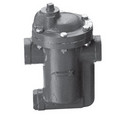
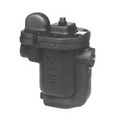
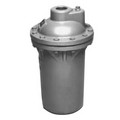
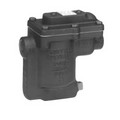
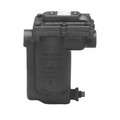

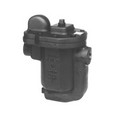
Inverted Bucket Steam Traps are mechanical devices that separate condensate from live steam in steam distribution and process heating systems. A bucket floats upside down inside the trap body; steam entering the bucket keeps it buoyant and closed against the valve seat, while condensate filling the bucket causes it to sink and open the discharge valve. Sizes commonly range from 1/2 inch to 3 inches, and bodies are available in cast iron, carbon steel, or alloy steel depending on pressure and temperature requirements. Because the mechanism works directly off the density difference between steam and condensate, these traps handle waterhammer and dirty condensate better than many float or thermostatic designs. Some models include a check valve at the inlet, which allows operation with superheated steam. Contractors specifying traps for boiler rooms, unit heaters, or steam mains need a design that keeps pace with load swings without losing prime, and inverted bucket traps deliver that reliability across food processing, hospital, and industrial steam systems.
Subcategories
- Cast Iron Body Traps: Cast iron inverted bucket traps cover the bulk of low and medium pressure steam applications, including unit heaters, tracing lines, and process equipment in commercial buildings. Sizes run from 1/2 inch through 3 inches, matching the range used across the inverted bucket product line. Facilities maintenance crews favor cast iron bodies because the material is easy to machine for repair and holds up well in indoor, non corrosive environments. Boiler rooms and steam mains in schools and hospitals commonly use this body style.
- Carbon Steel Body Traps: Carbon steel inverted bucket traps handle higher pressure and temperature service than cast iron versions, making them a fit for welded steam distribution systems. The same 1/2 inch to 3 inch size range applies, so plants can standardize trap internals across body materials. Refineries, plants with elevated ambient temperatures, and systems prone to thermal cycling benefit from the added strength of a steel shell. Piping crews often choose carbon steel bodies when local code requires welded rather than threaded connections.
- Alloy Steel Body Traps: Alloy steel inverted bucket traps are built for severe service where pressure, temperature, or corrosive condensate would shorten the life of a standard steel or iron body. They share the 1/2 inch to 3 inch sizing found across the category, so specifiers can drop them into existing pipe runs. Power plants, chemical processing lines, and high pressure steam headers rely on alloy construction to avoid frequent trap replacement. Engineers typically reserve this body style for the harshest points in a steam system.
- High-Pressure and Superheated Steam Traps: High pressure inverted bucket traps add a check valve at the inlet, letting the trap operate on superheated steam without losing its water seal. The design covers the same 1/2 inch to 3 inch range as the standard line, so upgrading from a lower pressure trap does not change the footprint. Power boiler rooms, turbine exhaust lines, and other high pressure steam mains are the typical proving ground for this option. Selecting the high pressure trap protects against bucket flooding when steam conditions push past a standard trap's rating.
Buying Guide
Choosing the right trap starts with system pressure and temperature, since that determines whether a cast iron, carbon steel, or alloy steel body is appropriate. Cast iron covers most indoor, low to medium pressure runs, while carbon steel and alloy steel step up for welded systems, higher temperatures, or corrosive condensate. Next, match the trap size to the connected pipe and expected condensate load; inverted bucket traps in the 1/2 inch to 3 inch range cover the vast majority of unit heaters, steam mains, and process equipment found in commercial and industrial buildings. Orifice size matters as much as body size, since an undersized orifice backs up condensate while an oversized one wastes steam, so pulling load data from the equipment being trapped keeps the selection accurate. For systems running superheated steam or subject to sudden load swings, a design with a check valve at the inlet holds its water seal better than a standard trap. Inverted Bucket Steam Traps also tolerate waterhammer and dirty condensate better than float and thermostatic designs, which matters on older steam mains where debris and slugging are common. Connection type, whether threaded or flanged, should match the existing pipe run to avoid adding unnecessary fittings. Maintenance access is worth checking too, since some bodies allow internal parts to be serviced without removing the trap from the line, cutting downtime during boiler season.
Frequently Asked Questions
What size inverted bucket steam trap do I need for a unit heater?
Inverted bucket steam traps for unit heaters generally fall within the standard 1/2 inch to 3 inch size range used across the category. Matching orifice size to the heater's actual condensate load matters more than matching pipe size alone. Checking the heater's steam consumption rating before ordering avoids a trap that cannot keep pace with full load.
How does an inverted bucket steam trap handle waterhammer compared to other trap types?
An inverted bucket steam trap uses a solid mechanical bucket instead of a float or bimetallic element, so it withstands waterhammer and slugging better than float or thermostatic designs. Because the bucket motion is driven by the density difference between steam and condensate, it keeps working even when condensate arrives in surges. Older steam mains with rough piping or debris are common places this trap type gets specified for that reason.
When is a carbon steel or alloy steel body needed instead of cast iron?
Carbon steel and alloy steel bodies handle higher pressure, higher temperature, and more corrosive condensate than a standard cast iron inverted bucket trap. Facilities running welded steam distribution systems often specify steel bodies to match the piping material and pressure class. Cast iron remains the standard choice for indoor, low to medium pressure runs where those conditions are not a factor.
Can an inverted bucket steam trap be used with superheated steam?
Standard inverted bucket traps are not built for superheated steam, since the missing water film around the bucket can affect the seal. Models with a check valve at the inlet are designed specifically for this condition, holding the water seal even when steam arrives without moisture. Specifying that option upfront avoids a trap failure on turbine exhaust lines or high pressure headers running superheated steam.
What causes an inverted bucket steam trap to fail?
Wear at the valve seat or a lost prime inside the bucket are the most common failure points on an inverted bucket steam trap. Debris in the steam system can also lodge in the valve and mechanism, holding the trap open or closed longer than it should. Periodic testing catches worn internals before they lead to steam loss or waterlogged coils.
