




Filters
SORT
Product Availability –
Review Score –
 --%3E %3Csvg version='1.1' id='Fill' xmlns='http://www.w3.org/2000/svg' xmlns:xlink='http://www.w3.org/1999/xlink' x='0px' y='0px' viewBox='0 0 100 100' enable-background='new 0 0 100 100' xml:space='preserve'%3E %3Cpath fill='%23F15C02' d='M79.44,0.95H20.56C9.78,0.95,0.95,9.78,0.95,20.56v58.87c0,10.79,8.82,19.61,19.61,19.61h58.87 c10.79,0,19.61-8.83,19.61-19.61V20.56C99.05,9.78,90.22,0.95,79.44,0.95z M65.38,58.24l9.38,29.58L49.69,69.78L24.5,87.82 l9.34-29.6L8.8,39.6l30.73-0.17c0,0,6.98-19.61,10-28.93c0.54,1.36,9.88,29.1,9.88,29.1H91.2L65.38,58.24z'/%3E %3C/svg%3E)
 --%3E %3Csvg version='1.1' id='With-RB' xmlns='http://www.w3.org/2000/svg' xmlns:xlink='http://www.w3.org/1999/xlink' x='0px' y='0px' viewBox='0 0 100 100' enable-background='new 0 0 100 100' xml:space='preserve'%3E %3Cpath fill='%23FBC8B4' d='M79.44,0.95H20.56C9.78,0.95,0.95,9.78,0.95,20.56v58.87c0,10.79,8.82,19.61,19.61,19.61h58.87 c10.79,0,19.61-8.83,19.61-19.61V20.56C99.05,9.78,90.22,0.95,79.44,0.95z M65.38,58.24l9.38,29.58L49.69,69.78L24.5,87.82 l9.34-29.6L8.8,39.6l30.73-0.17c0,0,6.98-19.61,10-28.93c0.54,1.36,9.88,29.1,9.88,29.1H91.2L65.38,58.24z'/%3E %3C/svg%3E)
Price Range –
Lennox Conversion Kits

 --%3E %3Csvg version='1.1' id='No-RB' xmlns='http://www.w3.org/2000/svg' xmlns:xlink='http://www.w3.org/1999/xlink' x='0px' y='0px' viewBox='0 0 100 100' enable-background='new 0 0 100 100' xml:space='preserve'%3E %3Cpath fill='%23CECECE' d='M79.44,0.95H20.56C9.78,0.95,0.95,9.78,0.95,20.56v58.87c0,10.79,8.82,19.61,19.61,19.61h58.87 c10.79,0,19.61-8.83,19.61-19.61V20.56C99.05,9.78,90.22,0.95,79.44,0.95z M65.38,58.24l9.38,29.58L49.69,69.78L24.5,87.82 l9.34-29.6L8.8,39.6l30.73-0.17c0,0,6.98-19.61,10-28.93c0.54,1.36,9.88,29.1,9.88,29.1H91.2L65.38,58.24z'/%3E %3C/svg%3E)

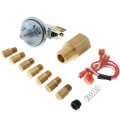
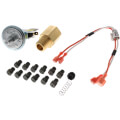
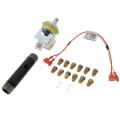
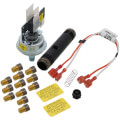
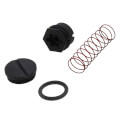
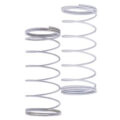
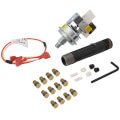
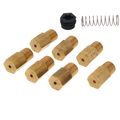
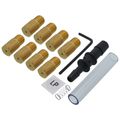
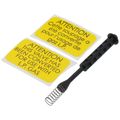

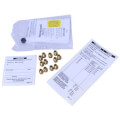

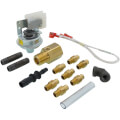
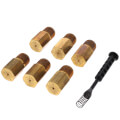
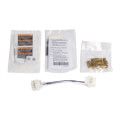
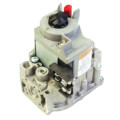
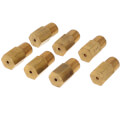
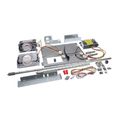
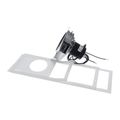

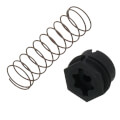
Lennox conversion kits let a furnace switch its gas orifices and regulator settings between natural gas and liquid propane, or adjust for high-altitude installations, without replacing the entire gas valve assembly. A technician installs one of these kits when a furnace is moving to a home without natural gas service, when a customer switches fuel suppliers, or when the unit is being installed above the elevation its factory settings were configured for. Because orifice sizing and regulator spring tension both change with fuel type and altitude, using the wrong kit results in a furnace that either underfires or overfires relative to its rated input. Lennox conversion kits are matched to specific furnace series and stage configurations, so confirming the furnace model before ordering avoids a mismatch between the kit's orifice sizing and the burner assembly already installed. Getting the conversion right the first time keeps the furnace operating at its intended BTU input and combustion efficiency.
Subcategories
- Natural Gas to Propane Conversion Kits: Natural gas to propane conversion kits swap the burner orifices and adjust the gas valve regulator so a furnace built for natural gas can safely burn propane instead. Technicians install these kits most often when a furnace is moving into a home without a natural gas utility connection, or when new construction defaults to propane service. Propane burns at a different pressure and orifice size than natural gas, so reusing natural gas orifices after a fuel switch results in incorrect firing rate. Matching the kit to the exact furnace series keeps the orifice count and burner spacing correct.
- Propane to Natural Gas Conversion Kits: Propane to natural gas conversion kits reverse the process, resizing orifices and adjusting the regulator when a property gains access to natural gas utility service after being installed on propane. Switching from propane to natural gas is common when a natural gas line gets extended to a rural property that previously relied on a propane tank. Confirming the furnace's gas valve type, since some models use White Rodgers or Resideo valves with different conversion parts, keeps the kit compatible with the installed equipment. Reusing propane-sized orifices with natural gas service leads to an underfired furnace that struggles to reach its rated heat output.
- High-Altitude Conversion Kits: High-altitude conversion kits adjust orifice sizing for furnaces installed at elevations where thinner air changes how efficiently gas burns. Lennox rates some conversion kits for installations up to a specified elevation ceiling, beyond which the furnace's manifold pressure and orifice sizing both need adjustment from sea-level factory defaults. Technicians working in mountain regions typically confirm the installation altitude before ordering to make sure the kit's rated range actually covers the job site. Skipping this adjustment at elevation can leave a furnace running rich and producing excess carbon monoxide.
Buying Guide
Start by identifying the furnace's exact model and series, since Lennox conversion kits are matched to specific burner and gas valve configurations rather than sold as a universal part. The model number is typically printed on a rating plate inside the furnace's front access panel, and cross-referencing that number against the parts catalog is more reliable than assuming a kit will fit based on furnace size alone.
Next, confirm the direction of the conversion needed. Some kits convert from natural gas to propane, while others reverse that process for a property gaining natural gas utility service, and ordering the wrong direction wastes a trip. For furnaces with two-stage or modulating burners, verify the kit is rated for that staging configuration, since orifice sizing differs from single-stage equipment even within the same furnace family.
If the installation is above typical sea-level elevation, check whether the site's altitude falls within the kit's rated range or requires a separate high-altitude adjustment, since thinner air at elevation changes how the burner needs to be set regardless of fuel type. After installing Lennox conversion kits, always run a combustion analysis to confirm manifold pressure and CO readings are within the furnace manufacturer's specification before closing up the unit, since a skipped combustion test can leave an incorrect conversion undetected until a callback.
Frequently Asked Questions
How do you know if a furnace needs a natural gas to propane conversion kit?
If the furnace is being installed or moved to a property without natural gas utility service, or the customer is switching to propane fuel delivery, the burner orifices and gas valve regulator need to be converted for the new fuel type before startup.
Can the same conversion kit work for both single-stage and two-stage furnaces?
No. Two-stage and modulating furnaces typically use different orifice sizing and valve configurations than single-stage units, so the conversion kit has to match the furnace's staging as well as its model number.
What happens if the wrong conversion kit is installed?
Mismatched orifice sizing causes the furnace to either underfire, which can lead to poor heat output and condensation issues, or overfire, which risks overheating the heat exchanger and tripping safety limits.
Do high-altitude installations always need a separate conversion kit?
Only above the elevation ceiling the furnace's factory settings are rated for. Below that threshold, standard orifice sizing is typically sufficient, but installations above the rated elevation need the adjusted orifice and manifold pressure settings.
Does converting fuel type affect the furnace's warranty?
Using a Lennox-specified conversion kit installed according to the furnace's installation instructions keeps the conversion within the manufacturer's intended service parameters, but skipping the combustion test after conversion leaves any resulting performance issue unconfirmed.
