




Filters
SORT
Product Availability –
Material –
Review Score –
 --%3E %3Csvg version='1.1' id='Fill' xmlns='http://www.w3.org/2000/svg' xmlns:xlink='http://www.w3.org/1999/xlink' x='0px' y='0px' viewBox='0 0 100 100' enable-background='new 0 0 100 100' xml:space='preserve'%3E %3Cpath fill='%23F15C02' d='M79.44,0.95H20.56C9.78,0.95,0.95,9.78,0.95,20.56v58.87c0,10.79,8.82,19.61,19.61,19.61h58.87 c10.79,0,19.61-8.83,19.61-19.61V20.56C99.05,9.78,90.22,0.95,79.44,0.95z M65.38,58.24l9.38,29.58L49.69,69.78L24.5,87.82 l9.34-29.6L8.8,39.6l30.73-0.17c0,0,6.98-19.61,10-28.93c0.54,1.36,9.88,29.1,9.88,29.1H91.2L65.38,58.24z'/%3E %3C/svg%3E)
 --%3E %3Csvg version='1.1' id='With-RB' xmlns='http://www.w3.org/2000/svg' xmlns:xlink='http://www.w3.org/1999/xlink' x='0px' y='0px' viewBox='0 0 100 100' enable-background='new 0 0 100 100' xml:space='preserve'%3E %3Cpath fill='%23FBC8B4' d='M79.44,0.95H20.56C9.78,0.95,0.95,9.78,0.95,20.56v58.87c0,10.79,8.82,19.61,19.61,19.61h58.87 c10.79,0,19.61-8.83,19.61-19.61V20.56C99.05,9.78,90.22,0.95,79.44,0.95z M65.38,58.24l9.38,29.58L49.69,69.78L24.5,87.82 l9.34-29.6L8.8,39.6l30.73-0.17c0,0,6.98-19.61,10-28.93c0.54,1.36,9.88,29.1,9.88,29.1H91.2L65.38,58.24z'/%3E %3C/svg%3E)
Price Range –
Lennox Heat Exchangers


 --%3E %3Csvg version='1.1' id='No-RB' xmlns='http://www.w3.org/2000/svg' xmlns:xlink='http://www.w3.org/1999/xlink' x='0px' y='0px' viewBox='0 0 100 100' enable-background='new 0 0 100 100' xml:space='preserve'%3E %3Cpath fill='%23CECECE' d='M79.44,0.95H20.56C9.78,0.95,0.95,9.78,0.95,20.56v58.87c0,10.79,8.82,19.61,19.61,19.61h58.87 c10.79,0,19.61-8.83,19.61-19.61V20.56C99.05,9.78,90.22,0.95,79.44,0.95z M65.38,58.24l9.38,29.58L49.69,69.78L24.5,87.82 l9.34-29.6L8.8,39.6l30.73-0.17c0,0,6.98-19.61,10-28.93c0.54,1.36,9.88,29.1,9.88,29.1H91.2L65.38,58.24z'/%3E %3C/svg%3E)
 --%3E %3Csvg version='1.1' id='Half' xmlns='http://www.w3.org/2000/svg' xmlns:xlink='http://www.w3.org/1999/xlink' x='0px' y='0px' viewBox='0 0 100 100' enable-background='new 0 0 100 100' xml:space='preserve'%3E %3Cg%3E %3Cpath fill='%23F15C02' d='M30.05,70.23l3.79-12.01L8.8,39.6l30.73-0.17c0,0,6.98-19.61,10-28.93c0.54,1.36,9.88,29.1,9.88,29.1h1.58 L93.71,7.18c-3.58-3.82-8.66-6.23-14.28-6.23H20.56C9.78,0.95,0.95,9.78,0.95,20.56v58.87c0,5.41,2.22,10.32,5.79,13.88 L30.05,70.23z'/%3E %3C/g%3E %3Cpath fill='%23FBC8B4' d='M93.71,7.18L60.98,39.6H91.2L65.38,58.24l9.38,29.58L49.69,69.78L24.5,87.82l5.55-17.59L6.75,93.32 c3.55,3.54,8.44,5.73,13.82,5.73h58.87c10.79,0,19.61-8.83,19.61-19.61V20.56C99.05,15.4,97.01,10.69,93.71,7.18z'/%3E %3C/svg%3E)
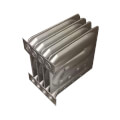
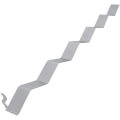

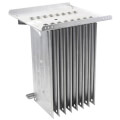
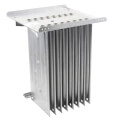
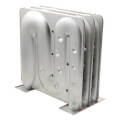
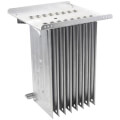
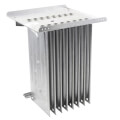
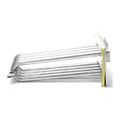
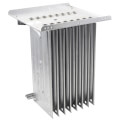
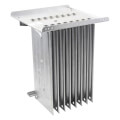

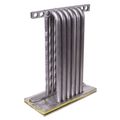
Lennox heat exchangers are replacement components that transfer combustion heat into the air stream inside a furnace cabinet while keeping flue gases separated from the air a building breathes. Technicians pull a heat exchanger when a furnace fails a combustion-gas leak test, shows visible cracking or rust-through, or trips a rollout or limit switch repeatedly during a heating cycle. Because Lennox furnace cabinets and burner assemblies vary by series and BTU size, a replacement heat exchanger has to match the original part number and orientation exactly or it will not seat against the burner box and vestibule panel. Both primary and secondary heat exchangers see repeated expansion and contraction every time the burners fire, which is why corrosion at weld seams and clam-shell joints is the most common failure point on older units. Swapping in the correct exchanger restores safe, efficient combustion and stops the furnace from cycling on safety lockouts.
Subcategories
- Primary Heat Exchangers: Primary heat exchangers sit directly above the burner assembly and absorb the first and most intense stage of combustion heat. HVAC technicians typically replace this component when they find cracking, rust perforation, or a failed combustion analyzer reading during a safety inspection. Because the primary chamber runs the hottest, its walls tend to fail years before the secondary coil does on the same furnace. A correctly matched primary exchanger has to line up with the existing burner orifices and igniter bracket without modification.
- Secondary/Condensing Coil Heat Exchangers: Secondary heat exchangers, used on high-efficiency condensing furnaces, extract additional heat from flue gases after they leave the primary chamber, which is what allows those units to reach higher efficiency ratings. Condensate produced in this stage is acidic, so the coil material and drain routing have to handle ongoing moisture exposure without corroding prematurely. Contractors replacing a condensing coil typically also inspect the drain trap and neutralizer kit at the same time, since a clogged drain is a common contributor to coil failure. Fitting the correct coil orientation keeps the flue gas pressure switch reading accurately.
- Heat Exchanger Gaskets and Seals: Gaskets and seals close the joints between the heat exchanger, vestibule panel, and blower compartment so combustion air and return air never mix inside the cabinet. A worn or brittle gasket is a common source of a failed combustion-air leak test even when the heat exchanger metal itself is still sound. Replacing the seal kit alongside the heat exchanger keeps the repair from needing a return visit for a secondary leak. Technicians match seal kits to the exact furnace model since gasket thickness and shape differ across Lennox furnace families.
- Heat Exchanger Mounting Hardware: Mounting brackets, clips, and fasteners hold the heat exchanger assembly in position against the burner box and blower deck. Over years of vibration and thermal cycling, these small parts can loosen or corrode, letting the heat exchanger shift slightly out of alignment with the burners. Replacing worn hardware during a heat exchanger swap prevents rattling and keeps the flame pattern centered on each burner. Stocking the correct hardware kit for a given furnace series saves a second trip once the new exchanger is already installed.
Buying Guide
Start a Lennox heat exchanger replacement by confirming the furnace's exact model and serial number, since Lennox has produced several heat exchanger designs across different furnace platforms and BTU sizes over the years. Pulling the existing part number off the vestibule panel or the exchanger itself, when it is still legible, is the most reliable way to avoid ordering the wrong shape or connection pattern. Match single-stage, two-stage, and modulating furnace variants carefully, because the burner orifice spacing and heat exchanger cell count often differ between them even within the same cabinet size.
Inspect the whole combustion assembly before ordering, not just the heat exchanger. A cracked or corroded exchanger is frequently paired with a worn gasket, a scaled igniter, or a flame sensor reading outside spec, and replacing only the exchanger without addressing those issues can bring a technician back for a second visit. On condensing units, check the condensate drain and trap for blockage at the same time, since a restricted drain is a common contributor to secondary coil failure.
Confirm venting and combustion air requirements have not changed since the original installation, especially on older Lennox Heat Exchangers where the furnace may predate current code requirements for sealed combustion. A furnace that fails a post-repair combustion test usually points back to a venting or air-supply problem rather than the new exchanger itself, so verify draft and gas pressure readings before closing up the cabinet.
Frequently Asked Questions
How do I know if a Lennox furnace needs a new heat exchanger instead of a repair?
A cracked or rusted-through heat exchanger cannot be safely patched or welded in the field, so it always calls for full replacement rather than a spot repair. Warning signs include a failed combustion-gas leak test, visible rust flaking near weld seams, or a furnace that repeatedly trips its rollout or limit switch. Any of these findings during a safety inspection means the exchanger should be swapped before the furnace runs again.
Can a secondary heat exchanger be replaced without swapping the primary one too?
Yes, on most condensing furnace platforms the primary and secondary heat exchangers are separate parts that can be replaced independently. Technicians typically only replace both together if the furnace has had an internal water leak or corrosion severe enough to affect both stages. Checking each component's condition separately during teardown avoids replacing a part that is still sound.
What causes premature heat exchanger corrosion on a Lennox furnace?
Condensate exposure, a cracked or leaking drain trap, and years of repeated thermal expansion at weld seams are the most common causes. Furnaces installed in humid basements or crawl spaces tend to see faster corrosion than units in dry, conditioned mechanical rooms. Addressing drainage and humidity issues around the furnace after a heat exchanger replacement helps the new part last longer.
Does a heat exchanger replacement require new gaskets and mounting hardware?
In most cases, yes. The gaskets and seals that closed against the old exchanger are usually brittle or compressed by the time a replacement is needed, and reusing them risks a combustion-air leak even with a brand-new exchanger installed. Ordering a full seal kit alongside the exchanger avoids a callback for a leak test failure.
Why does a furnace need a combustion test after installing a new heat exchanger?
A post-installation combustion test confirms the new exchanger is sealed correctly and that flue gases are venting properly rather than spilling into the living space. It also verifies gas pressure and draft are within the furnace manufacturer's specification, since an incorrect reading can point to a venting or air-supply issue unrelated to the new part. Skipping this test leaves a safety issue unconfirmed even after a correct parts swap.
