




Lennox Reversing Valves

 --%3E %3Csvg version='1.1' id='No-RB' xmlns='http://www.w3.org/2000/svg' xmlns:xlink='http://www.w3.org/1999/xlink' x='0px' y='0px' viewBox='0 0 100 100' enable-background='new 0 0 100 100' xml:space='preserve'%3E %3Cpath fill='%23CECECE' d='M79.44,0.95H20.56C9.78,0.95,0.95,9.78,0.95,20.56v58.87c0,10.79,8.82,19.61,19.61,19.61h58.87 c10.79,0,19.61-8.83,19.61-19.61V20.56C99.05,9.78,90.22,0.95,79.44,0.95z M65.38,58.24l9.38,29.58L49.69,69.78L24.5,87.82 l9.34-29.6L8.8,39.6l30.73-0.17c0,0,6.98-19.61,10-28.93c0.54,1.36,9.88,29.1,9.88,29.1H91.2L65.38,58.24z'/%3E %3C/svg%3E)

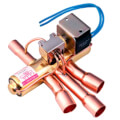
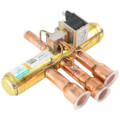
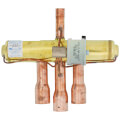
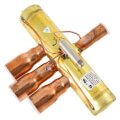
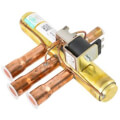
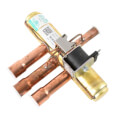


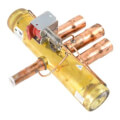
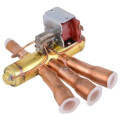


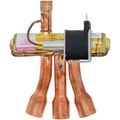
Lennox Reversing Valves are the components in Lennox heat pump systems that switch refrigerant flow direction, allowing a single system to provide both heating and cooling from the same equipment. The valve redirects refrigerant between the indoor and outdoor coils depending on whether the system is called to heat or cool, making it one of the more critical moving parts in a heat pump's refrigeration circuit.
A reversing valve that sticks or fails to switch properly can leave a system stuck in one mode, unable to heat or cool as needed, or cause it to short-cycle between modes. Because the valve sits directly in the refrigerant line, replacement requires proper refrigerant recovery and brazing skills rather than a simple parts swap.
Subcategories
- Solenoid Coils: The solenoid coil is the electrical component that energizes to shift the reversing valve between heating and cooling positions, and a failed coil is a common reason a valve won't switch even though the valve body itself is undamaged. Coil failures typically show up as a system stuck in one mode with no unusual refrigerant symptoms otherwise present. Replacing just the coil, rather than the entire valve, is often the lower-cost fix when the valve body still functions correctly.
- Valve Bodies: The valve body contains the internal slide mechanism that physically redirects refrigerant flow, and wear or internal leakage inside the body can cause a system to lose capacity or fail to fully switch modes. Replacing a valve body requires recovering refrigerant from the system and brazing the new valve into the line set. Technicians typically replace the body when the coil tests correctly but the valve still doesn't shift properly.
- Full Valve Assemblies: A full reversing valve assembly includes both the valve body and its solenoid coil as a single matched unit, which some technicians prefer over replacing components separately to avoid pairing a used valve body with a new coil or vice versa. Full assemblies are a common choice when the exact cause of failure isn't clear or when the existing valve has significant wear.
Buying Guide
Confirm the exact model and tonnage of the Lennox heat pump before ordering a replacement, since Lennox Reversing Valves are sized to match specific system capacities and a mismatched valve can affect refrigerant flow and system performance. Diagnosis matters before purchase: if the system won't switch between heating and cooling at all, testing the solenoid coil for continuity is a useful first step, since a bad coil is a lower-cost fix than a full valve replacement.
If the coil tests fine but the system still won't switch, or if it switches but loses capacity afterward, the valve body itself may need replacement instead. Because reversing valves sit directly in the refrigerant circuit, replacing the valve body requires refrigerant recovery, brazing skill, and proper evacuation and recharge afterward, work that should only be performed by a licensed technician with the right tools and certification.
Deciding between a coil-only repair, a valve body replacement, or a full assembly often comes down to how much of the original valve is confirmed to still be working correctly; when in doubt, a full assembly removes the guesswork of pairing a used component with a new one. Keeping the refrigerant type and system charge specifications on hand before starting the repair helps avoid delays once the old valve has already been removed from the line set.
Frequently Asked Questions
What does a reversing valve actually do in a heat pump?
It redirects refrigerant flow between the indoor and outdoor coils, which is what allows a single heat pump system to provide both heating and cooling.
How can I tell if the problem is the coil or the valve body?
Testing the solenoid coil for continuity is a good first step; if the coil tests fine but the system still won't switch modes or loses capacity, the valve body itself may be the issue.
Can I replace just the coil instead of the whole valve?
Yes, if the valve body is still functioning correctly, replacing only the failed coil is typically the lower-cost repair compared to a full valve replacement.
Why does replacing a reversing valve require a licensed technician?
The valve sits directly in the refrigerant circuit, so replacement involves refrigerant recovery, brazing, and proper evacuation and recharge, work that requires refrigerant handling certification.
What are the signs of a failing reversing valve?
Common signs include a system stuck in one mode, an inability to switch between heating and cooling, or short-cycling between modes without a clear cause elsewhere in the system.
