




Level Switches
Level switches are electromechanical devices that monitor liquid height in a sump, tank, or basin. They signal a pump, alarm, or control panel when the liquid reaches a set point. A float or sensing element inside the switch rises and falls with the liquid, triggering the switch's contacts open or closed at the calibrated level.
Plumbers and pump installers rely on level switches to automate sump pumps, sewage ejector systems, and water storage tanks. This lets equipment turn on and off without a technician monitoring the liquid level directly. A properly matched switch keeps a pump from running dry or a tank from overflowing, protecting both the equipment and the space around it.

Subcategories
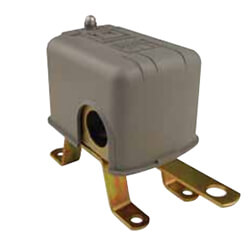
- Square D Float Switches: Square D float switches use a weighted float on a tether or rod to open or close a circuit at a preset liquid level. They are commonly wired into sump and sewage ejector pump systems to control on/off cycling or trigger a high water alarm.
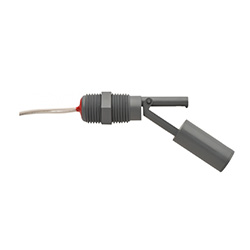
- Whitman Controls Level Switches: Whitman Controls level switches provide float-actuated switching for sump, effluent, and water level applications. Mounting styles suit pump chambers, storage tanks, and basins where a compact switch is needed.
Buying Guide
Selecting a level switch starts with the application: is it turning a pump on and off, triggering a high water alarm, or both? Single-float switches typically handle a single on/off point. Systems that need separate pump control and alarm functions call for two switches wired to different set points or a multi-float configuration.
Electrical rating matters as much as float action. Check the switch's voltage and amperage rating against the pump or control circuit it will operate. Wiring a level switch directly into a load that exceeds its rating can burn out the contacts or create a safety hazard.
Mounting style affects how the switch performs in the pit or tank. A tethered float switch needs enough clearance to swing freely without catching on the pit wall or other equipment. A vertical or rod-mounted switch fits narrower chambers where a swinging float has no room to travel.
Set point and differential, the gap between the on and off trigger levels, determine how often the connected pump cycles. A narrower differential keeps the liquid level more consistent but cycles the pump more frequently. A wider differential reduces cycling at the cost of a larger swing in liquid level.
Matching the switch to the pit or tank size and float travel distance keeps the system working as designed. Confirm the pit is wide and deep enough for the switch before installing it, since a pit that's too narrow can restrict float movement and cause erratic switching.
Frequently Asked Questions
What does a level switch do in a sump pump system?
It monitors the water level in the sump pit and closes or opens a circuit at a set height. The pump turns on when water rises and off once it drops, without a technician checking the pit manually.
How many level switches does a sump system need?
A basic system can run on a single switch for pump on/off control. Systems that also need a high water alarm typically add a second switch set at a higher trigger point.
Can a level switch be wired directly to a pump?
It depends on the switch's electrical rating relative to the pump's draw. Confirm the switch's voltage and amperage rating is sufficient for the pump circuit, or route it through a control panel or relay instead.
What is switch differential and why does it matter?
Differential is the vertical distance between the level that turns the switch on and the level that turns it off. A narrower differential keeps water level more consistent; a wider one reduces how often the pump cycles.
Do tethered float switches need clearance inside the pit?
Yes. A tethered float needs room to swing without striking the pit wall, pump, or other equipment, so pit diameter and switch placement should be checked before installation.
Resources
Subcategories
- Square D Float Switches: Square D float switches use a weighted float on a tether or rod to open or close a circuit at a preset liquid level. They are commonly wired into sump and sewage ejector pump systems to control on/off cycling or trigger a high water alarm.
- Whitman Controls Level Switches: Whitman Controls level switches provide float-actuated switching for sump, effluent, and water level applications. Mounting styles suit pump chambers, storage tanks, and basins where a compact switch is needed.
Buying Guide
Selecting a level switch starts with the application: is it turning a pump on and off, triggering a high water alarm, or both? Single-float switches typically handle a single on/off point. Systems that need separate pump control and alarm functions call for two switches wired to different set points or a multi-float configuration.
Electrical rating matters as much as float action. Check the switch's voltage and amperage rating against the pump or control circuit it will operate. Wiring a level switch directly into a load that exceeds its rating can burn out the contacts or create a safety hazard.
Mounting style affects how the switch performs in the pit or tank. A tethered float switch needs enough clearance to swing freely without catching on the pit wall or other equipment. A vertical or rod-mounted switch fits narrower chambers where a swinging float has no room to travel.
Set point and differential, the gap between the on and off trigger levels, determine how often the connected pump cycles. A narrower differential keeps the liquid level more consistent but cycles the pump more frequently. A wider differential reduces cycling at the cost of a larger swing in liquid level.
Matching the switch to the pit or tank size and float travel distance keeps the system working as designed. Confirm the pit is wide and deep enough for the switch before installing it, since a pit that's too narrow can restrict float movement and cause erratic switching.
Frequently Asked Questions
What does a level switch do in a sump pump system?
It monitors the water level in the sump pit and closes or opens a circuit at a set height. The pump turns on when water rises and off once it drops, without a technician checking the pit manually.
How many level switches does a sump system need?
A basic system can run on a single switch for pump on/off control. Systems that also need a high water alarm typically add a second switch set at a higher trigger point.
Can a level switch be wired directly to a pump?
It depends on the switch's electrical rating relative to the pump's draw. Confirm the switch's voltage and amperage rating is sufficient for the pump circuit, or route it through a control panel or relay instead.
What is switch differential and why does it matter?
Differential is the vertical distance between the level that turns the switch on and the level that turns it off. A narrower differential keeps water level more consistent; a wider one reduces how often the pump cycles.
Do tethered float switches need clearance inside the pit?
Yes. A tethered float needs room to swing without striking the pit wall, pump, or other equipment, so pit diameter and switch placement should be checked before installation.