



Long Flare Nuts

 --%3E %3Csvg version='1.1' id='Fill' xmlns='http://www.w3.org/2000/svg' xmlns:xlink='http://www.w3.org/1999/xlink' x='0px' y='0px' viewBox='0 0 100 100' enable-background='new 0 0 100 100' xml:space='preserve'%3E %3Cpath fill='%23F15C02' d='M79.44,0.95H20.56C9.78,0.95,0.95,9.78,0.95,20.56v58.87c0,10.79,8.82,19.61,19.61,19.61h58.87 c10.79,0,19.61-8.83,19.61-19.61V20.56C99.05,9.78,90.22,0.95,79.44,0.95z M65.38,58.24l9.38,29.58L49.69,69.78L24.5,87.82 l9.34-29.6L8.8,39.6l30.73-0.17c0,0,6.98-19.61,10-28.93c0.54,1.36,9.88,29.1,9.88,29.1H91.2L65.38,58.24z'/%3E %3C/svg%3E)
 --%3E %3Csvg version='1.1' id='Half' xmlns='http://www.w3.org/2000/svg' xmlns:xlink='http://www.w3.org/1999/xlink' x='0px' y='0px' viewBox='0 0 100 100' enable-background='new 0 0 100 100' xml:space='preserve'%3E %3Cg%3E %3Cpath fill='%23F15C02' d='M30.05,70.23l3.79-12.01L8.8,39.6l30.73-0.17c0,0,6.98-19.61,10-28.93c0.54,1.36,9.88,29.1,9.88,29.1h1.58 L93.71,7.18c-3.58-3.82-8.66-6.23-14.28-6.23H20.56C9.78,0.95,0.95,9.78,0.95,20.56v58.87c0,5.41,2.22,10.32,5.79,13.88 L30.05,70.23z'/%3E %3C/g%3E %3Cpath fill='%23FBC8B4' d='M93.71,7.18L60.98,39.6H91.2L65.38,58.24l9.38,29.58L49.69,69.78L24.5,87.82l5.55-17.59L6.75,93.32 c3.55,3.54,8.44,5.73,13.82,5.73h58.87c10.79,0,19.61-8.83,19.61-19.61V20.56C99.05,15.4,97.01,10.69,93.71,7.18z'/%3E %3C/svg%3E)

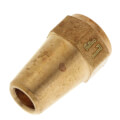
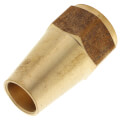
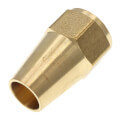

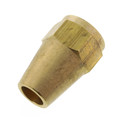
Long Copper Flare Nuts thread onto SAE 45-degree flared copper tubing to create a metal-to-metal seal at pipe joints without solder or adhesive. Brass construction, confirmed on manufacturer flare nut lines such as BrassCraft's long flare nut fittings, gives the nut enough strength to compress the flared tube face against a mating fitting cone under repeated tightening. The extended body length compared to a short flare nut gives a wrench more surface to grip and adds thread engagement, which matters on joints exposed to vibration from compressors, pumps, or appliance operation. Refrigeration line sets, gas appliance connectors, and water heater venting are common places contractors reach for the longer nut instead of the standard length. Because the connection depends on a clean flare and matching thread pitch rather than a soldered bond, these nuts also make sense on service calls where a joint needs to come apart again later without cutting pipe.
Subcategories
- Refrigeration Line Set Connections: Long flare nuts show up most often on refrigeration and air conditioning line sets, where the flared copper joint needs to hold against system pressure and compressor vibration over years of operation. Brass construction gives the nut the strength to stay compressed against the flare cone without deforming. The extra length over a short nut gives a wrench more grip surface in tight condensing unit cabinets. Technicians favor this style when a joint has to be broken and remade during service work.
- Gas Appliance Connections: Flexible and rigid gas connectors for appliances often terminate in a flared fitting rather than a soldered joint, since gas lines need connections that can be serviced without a torch near a fuel line. Brass long flare nuts hold that flare tight through the appliance shutoff valve or regulator connection. Vibration from an appliance running nearby is one reason the longer nut is specified over the short version in this application. Local gas codes typically dictate which fittings are approved for a given appliance hookup.
- Water Heater and Boiler Connections: Flared brass fittings are used on some water heater and boiler control connections where a mechanical joint is preferred over a soldered one. Long flare nuts give installers extra thread engagement in spots where a torch is a poor option near existing insulation or wiring. Brass material keeps the joint corrosion-resistant in a mechanical room environment. Replacement and service work on these connections is usually why the long-body nut gets specified over the shorter version.
Buying Guide
Picking the right long copper flare nut for a job comes down to matching the fitting to the tubing it will seal, not just grabbing whatever length is in the truck. Start with tube outside diameter, since a flare nut has to thread onto a fitting sized for the exact tubing being flared. A nut that's undersized won't thread past the flare, and one that's oversized won't compress the flare face against the mating cone, leaving a joint that leaks under pressure. Next, confirm that the fitting matches SAE 45-degree flare standards rather than the 37-degree flare used in some hydraulic and aircraft applications, since the two are not interchangeable even at the same nominal size. Long Copper Flare Nuts specifically make sense where a wrench needs extra surface to get proper torque in a tight cabinet, or where the joint sits somewhere vibration is a long-term concern, such as next to a compressor or gas appliance. Brass construction is standard across this category and holds up well in mechanical room environments. Finally, factor in whether the joint will need to be serviced again later. A flared mechanical connection can be broken down and remade multiple times without cutting pipe, which is an advantage over a soldered joint on any run that might need future access for repair or component replacement.
Frequently Asked Questions
What's the difference between a long flare nut and a short flare nut?
A long flare nut has extra body length compared to the short version, giving a wrench more surface to grip during tightening and adding thread engagement at the joint. Both styles create the same 45-degree flare seal, but the longer nut is often chosen where vibration or repeated servicing makes the extra grip and thread contact worthwhile. Physical clearance in the installation location also factors into which length gets specified.
Are long copper flare nuts made from brass or copper?
The nut itself is typically brass, even though it threads onto flared copper tubing. Brass gives the nut the strength to compress the flare face against a mating fitting cone without deforming under repeated tightening. Copper tubing is what actually gets flared, while the nut and mating fitting are brass components.
Where are long flare nuts commonly used?
Refrigeration and air conditioning line sets, gas appliance connectors, and other mechanical room connections that need a serviceable joint are the most common applications. The mechanical flare seal lets a technician break the joint apart later without cutting pipe or applying heat. Vibration-prone locations near compressors or running appliances are where the longer nut length is specified most often.
Do long flare nuts require special tools to install?
A flaring tool is needed to form the 45-degree flare on the tubing end before the nut and fitting go together, along with a wrench sized for the nut. No soldering torch or adhesive is required since the seal comes from the mechanical compression between the flare face and the fitting cone. Proper flare quality matters more to a leak-free joint than the tools used to tighten the nut.
Can a long flare nut be reused after a joint is taken apart?
A flare nut and fitting can typically be reused if the flare on the tubing itself is still in good condition and the mating surfaces aren't damaged. Repeated over-tightening or a cracked flare face means the tubing needs to be re-flared or cut back before reassembly. Inspecting the flare surface before reconnecting a long flare nut helps avoid a joint that leaks on the first pressure test.
