




MARS Blower Wheels


 --%3E %3Csvg version='1.1' id='No-RB' xmlns='http://www.w3.org/2000/svg' xmlns:xlink='http://www.w3.org/1999/xlink' x='0px' y='0px' viewBox='0 0 100 100' enable-background='new 0 0 100 100' xml:space='preserve'%3E %3Cpath fill='%23CECECE' d='M79.44,0.95H20.56C9.78,0.95,0.95,9.78,0.95,20.56v58.87c0,10.79,8.82,19.61,19.61,19.61h58.87 c10.79,0,19.61-8.83,19.61-19.61V20.56C99.05,9.78,90.22,0.95,79.44,0.95z M65.38,58.24l9.38,29.58L49.69,69.78L24.5,87.82 l9.34-29.6L8.8,39.6l30.73-0.17c0,0,6.98-19.61,10-28.93c0.54,1.36,9.88,29.1,9.88,29.1H91.2L65.38,58.24z'/%3E %3C/svg%3E)


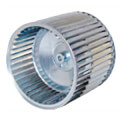
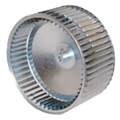
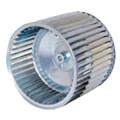


MARS Blower Wheels are replacement squirrel-cage wheels built for HVAC blower assemblies, sized and shaped to drop into furnace, air handler, and packaged unit housings without custom fabrication. Manufactured by RectorSeal under the MARS brand, the wheels use forward-curved blade designs constructed from galvanized steel, moving higher air volume at lower operating speeds than backward-curved designs and keeping noise down in occupied spaces like basements and mechanical closets. Direct drive models mount straight to the motor shaft, while belt drive wheels connect through a pulley system for equipment that separates the motor from the blower housing. Double-inlet configurations pull air from both sides of the wheel, increasing airflow for larger duct runs without stepping up to a bigger housing. Technicians replacing a worn or bent wheel match bore size, wheel diameter, and width against the original part before ordering, since a mismatch throws off airflow and can strain the motor.
Subcategories
- Direct Drive Blower Wheels: Direct drive blower wheels mount straight onto the motor shaft without a belt or pulley, matching OEM bore and hub configurations so they drop into furnace and air handler housings as direct replacements. Convex and concave hub options accommodate different motor shaft styles. Sizing runs by width and diameter, such as a 9 by 7 inch or 12 by 12 inch wheel, so techs pull the old wheel and match dimensions before ordering. Direct drive is the more common configuration in residential furnaces and small packaged units.
- Belt Drive Blower Wheels: Belt drive blower wheels connect to the motor through a pulley and belt rather than a direct shaft mount, a setup common in larger commercial air handlers where the motor sits apart from the blower housing. Forward-curved belt drive wheels run from smaller diameters through large industrial sizes, giving techs a wider range for bigger duct systems. Because the motor isn't fixed to the wheel's bore, belt drive setups allow speed adjustment by changing pulley ratios. Galvanized steel construction is standard across the belt drive lineup, the same building block used in MARS direct drive wheels.
- Double-Inlet Blower Wheels: Double-inlet blower wheels pull air in from both open sides instead of one, a configuration used in models like the MD1212-1/2CR at roughly 12.87 inches in diameter and 12.62 inches wide. The dual intake increases airflow through the same housing footprint, useful in retrofit situations where duct size can't change. Double-inlet wheels are built from galvanized steel like the rest of the MARS lineup. Techs use double-inlet replacements mainly in commercial air handlers and larger residential systems where a single-inlet wheel can't move enough air.
- Forward-Curved Blower Wheels: Forward-curved blower wheels use blades that curve in the direction of the wheel's rotation, a shape that produces strong airflow at lower rotational speeds than backward-curved designs. Lower rotational speed translates into quieter operation, which matters in occupied spaces like finished basements or mechanical rooms near living areas. MARS builds forward-curved wheels for both direct drive and belt drive applications, covering the sizing range used across residential and light commercial equipment. The forward-curved shape is the standard found in most furnace and air handler blower assemblies serviced in the field.
Buying Guide
Matching a replacement blower wheel starts with the old part, not the equipment model number. Pull the failing wheel and record bore diameter, wheel diameter, wheel width, and rotation direction before ordering, since two units with the same tonnage can use different wheel dimensions depending on motor and housing design. A wheel that's even slightly undersized or oversized throws off airflow and can overload the motor.
Drive type comes next. Furnaces and small air handlers typically use direct drive wheels that mount straight to the motor shaft, so hub style (convex or concave) and bore size need to match exactly. Larger commercial air handlers more often run belt drive wheels connected through a pulley, which gives more flexibility on speed but requires checking pulley alignment and belt tension after installation.
Inlet configuration affects airflow capacity. Single-inlet wheels pull air from one side and suit smaller housings, while double-inlet MARS Blower Wheels pull from both sides and move more air through the same footprint, useful when duct sizing can't change during a retrofit.
Material and blade shape round out the decision. Forward-curved, galvanized steel construction is the standard across the MARS lineup and holds up to continuous run cycles without warping. Techs replacing a wheel on an older unit should confirm the manufacturer still lists an exact-match part before substituting a close equivalent, since a mismatched wheel shortens motor life.
Frequently Asked Questions
How do I find the right replacement MARS blower wheel for my furnace?
Matching starts with the physical dimensions of the failing wheel, not the furnace model number. Bore diameter, wheel diameter, wheel width, hub style, and rotation direction all need to match the original part. Pulling the old wheel and measuring directly is more reliable than guessing from equipment specs alone.
What's the difference between direct drive and belt drive blower wheels?
Direct drive wheels mount straight onto the motor shaft, a setup common in residential furnaces and small packaged units. Belt drive wheels connect to the motor through a pulley and belt, which is typical in larger commercial air handlers where the motor sits apart from the blower housing. Belt drive setups allow speed changes by swapping pulley ratios, while direct drive speed is fixed to the motor.
Are MARS blower wheels made of galvanized steel?
MARS builds its blower wheels from galvanized steel across the direct drive and belt drive lineup. Galvanized construction resists corrosion from condensation and humidity inside the blower housing over years of continuous cycling. Material choice stays standard across residential and commercial sizes alike.
What does a double-inlet blower wheel do differently than a single-inlet wheel?
Double-inlet wheels pull air in from both open sides instead of one, increasing airflow through the same housing size. Commercial air handlers and larger residential systems use this configuration when a single-inlet wheel can't move enough air. Models like the MD1212-1/2CR use this double-inlet design at roughly 12.87 inches in diameter.
Why does blade curve direction matter on a blower wheel?
Forward-curved blades move higher airflow at lower rotational speeds compared to backward-curved designs, which keeps operating noise down. Most furnace and air handler blower assemblies serviced in the field use this forward-curved shape as the standard. Backward-curved wheels show up more in industrial exhaust applications rather than typical HVAC blower housings.
