




Filters
SORT
Product Availability –
Size –
Review Score –
 --%3E %3Csvg version='1.1' id='Fill' xmlns='http://www.w3.org/2000/svg' xmlns:xlink='http://www.w3.org/1999/xlink' x='0px' y='0px' viewBox='0 0 100 100' enable-background='new 0 0 100 100' xml:space='preserve'%3E %3Cpath fill='%23F15C02' d='M79.44,0.95H20.56C9.78,0.95,0.95,9.78,0.95,20.56v58.87c0,10.79,8.82,19.61,19.61,19.61h58.87 c10.79,0,19.61-8.83,19.61-19.61V20.56C99.05,9.78,90.22,0.95,79.44,0.95z M65.38,58.24l9.38,29.58L49.69,69.78L24.5,87.82 l9.34-29.6L8.8,39.6l30.73-0.17c0,0,6.98-19.61,10-28.93c0.54,1.36,9.88,29.1,9.88,29.1H91.2L65.38,58.24z'/%3E %3C/svg%3E)
Price Range –
Male Unions (CxM)

 --%3E %3Csvg version='1.1' id='No-RB' xmlns='http://www.w3.org/2000/svg' xmlns:xlink='http://www.w3.org/1999/xlink' x='0px' y='0px' viewBox='0 0 100 100' enable-background='new 0 0 100 100' xml:space='preserve'%3E %3Cpath fill='%23CECECE' d='M79.44,0.95H20.56C9.78,0.95,0.95,9.78,0.95,20.56v58.87c0,10.79,8.82,19.61,19.61,19.61h58.87 c10.79,0,19.61-8.83,19.61-19.61V20.56C99.05,9.78,90.22,0.95,79.44,0.95z M65.38,58.24l9.38,29.58L49.69,69.78L24.5,87.82 l9.34-29.6L8.8,39.6l30.73-0.17c0,0,6.98-19.61,10-28.93c0.54,1.36,9.88,29.1,9.88,29.1H91.2L65.38,58.24z'/%3E %3C/svg%3E)

 --%3E %3Csvg version='1.1' id='Half' xmlns='http://www.w3.org/2000/svg' xmlns:xlink='http://www.w3.org/1999/xlink' x='0px' y='0px' viewBox='0 0 100 100' enable-background='new 0 0 100 100' xml:space='preserve'%3E %3Cg%3E %3Cpath fill='%23F15C02' d='M30.05,70.23l3.79-12.01L8.8,39.6l30.73-0.17c0,0,6.98-19.61,10-28.93c0.54,1.36,9.88,29.1,9.88,29.1h1.58 L93.71,7.18c-3.58-3.82-8.66-6.23-14.28-6.23H20.56C9.78,0.95,0.95,9.78,0.95,20.56v58.87c0,5.41,2.22,10.32,5.79,13.88 L30.05,70.23z'/%3E %3C/g%3E %3Cpath fill='%23FBC8B4' d='M93.71,7.18L60.98,39.6H91.2L65.38,58.24l9.38,29.58L49.69,69.78L24.5,87.82l5.55-17.59L6.75,93.32 c3.55,3.54,8.44,5.73,13.82,5.73h58.87c10.79,0,19.61-8.83,19.61-19.61V20.56C99.05,15.4,97.01,10.69,93.71,7.18z'/%3E %3C/svg%3E)
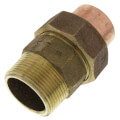
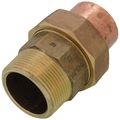
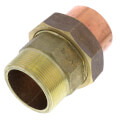
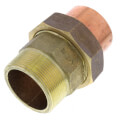

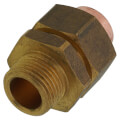
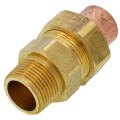
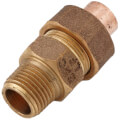
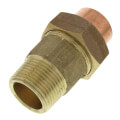
Male Unions (CxM) join a length of copper tubing to a male threaded fitting or valve, using a sweat connection on one side and male pipe thread on the other. SupplyHouse carries these unions in lead-free copper alloy from brands including Everflow and Elkhart, in sizes such as three-eighths inch, one-half inch, and three-quarter inch. The union's three-piece design, a solder-end adapter, a nut, and a mating fitting, allows the joint to be taken apart for service without cutting the copper tubing on either side. Plumbers use a CxM union anywhere a copper line needs to connect to a threaded fitting, valve, or piece of equipment that may need to be removed later for repair or replacement. Lead-free construction meets current potable water code requirements for fittings used in drinking water systems. Selecting the correct size to match the copper tubing diameter keeps the sweat joint properly fitted before soldering.
Subcategories
- 3/8 Inch Male Unions: The three-eighths inch CxM union connects small diameter copper tubing, commonly used on fixture supply lines and small branch runs, to a male threaded fitting or valve. Plumbers use this size where space is tight and a smaller union footprint is needed, such as under a sink or at a small appliance connection. Lead-free brass or bronze construction meets potable water requirements for this size range. The sweat side solders onto the copper tubing while the threaded side connects to standard pipe thread.
- 1/2 Inch Male Unions: The half-inch CxM union is a common size for residential water supply branch lines, connecting copper tubing to valves, water heaters, and other threaded fixtures. Technicians reach for this size on general service and repair work more often than any other union size, since half-inch copper is standard for most branch supply piping. The union allows a section of pipe to be disconnected at that point for future service without cutting the copper. Lead-free versions are required for any connection in a potable water system under current plumbing codes.
- 3/4 Inch and Larger Male Unions: Three-quarter inch and larger CxM unions connect main supply lines and larger branch runs where higher flow volumes pass through the piping. Installers use these larger unions at water heater connections, main shutoff valves, and other points on a larger diameter line that may need to be serviced later. The larger union body still uses the same three-piece design as the smaller sizes, with a sweat adapter, nut, and threaded mating fitting. Matching the union size exactly to the pipe diameter is necessary since these fittings aren't interchangeable across sizes.
Buying Guide
Sizing starts with matching the union exactly to the outside diameter of the copper tubing being joined, since a CxM union is not adjustable across different pipe sizes the way some compression fittings are. Confirming the copper tubing size against the union's rated size before soldering avoids a joint that doesn't seat correctly.
Lead content matters on any fitting used in a potable water system. Male Unions (CxM) intended for drinking water applications need to meet current lead-free requirements, so confirming the specific product listing states lead-free construction is worth checking, particularly when replacing an older fitting that may predate current code requirements.
Thread type and size on the male end need to match the mating valve, fitting, or equipment connection. Standard male pipe thread covers most residential and light commercial applications, but confirming the thread size against the equipment's connection point before ordering avoids a mismatch discovered mid-installation.
Placement in the piping run affects long-term serviceability. Installing a union at a water heater, valve, or any fixture likely to need future removal saves cutting and re-soldering copper tubing during a later repair. Skipping the union at these points and soldering directly to threaded fittings makes future service more labor intensive, since the copper has to be cut to separate the joint.
Frequently Asked Questions
What does CxM mean on a union?
CxM identifies the two connection types on the fitting, with the C standing for copper sweat connection and the M standing for male pipe thread. One side solders onto copper tubing while the other side threads into a female fitting, valve, or piece of equipment. The same C and M naming convention applies across most other copper fitting types, not just unions.
Why use a union instead of soldering directly to a threaded adapter?
A union allows the joint to be disconnected later without cutting the copper tubing, since the nut can be loosened to separate the two halves. Soldering directly to a threaded adapter without a union means any future service at that point requires cutting the pipe and re-soldering a new fitting. Installing a union at points likely to need future service, such as water heaters or shutoff valves, saves labor on repairs down the line.
Are all Male Unions (CxM) lead-free?
Not automatically, so confirming the specific product listing states lead-free construction is important, especially on any fitting installed in a potable water system. Current plumbing codes require lead-free fittings for drinking water applications. Checking the product specification before ordering, rather than assuming based on brand or price, is the reliable way to confirm compliance.
Can a CxM union be reused after taking it apart?
The union body and threaded sections can typically be reused, since taking the union apart only requires loosening the nut rather than cutting or soldering. The sweat side that was originally soldered to the copper tubing stays in place unless the tubing itself is cut. Inspecting the mating surfaces and any washer or gasket for wear before reassembly helps confirm the union will still seal correctly.
What sizes of Male Unions (CxM) does SupplyHouse carry?
Sizes include three-eighths inch, one-half inch, and three-quarter inch, covering the most common residential copper tubing diameters. Half-inch is the most frequently used size for general branch supply line service work. Confirming the exact outside diameter of the existing copper tubing before ordering is the best way to select the correct union size.
