




Filters
SORT
Product Availability –
Size –
Capacity (BTU) –
Pressure Set Point –
Review Score –
 --%3E %3Csvg version='1.1' id='Fill' xmlns='http://www.w3.org/2000/svg' xmlns:xlink='http://www.w3.org/1999/xlink' x='0px' y='0px' viewBox='0 0 100 100' enable-background='new 0 0 100 100' xml:space='preserve'%3E %3Cpath fill='%23F15C02' d='M79.44,0.95H20.56C9.78,0.95,0.95,9.78,0.95,20.56v58.87c0,10.79,8.82,19.61,19.61,19.61h58.87 c10.79,0,19.61-8.83,19.61-19.61V20.56C99.05,9.78,90.22,0.95,79.44,0.95z M65.38,58.24l9.38,29.58L49.69,69.78L24.5,87.82 l9.34-29.6L8.8,39.6l30.73-0.17c0,0,6.98-19.61,10-28.93c0.54,1.36,9.88,29.1,9.88,29.1H91.2L65.38,58.24z'/%3E %3C/svg%3E)
Price Range –
Mcdonnell & Miller 250 Series Relief Valves


 --%3E %3Csvg version='1.1' id='No-RB' xmlns='http://www.w3.org/2000/svg' xmlns:xlink='http://www.w3.org/1999/xlink' x='0px' y='0px' viewBox='0 0 100 100' enable-background='new 0 0 100 100' xml:space='preserve'%3E %3Cpath fill='%23CECECE' d='M79.44,0.95H20.56C9.78,0.95,0.95,9.78,0.95,20.56v58.87c0,10.79,8.82,19.61,19.61,19.61h58.87 c10.79,0,19.61-8.83,19.61-19.61V20.56C99.05,9.78,90.22,0.95,79.44,0.95z M65.38,58.24l9.38,29.58L49.69,69.78L24.5,87.82 l9.34-29.6L8.8,39.6l30.73-0.17c0,0,6.98-19.61,10-28.93c0.54,1.36,9.88,29.1,9.88,29.1H91.2L65.38,58.24z'/%3E %3C/svg%3E)





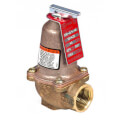






Mcdonnell & Miller 250 Series Relief Valves are boiler pressure relief valves used on hot water heating systems to protect against dangerous overpressure conditions. Mcdonnell & Miller was founded in 1924 to build protective devices for steam heating boilers, and the company later became part of Xylem following its 2011 spinoff from ITT Corporation. The 250 Series is a mechanical relief valve line designed to open automatically at a set pressure, releasing water from the system before pressure can build to a level that risks damaging the boiler or, in a worst case, causing a rupture. These valves are a required safety component on nearly every hot water boiler installation and are typically sized based on the boiler's BTU input rating rather than pipe size alone. Replacing a relief valve is a common maintenance item, since a valve that weeps or fails to reseat after a pressure event needs to be swapped rather than repaired in the field.
Subcategories
- Standard Pressure Relief Valves: Standard 250 Series relief valves open automatically once system pressure exceeds their rated setting, releasing water to bring pressure back down to a safe range. These valves are sized according to the boiler's BTU input, not the size of the pipe they thread into, so matching capacity to the specific boiler is necessary rather than choosing based on connection size alone. A valve rated too low for the boiler will weep or discharge more often than necessary, while one rated too high may not protect the system adequately.
- Replacement Valve Seats and Seals: Internal seats and seals wear over years of service and repeated pressure cycles, which can cause a relief valve to weep continuously even when system pressure is within a normal range. Replacing the seat and seal is sometimes possible on certain valve models, though many contractors replace the entire valve instead once weeping begins, since the labor difference is small and a full replacement resets the entire component. Mineral buildup from hard water is a common contributor to seat wear.
- Discharge Piping and Extensions: Discharge piping directs water released by the relief valve safely away from the boiler and toward a floor drain, rather than allowing hot water or steam to spray directly into the mechanical room. Extension fittings let the discharge pipe reach a drain that is farther from the valve than the standard outlet allows. Code requirements typically specify pipe material, maximum length, and clearance from the floor for relief valve discharge piping, so checking local code before installation avoids a failed inspection.
- Test and Drain Accessories: A test lever built into most 250 Series valves allows a technician to manually open the valve briefly to confirm it is not stuck closed, which is a standard part of routine boiler maintenance. Drain accessories and funnel fittings help direct the small amount of water released during a manual test toward a floor drain rather than onto the mechanical room floor. Testing a relief valve on a schedule catches a stuck valve before an actual overpressure event, when a functioning valve matters most.
Buying Guide
Selecting a replacement relief valve starts with matching the pressure rating and BTU capacity to the specific boiler, since a valve sized for the wrong input rating either fails to protect the system or discharges more frequently than it should. The boiler's data plate lists the BTU input needed to size the valve correctly, and this figure matters more than the pipe thread size when choosing a replacement. Mcdonnell & Miller 250 Series Relief Valves are commonly specified as direct replacements on residential and light commercial hot water boilers where the original valve has begun to weep or has failed a manual test. A valve that weeps constantly even at normal system pressure usually indicates a worn seat or a buildup of mineral deposits rather than an actual overpressure condition, and confirming system pressure with a separate gauge before replacing the valve avoids swapping a part that was not actually the problem. Discharge piping should be checked at the same time as valve replacement, since a discharge line that is too long, undersized, or missing entirely creates its own hazard independent of the valve itself. Local plumbing and mechanical codes typically specify requirements for relief valve discharge piping, including material, maximum length, and clearance above the floor, so reviewing those requirements before finishing an installation avoids a failed inspection. Testing the valve manually after installation, using the built-in test lever, confirms it opens and reseats properly before the job is considered complete.
Frequently Asked Questions
How do I size a replacement relief valve for a boiler?
Relief valves are sized to the boiler's BTU input rating, which is listed on the boiler's data plate, rather than to the pipe size of the existing valve connection. Installing a valve rated below the boiler's actual input does not provide adequate protection, while one rated well above it may not respond quickly enough. Confirming the BTU rating before ordering avoids installing an incorrectly sized valve.
Why does my relief valve keep weeping water even though the boiler pressure looks normal?
A worn valve seat or mineral deposits from hard water are the most common causes of a relief valve weeping at normal system pressure. Confirming actual system pressure with a separate gauge rules out an actual overpressure condition before assuming the valve itself is at fault. Once weeping begins, most contractors replace the entire valve rather than attempting a field repair on the seat.
Where should relief valve discharge piping be directed?
Discharge piping should route to a floor drain or another safe location away from the boiler, rather than discharging directly into the mechanical room or toward anyone servicing the equipment. Local plumbing and mechanical codes specify requirements for pipe material, maximum length, and clearance above the floor, and these requirements vary by jurisdiction. Checking code before finishing the installation avoids a failed inspection.
How often should a boiler relief valve be tested?
Most manufacturers and many local codes recommend testing a relief valve at least once a year as part of routine boiler maintenance, using the built-in test lever to confirm the valve opens and reseats properly. A valve that fails to open, or does not reseat cleanly after testing, should be replaced rather than left in service. Annual testing catches a stuck valve before an actual overpressure event occurs.
Is Mcdonnell & Miller still a supported brand for boiler relief valves?
Mcdonnell & Miller has operated since 1924 and continues as an active brand under Xylem, which acquired the company following its 2011 spinoff from ITT Corporation. Replacement parts and valves for the 250 Series line remain available through that ongoing support structure. Confirming the exact model number on an older valve before ordering helps identify the correct current equivalent part.
