



Filters
SORT
Product Availability –
Review Score –
 --%3E %3Csvg version='1.1' id='Fill' xmlns='http://www.w3.org/2000/svg' xmlns:xlink='http://www.w3.org/1999/xlink' x='0px' y='0px' viewBox='0 0 100 100' enable-background='new 0 0 100 100' xml:space='preserve'%3E %3Cpath fill='%23F15C02' d='M79.44,0.95H20.56C9.78,0.95,0.95,9.78,0.95,20.56v58.87c0,10.79,8.82,19.61,19.61,19.61h58.87 c10.79,0,19.61-8.83,19.61-19.61V20.56C99.05,9.78,90.22,0.95,79.44,0.95z M65.38,58.24l9.38,29.58L49.69,69.78L24.5,87.82 l9.34-29.6L8.8,39.6l30.73-0.17c0,0,6.98-19.61,10-28.93c0.54,1.36,9.88,29.1,9.88,29.1H91.2L65.38,58.24z'/%3E %3C/svg%3E)
 --%3E %3Csvg version='1.1' id='With-RB' xmlns='http://www.w3.org/2000/svg' xmlns:xlink='http://www.w3.org/1999/xlink' x='0px' y='0px' viewBox='0 0 100 100' enable-background='new 0 0 100 100' xml:space='preserve'%3E %3Cpath fill='%23FBC8B4' d='M79.44,0.95H20.56C9.78,0.95,0.95,9.78,0.95,20.56v58.87c0,10.79,8.82,19.61,19.61,19.61h58.87 c10.79,0,19.61-8.83,19.61-19.61V20.56C99.05,9.78,90.22,0.95,79.44,0.95z M65.38,58.24l9.38,29.58L49.69,69.78L24.5,87.82 l9.34-29.6L8.8,39.6l30.73-0.17c0,0,6.98-19.61,10-28.93c0.54,1.36,9.88,29.1,9.88,29.1H91.2L65.38,58.24z'/%3E %3C/svg%3E)
Price Range –
Modine Parts - Furnace & AC


 --%3E %3Csvg version='1.1' id='No-RB' xmlns='http://www.w3.org/2000/svg' xmlns:xlink='http://www.w3.org/1999/xlink' x='0px' y='0px' viewBox='0 0 100 100' enable-background='new 0 0 100 100' xml:space='preserve'%3E %3Cpath fill='%23CECECE' d='M79.44,0.95H20.56C9.78,0.95,0.95,9.78,0.95,20.56v58.87c0,10.79,8.82,19.61,19.61,19.61h58.87 c10.79,0,19.61-8.83,19.61-19.61V20.56C99.05,9.78,90.22,0.95,79.44,0.95z M65.38,58.24l9.38,29.58L49.69,69.78L24.5,87.82 l9.34-29.6L8.8,39.6l30.73-0.17c0,0,6.98-19.61,10-28.93c0.54,1.36,9.88,29.1,9.88,29.1H91.2L65.38,58.24z'/%3E %3C/svg%3E)
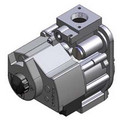

Modine Parts are the replacement components contractors use to keep Modine space heating equipment running in shops, warehouses, and garages. Modine builds gas-fired, electric, hydronic, and oil-fired unit heaters, plus infrared heaters and convectors, and its Hot Dawg line of gas-fired and hydronic unit heaters spans 30 to 125 MBH depending on the model. Each heater type depends on components, burners, blower motors, gas valves, thermocouples, and control boards, that break down with age or heavy cycling. Technicians who know a heater's model number can usually find a matching part without pulling the unit apart for a full diagnosis, which keeps downtime short during a cold snap. Stocking common wear items ahead of a service call means a single truck roll can restore heat rather than requiring a return trip once the correct part arrives.
Subcategories
- Blower Motors & Wheels: Blower motors and wheels move heated air across the unit heater's coil and out into the space, and technicians replace them when a heater runs but blows weak or noisy air. Modine specifies motor horsepower and wheel diameter by model, so matching the original part avoids airflow problems that can trip the limit switch. Contractors servicing older units often find that a worn motor bearing is the source of a heater cycling on high limit even though the burner itself is fine.
- Gas Valves & Controls: Gas valves regulate fuel flow to the burner and are one of the first parts contractors check when a Modine gas-fired unit heater fails to ignite. Replacement valves are model-specific because Modine's gas-fired Hot Dawg heaters range from 30 to 125 MBH, and a valve sized for the wrong input rating will affect burner performance. Swapping a failed valve restores normal ignition without requiring any adjustment to the rest of the gas train.
- Igniters & Thermocouples: Igniters and thermocouples are safety and ignition components that fail more often than any other part on a gas-fired unit heater. A cracked hot surface igniter or a thermocouple that no longer generates enough millivoltage will keep the gas valve from opening, leaving the heater in lockout. A technician typically checks igniters and thermocouples first on a no-heat call, since they cost less than a full burner assembly and swap in quickly in the field.
- Circuit Boards & Controls: Circuit boards manage ignition sequence, blower timing, and safety lockouts on Modine unit heaters, and a failed board often shows up as a heater that will not start any part of its cycle. Replacement boards are matched to the specific control sequence of the original unit, since boards from different heater generations are not interchangeable. Contractors who confirm the board's part number before ordering avoid a second trip when the first board does not match the wiring harness.
Buying Guide
Finding the right Modine part starts with the heater's model and serial number, usually printed on a data plate mounted on the unit's cabinet. Matching that number against Modine's parts catalog narrows the search down to the specific burner, motor, or control assembly built for that heater generation, since components are not always interchangeable across model years even within the same heater family.
Once the model is confirmed, the fastest path to a fix is identifying the failure mode before ordering. A heater that will not ignite at all usually points to the gas valve, igniter, or control board, while a heater that ignites but delivers weak airflow usually points to the blower motor or wheel. Ordering Modine Parts based on the actual symptom, rather than replacing every component at once, keeps material costs down and gets the truck back on schedule faster.
Contractors working on older units should also check whether the original part is still in production before assuming a direct replacement exists. Some legacy control boards and valves have been superseded by updated assemblies that require a wiring harness adapter or a control sequence change. Confirming compatibility against the heater's data plate before the service call, rather than after arriving on site, prevents a wasted trip when the original part number has been discontinued.
Frequently Asked Questions
How do I know which Modine part fits my unit heater?
Check the heater's data plate for the exact model and serial number before ordering. Modine parts are matched to specific heater generations, so the model number is the fastest way to confirm compatibility. Contacting a parts specialist with that number on hand avoids ordering the wrong burner or control assembly.
What usually causes a Modine gas-fired unit heater to stop igniting?
A failed igniter, thermocouple, or gas valve is the most common cause of ignition failure. Each of these parts is inexpensive to replace compared with a full burner assembly. Testing them in that order usually isolates the fault quickly.
Can a Modine blower motor be replaced without replacing the wheel?
In most cases the motor and wheel can be replaced separately since they are sold as individual parts. Confirm the wheel is not warped or unbalanced before reusing it on a new motor, since a bad wheel can quickly wear out a new motor's bearings. Matching the wheel diameter and motor horsepower to the original spec keeps airflow within the heater's design range.
Are older Modine unit heater parts still available?
Many components remain available for units that are still several years in service. Some legacy control boards and valves have been superseded by updated assemblies that need a wiring harness adapter. Checking part availability against the data plate before scheduling the repair prevents a wasted trip.
What's the fastest way to diagnose a Modine unit heater that isn't heating?
Start by confirming the thermostat is calling for heat and that gas or power is reaching the unit. A heater that ignites but produces weak airflow usually points to the blower motor or wheel, while a heater that never ignites points to the gas valve, igniter, or control board. Isolating the symptom before ordering parts avoids buying components that were not the actual problem.
