




Navien
Navien is a category built around tankless and combination water heating equipment. It covers Navien's own product lines alongside comparable tankless water heaters and boilers from other manufacturers that installers often source together. Contractors turn to this grouping when specifying or replacing a tankless water heater, a combination boiler, or the venting and accessory parts that go with either type of appliance.
Tankless and combination heating equipment differs from a standard tank water heater because it produces hot water on demand rather than storing a fixed volume. This changes both the installation requirements and the accessories needed to support it. Matching venting material, gas supply sizing, and valve or accessory kits to the specific unit being installed keeps a tankless or combination system running efficiently and passing inspection. Stocking parts across multiple tankless brands lets a plumbing or heating contractor service whatever equipment a homeowner or building already has installed.





Subcategories
- Boilers: Boilers in this grouping cover combination and space-heating units that pair with a home's heating system, often alongside domestic hot water production in a single appliance. A combination unit reduces the number of separate appliances a mechanical room needs by handling both space heating and hot water. Sizing a boiler correctly to the building's heating load and hot water demand is central to getting adequate performance from either function.
- Bosch Electric Tankless Water Heaters: Bosch electric tankless water heaters heat water on demand using electric resistance elements rather than a gas burner. This suits installations without gas service or where a smaller point-of-use unit is preferred. Electric tankless units generally require a dedicated high-amperage electrical circuit sized to the unit. They're often installed closer to the fixture they serve than a whole-house gas tankless unit would be.
- Eemax Electric Tankless Water Heaters: Eemax electric tankless water heaters are another electric-only tankless option. They are commonly specified for point-of-use applications such as a single sink, shower, or small commercial fixture where running a full whole-house unit isn't practical. Point-of-use placement shortens the hot water wait time at that fixture. Electrical service capacity is the main installation consideration, since these units draw significant current relative to their physical size.
- EZ Tankless Water Heaters: EZ tankless water heaters provide gas-fired, on-demand hot water production for whole-house or larger point-of-use applications where electric units don't have enough capacity. Sizing is based on the flow rate and temperature rise needed for the building's fixtures. Gas supply line sizing and venting need to match the manufacturer's specifications for the unit being installed.
- Noritz Tankless Water Heaters: Noritz tankless water heaters are a gas-fired tankless line used for whole-house hot water production. They are sized by flow rate and the temperature rise needed for the coldest incoming water the installation will see. Proper gas line and venting sizing are part of every installation, not just larger commercial jobs. Contractors match unit capacity to fixture count and expected simultaneous demand.
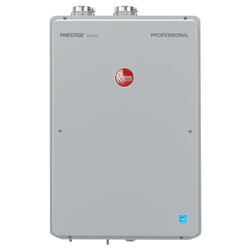
- Rheem Tankless Water Heaters: Rheem tankless water heaters round out the gas-fired options in this category, again sized to the building's flow rate and temperature rise requirements rather than a fixed tank volume. As with other gas tankless brands, correct gas supply sizing and approved venting material are required for safe, code-compliant operation.
Buying Guide
Deciding between electric and gas tankless equipment usually comes down to what utilities are already available at the installation site and how much hot water the application needs. Electric units suit point-of-use or smaller-capacity needs where a dedicated high-amperage circuit is easier to run than a gas line. Gas-fired units generally handle higher flow rates for whole-house service.
Sizing any tankless unit correctly requires knowing two things. The first is the flow rate needed, based on how many fixtures might run at once. The second is the temperature rise required, based on the coldest incoming water temperature at the site. Undersizing a unit leads to inconsistent water temperature when multiple fixtures draw at the same time.
Combination units that provide both space heating and domestic hot water simplify a mechanical room. They also tie both functions to a single appliance, so a failure affects heat and hot water together. A contractor should weigh that tradeoff against the space and cost savings a combination unit offers compared with separate dedicated appliances.
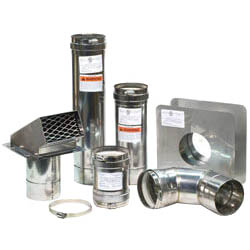
Venting material and gas line sizing are specific to each manufacturer and model. Installers should not assume that venting or piping sized for a different brand or an older tank-style unit is compatible.
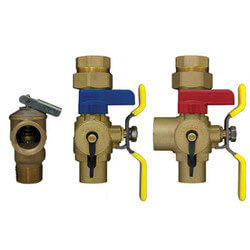
Because this category spans several manufacturers, a service contractor benefits from knowing each brand's specific accessory kits, venting requirements, and common replacement parts. That knowledge helps them respond quickly regardless of which tankless brand a particular building already has installed.
Frequently Asked Questions
What determines whether a job needs an electric or gas tankless water heater?
Available utilities and hot water demand drive the decision. A location without gas service or a lower-demand point-of-use application often fits an electric unit. Whole-house hot water needs generally call for a gas-fired unit with higher flow capacity.
Why does temperature rise matter when sizing a tankless water heater?
Temperature rise is the difference between the coldest incoming water temperature and the desired output temperature, and it directly affects how much flow a given unit can support. A unit sized only for flow rate without accounting for temperature rise can underperform in colder climates.
What's the advantage of a combination boiler over separate heating and hot water appliances?
A combination unit handles both space heating and domestic hot water in one appliance. This saves mechanical room space and reduces the number of appliances that need service and venting. The tradeoff is that both functions depend on a single piece of equipment.
Can venting parts from one tankless brand be used on another brand's unit?
Generally no. Venting material and configuration are specified by each manufacturer for their specific units. Venting should be sourced and installed to match the exact unit being installed.
Do electric tankless water heaters need special electrical work?
Yes, electric tankless units typically require a dedicated circuit sized for the unit's amperage draw, which is often higher than typical household circuits. Confirming electrical service capacity before installation avoids a mismatch between the unit and the available power.
Resources
Subcategories
- Boilers: Boilers in this grouping cover combination and space-heating units that pair with a home's heating system, often alongside domestic hot water production in a single appliance. A combination unit reduces the number of separate appliances a mechanical room needs by handling both space heating and hot water. Sizing a boiler correctly to the building's heating load and hot water demand is central to getting adequate performance from either function.
- Bosch Electric Tankless Water Heaters: Bosch electric tankless water heaters heat water on demand using electric resistance elements rather than a gas burner. This suits installations without gas service or where a smaller point-of-use unit is preferred. Electric tankless units generally require a dedicated high-amperage electrical circuit sized to the unit. They're often installed closer to the fixture they serve than a whole-house gas tankless unit would be.
- Eemax Electric Tankless Water Heaters: Eemax electric tankless water heaters are another electric-only tankless option. They are commonly specified for point-of-use applications such as a single sink, shower, or small commercial fixture where running a full whole-house unit isn't practical. Point-of-use placement shortens the hot water wait time at that fixture. Electrical service capacity is the main installation consideration, since these units draw significant current relative to their physical size.
- EZ Tankless Water Heaters: EZ tankless water heaters provide gas-fired, on-demand hot water production for whole-house or larger point-of-use applications where electric units don't have enough capacity. Sizing is based on the flow rate and temperature rise needed for the building's fixtures. Gas supply line sizing and venting need to match the manufacturer's specifications for the unit being installed.
- Noritz Tankless Water Heaters: Noritz tankless water heaters are a gas-fired tankless line used for whole-house hot water production. They are sized by flow rate and the temperature rise needed for the coldest incoming water the installation will see. Proper gas line and venting sizing are part of every installation, not just larger commercial jobs. Contractors match unit capacity to fixture count and expected simultaneous demand.
- Rheem Tankless Water Heaters: Rheem tankless water heaters round out the gas-fired options in this category, again sized to the building's flow rate and temperature rise requirements rather than a fixed tank volume. As with other gas tankless brands, correct gas supply sizing and approved venting material are required for safe, code-compliant operation.
Buying Guide
Deciding between electric and gas tankless equipment usually comes down to what utilities are already available at the installation site and how much hot water the application needs. Electric units suit point-of-use or smaller-capacity needs where a dedicated high-amperage circuit is easier to run than a gas line. Gas-fired units generally handle higher flow rates for whole-house service.
Sizing any tankless unit correctly requires knowing two things. The first is the flow rate needed, based on how many fixtures might run at once. The second is the temperature rise required, based on the coldest incoming water temperature at the site. Undersizing a unit leads to inconsistent water temperature when multiple fixtures draw at the same time.
Combination units that provide both space heating and domestic hot water simplify a mechanical room. They also tie both functions to a single appliance, so a failure affects heat and hot water together. A contractor should weigh that tradeoff against the space and cost savings a combination unit offers compared with separate dedicated appliances.
Venting material and gas line sizing are specific to each manufacturer and model. Installers should not assume that venting or piping sized for a different brand or an older tank-style unit is compatible.
Because this category spans several manufacturers, a service contractor benefits from knowing each brand's specific accessory kits, venting requirements, and common replacement parts. That knowledge helps them respond quickly regardless of which tankless brand a particular building already has installed.
Frequently Asked Questions
What determines whether a job needs an electric or gas tankless water heater?
Available utilities and hot water demand drive the decision. A location without gas service or a lower-demand point-of-use application often fits an electric unit. Whole-house hot water needs generally call for a gas-fired unit with higher flow capacity.
Why does temperature rise matter when sizing a tankless water heater?
Temperature rise is the difference between the coldest incoming water temperature and the desired output temperature, and it directly affects how much flow a given unit can support. A unit sized only for flow rate without accounting for temperature rise can underperform in colder climates.
What's the advantage of a combination boiler over separate heating and hot water appliances?
A combination unit handles both space heating and domestic hot water in one appliance. This saves mechanical room space and reduces the number of appliances that need service and venting. The tradeoff is that both functions depend on a single piece of equipment.
Can venting parts from one tankless brand be used on another brand's unit?
Generally no. Venting material and configuration are specified by each manufacturer for their specific units. Venting should be sourced and installed to match the exact unit being installed.
Do electric tankless water heaters need special electrical work?
Yes, electric tankless units typically require a dedicated circuit sized for the unit's amperage draw, which is often higher than typical household circuits. Confirming electrical service capacity before installation avoids a mismatch between the unit and the available power.