




PEX-A
PEX-A is a cross-linked polyethylene tubing made using the Engel method, a peroxide process that produces a highly flexible pipe with strong memory characteristics. Plumbers and mechanical contractors specify it for potable water distribution, hydronic heating loops, and radiant floor systems because it can be bent around tight framing without a fitting, then coaxed back toward its original shape if kinked with mild heat.
Contractors working in both new construction and renovation rely on PEX-A for the way it handles cold weather and rough job-site conditions. Its expanded-fitting compatibility, flexibility in freezing temperatures, and resistance to scale and chlorine make it a common alternative to copper and PEX-B on residential and light commercial jobs where routing speed and fewer connections matter.


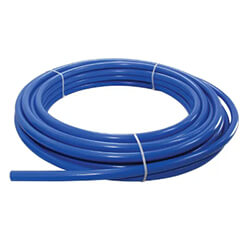

Subcategories
- Bluefin Oxygen Barrier PEX-a Tubing (Heating): Oxygen barrier tubing built for closed hydronic heating loops, where an EVOH layer blocks oxygen diffusion into the water to protect boilers, pumps, and ferrous components from corrosion.
- Bluefin PEX-a Tubing (Plumbing): Non-barrier PEX-A tubing intended for potable water plumbing, sized for supply lines feeding fixtures and manifolds in residential and light commercial installations.
- Mr. PEX Oxygen Barrier PEX Tubing: Oxygen barrier PEX tubing from Mr. PEX Systems, sized for radiant heat and snow-melt loops that circulate treated water through metal-bodied equipment.
- Mr. PEX Plumbing Tubing: Non-barrier PEX tubing from Mr. PEX Systems for potable water distribution, compatible with standard expansion and crimp fitting systems.
- Pre-Insulated AquaPEX Tubing: Tubing that ships with a factory-applied foam insulation sleeve, reducing heat loss on hot water runs and cutting installation time versus wrapping pipe on site.
- Pre-Insulated hePEX Oxygen Barrier Tubing: Oxygen barrier tubing with a factory-applied insulation sleeve, suited to radiant heating runs that pass through unconditioned spaces such as crawlspaces or slab edges.
Buying Guide
Choosing the right PEX-A tubing starts with the application. Potable water lines call for non-barrier tubing rated for pressure and temperature ranges typical of domestic supply, while any closed-loop hydronic heating or radiant system should use an oxygen barrier product to keep dissolved oxygen away from boilers, circulators, and steel components.
Diameter and length matter as much as barrier type. Smaller diameters suit individual fixture runs from a manifold, while larger diameters carry higher flow for trunk lines or whole-house distribution. Contractors ordering for radiant floor jobs typically work from a loop layout that specifies total footage per zone, so measuring the run before ordering avoids costly mid-job reorders.
PEX-A is compatible with expansion (ProPEX-style) fittings, which stretch the tube end and let it shrink back around a fitting for a connection that can be inspected and reworked without special crimp tools. Crimp and clamp systems also work with PEX-A tubing, so contractors already invested in one fitting platform can typically stay with it.
Insulated tubing is worth the added cost anywhere heat loss or condensation is a concern, such as hot water lines run through unconditioned basements or crawlspaces. It also speeds up rough-in on radiant slab jobs by removing a separate wrap step.
Storage and handling affect long-term performance. PEX-A tubing should be kept coiled and protected from prolonged direct sunlight before installation, since UV exposure over time can degrade the material even though installed runs are typically covered by drywall, insulation, or slab.
Frequently Asked Questions
What is the difference between PEX-A and PEX-B tubing?
PEX-A is manufactured with the Engel (peroxide) method, giving it greater flexibility and the ability to expand around a fitting and shrink back into place. PEX-B uses a silane method and tends to be stiffer, typically paired with crimp or clamp fittings instead of expansion fittings.
Can PEX-A be used for both plumbing and radiant heating?
Yes, but the tubing type matters. Non-barrier PEX-A is intended for potable water plumbing, while oxygen barrier PEX-A is built for closed hydronic heating loops to protect metal components from oxygen-related corrosion.
Does PEX-A tubing need special tools to install?
Expansion fittings require an expansion tool designed for that fitting system, but PEX-A also works with standard crimp or clamp tools if a contractor prefers those connection methods.
How does insulated PEX-A tubing differ from standard tubing?
Insulated tubing ships with a foam sleeve already applied at the factory, cutting down on job-site wrapping time and reducing heat loss on runs through unconditioned spaces like crawlspaces or exterior walls.
Can PEX-A tubing be used outdoors or in unconditioned spaces?
PEX-A handles cold temperatures well and resists freeze-related splitting better than rigid piping, but it should still be protected from prolonged direct sunlight, and any exposed exterior runs should follow local code requirements for protection and support.
Resources

 --%3E %3C!DOCTYPE svg PUBLIC '-//W3C//DTD SVG 1.1//EN' 'http://www.w3.org/Graphics/SVG/1.1/DTD/svg11.dtd'%3E %3Csvg version='1.1' id='Layer_1' xmlns='http://www.w3.org/2000/svg' xmlns:xlink='http://www.w3.org/1999/xlink' x='0px' y='0px' width='90px' height='90px' viewBox='0 0 90 90' enable-background='new 0 0 90 90' xml:space='preserve'%3E %3Crect x='27' y='23' fill='%23FFFFFF' width='43' height='44'/%3E %3Cg%3E %3Cdefs%3E %3Crect id='SVGID_1_' width='90' height='90'/%3E %3C/defs%3E %3CclipPath id='SVGID_2_'%3E %3Cuse xlink:href='%23SVGID_1_' overflow='visible'/%3E %3C/clipPath%3E %3Cpath clip-path='url(%23SVGID_2_)' fill='%234186AD' d='M45,0C20.1,0,0,20.1,0,45c0,24.9,20.1,45,45,45c24.9,0,45-20.1,45-45 C90,20.1,69.9,0,45,0'/%3E %3C/g%3E %3Cpath fill='%23FFFFFF' d='M60.6,47.4l-22.5,14c-0.5,0.3-1,0.399-1.5,0.399s-0.9-0.1-1.4-0.399c-0.9-0.5-1.4-1.4-1.4-2.5v-28 c0-1,0.6-2,1.4-2.5c0.9-0.5,2-0.5,2.9,0.1l22.5,14.1C61.4,43.1,61.9,44,61.9,45S61.4,46.9,60.6,47.4'/%3E %3C/svg%3E)
Subcategories
- Bluefin Oxygen Barrier PEX-a Tubing (Heating): Oxygen barrier tubing built for closed hydronic heating loops, where an EVOH layer blocks oxygen diffusion into the water to protect boilers, pumps, and ferrous components from corrosion.
- Bluefin PEX-a Tubing (Plumbing): Non-barrier PEX-A tubing intended for potable water plumbing, sized for supply lines feeding fixtures and manifolds in residential and light commercial installations.
- Mr. PEX Oxygen Barrier PEX Tubing: Oxygen barrier PEX tubing from Mr. PEX Systems, sized for radiant heat and snow-melt loops that circulate treated water through metal-bodied equipment.
- Mr. PEX Plumbing Tubing: Non-barrier PEX tubing from Mr. PEX Systems for potable water distribution, compatible with standard expansion and crimp fitting systems.
- Pre-Insulated AquaPEX Tubing: Tubing that ships with a factory-applied foam insulation sleeve, reducing heat loss on hot water runs and cutting installation time versus wrapping pipe on site.
- Pre-Insulated hePEX Oxygen Barrier Tubing: Oxygen barrier tubing with a factory-applied insulation sleeve, suited to radiant heating runs that pass through unconditioned spaces such as crawlspaces or slab edges.
Buying Guide
Choosing the right PEX-A tubing starts with the application. Potable water lines call for non-barrier tubing rated for pressure and temperature ranges typical of domestic supply, while any closed-loop hydronic heating or radiant system should use an oxygen barrier product to keep dissolved oxygen away from boilers, circulators, and steel components.
Diameter and length matter as much as barrier type. Smaller diameters suit individual fixture runs from a manifold, while larger diameters carry higher flow for trunk lines or whole-house distribution. Contractors ordering for radiant floor jobs typically work from a loop layout that specifies total footage per zone, so measuring the run before ordering avoids costly mid-job reorders.
PEX-A is compatible with expansion (ProPEX-style) fittings, which stretch the tube end and let it shrink back around a fitting for a connection that can be inspected and reworked without special crimp tools. Crimp and clamp systems also work with PEX-A tubing, so contractors already invested in one fitting platform can typically stay with it.
Insulated tubing is worth the added cost anywhere heat loss or condensation is a concern, such as hot water lines run through unconditioned basements or crawlspaces. It also speeds up rough-in on radiant slab jobs by removing a separate wrap step.
Storage and handling affect long-term performance. PEX-A tubing should be kept coiled and protected from prolonged direct sunlight before installation, since UV exposure over time can degrade the material even though installed runs are typically covered by drywall, insulation, or slab.
Frequently Asked Questions
What is the difference between PEX-A and PEX-B tubing?
PEX-A is manufactured with the Engel (peroxide) method, giving it greater flexibility and the ability to expand around a fitting and shrink back into place. PEX-B uses a silane method and tends to be stiffer, typically paired with crimp or clamp fittings instead of expansion fittings.
Can PEX-A be used for both plumbing and radiant heating?
Yes, but the tubing type matters. Non-barrier PEX-A is intended for potable water plumbing, while oxygen barrier PEX-A is built for closed hydronic heating loops to protect metal components from oxygen-related corrosion.
Does PEX-A tubing need special tools to install?
Expansion fittings require an expansion tool designed for that fitting system, but PEX-A also works with standard crimp or clamp tools if a contractor prefers those connection methods.
How does insulated PEX-A tubing differ from standard tubing?
Insulated tubing ships with a foam sleeve already applied at the factory, cutting down on job-site wrapping time and reducing heat loss on runs through unconditioned spaces like crawlspaces or exterior walls.
Can PEX-A tubing be used outdoors or in unconditioned spaces?
PEX-A handles cold temperatures well and resists freeze-related splitting better than rigid piping, but it should still be protected from prolonged direct sunlight, and any exposed exterior runs should follow local code requirements for protection and support.