




Filters
SORT
Product Availability –
Size –
Review Score –
 --%3E %3Csvg version='1.1' id='Fill' xmlns='http://www.w3.org/2000/svg' xmlns:xlink='http://www.w3.org/1999/xlink' x='0px' y='0px' viewBox='0 0 100 100' enable-background='new 0 0 100 100' xml:space='preserve'%3E %3Cpath fill='%23F15C02' d='M79.44,0.95H20.56C9.78,0.95,0.95,9.78,0.95,20.56v58.87c0,10.79,8.82,19.61,19.61,19.61h58.87 c10.79,0,19.61-8.83,19.61-19.61V20.56C99.05,9.78,90.22,0.95,79.44,0.95z M65.38,58.24l9.38,29.58L49.69,69.78L24.5,87.82 l9.34-29.6L8.8,39.6l30.73-0.17c0,0,6.98-19.61,10-28.93c0.54,1.36,9.88,29.1,9.88,29.1H91.2L65.38,58.24z'/%3E %3C/svg%3E)
PVC Barbed Insert Crosses


 --%3E %3Csvg version='1.1' id='No-RB' xmlns='http://www.w3.org/2000/svg' xmlns:xlink='http://www.w3.org/1999/xlink' x='0px' y='0px' viewBox='0 0 100 100' enable-background='new 0 0 100 100' xml:space='preserve'%3E %3Cpath fill='%23CECECE' d='M79.44,0.95H20.56C9.78,0.95,0.95,9.78,0.95,20.56v58.87c0,10.79,8.82,19.61,19.61,19.61h58.87 c10.79,0,19.61-8.83,19.61-19.61V20.56C99.05,9.78,90.22,0.95,79.44,0.95z M65.38,58.24l9.38,29.58L49.69,69.78L24.5,87.82 l9.34-29.6L8.8,39.6l30.73-0.17c0,0,6.98-19.61,10-28.93c0.54,1.36,9.88,29.1,9.88,29.1H91.2L65.38,58.24z'/%3E %3C/svg%3E)

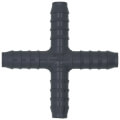
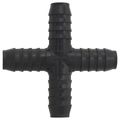
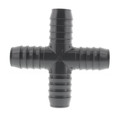
PVC Barbed Insert Crosses are four-way fittings used to branch polyethylene pipe at a single junction without solvent welding. The lineup includes sizes from 1/2 inch up to 1 inch, such as the Spears 1420-005, 1420-007, and 1420-010, each built with four insert barbs in an insert by insert by insert by insert configuration. Irrigation installers and plumbers use them where a poly line needs to split into four branches, such as at a manifold feeding several drip or lawn zones from one point. Because the fitting connects with a barbed insert rather than a socket, it clamps directly onto the outside of the pipe instead of requiring glue or threading. Such a design makes the cross a quick way to add a branch point in the field without cutting into a run and reconnecting it with multiple separate fittings.
Subcategories
- 1/2 Inch Insert Crosses: The 1/2 inch size, such as the Spears 1420-005, is the smallest insert cross in the lineup and fits typical drip irrigation and small-diameter poly distribution lines. Landscapers and irrigation technicians use it to branch a zone line into four separate runs from one fitting instead of installing several tees. It connects with four insert barbs rather than a socket or threaded end. The small diameter keeps it suited to low-flow zones rather than a main supply line.
- 3/4 Inch Insert Crosses: The 3/4 inch size, such as the Spears 1420-007, steps up to handle higher flow than the 1/2 inch version while keeping the same four-port insert design. Plumbers and irrigation contractors use it on residential and light commercial poly lines that need a branch point without a socket connection. Each of its four ports accepts a barbed insert that clamps onto the pipe. It is a common middle size for yard and landscape distribution systems.
- 1 Inch Insert Crosses: The 1 inch size, such as the Spears 1420-010, is the largest cross in the category and suits trunk lines feeding multiple zones or a well system. Irrigation installers use it where a single poly line needs to split into several branches while carrying more flow than the smaller sizes allow. Like the rest of the lineup, it uses four insert barbs in an insert by insert by insert by insert configuration. The larger diameter makes it a fit for a main distribution point rather than an individual zone.
Buying Guide
Start with the pipe size already running to the branch point. PVC Barbed Insert Crosses are available from 1/2 inch up to 1 inch, such as the Spears 1420-005, 1420-007, and 1420-010, and the fitting size needs to match the outside diameter of the polyethylene pipe already in the ground or in the wall. Installing an undersized cross on a larger line, or the reverse, leaves a poor connection that will not seal properly.
Next, confirm the fitting is actually meant for insert connection rather than socket or threaded connection. Every port on these crosses is a barbed insert, which clamps onto the outside of the poly pipe rather than gluing into a socket or threading onto a fitting. Such a connection style matters because it determines what clamps or tools the job needs on site; insert fittings typically call for stainless steel clamps rather than solvent cement.
Finally, think about flow. A smaller branch point, such as a single drip zone, rarely needs more than the 1/2 inch size, while a trunk line feeding several zones or a well system benefits from the 1 inch size. Choosing the smallest size that still carries the needed flow keeps material costs down without restricting the line. Matching pipe size, connection style, and flow need together narrows the decision to a single correct fitting for the job.
Frequently Asked Questions
What pipe do PVC barbed insert crosses connect to?
PVC Barbed Insert Crosses connect to polyethylene pipe through four barbed insert ports rather than through a socket or threaded connection. Each port clamps onto the outside diameter of the poly pipe once the pipe is pushed over the barb. Sizes such as the Spears 1420-005 and 1420-007 fit standard poly tubing used in irrigation and small water distribution lines. The barbed design lets the fitting work without solvent cement.
What sizes do insert crosses come in?
The category runs from 1/2 inch, such as the Spears 1420-005, up through 3/4 inch and 1 inch sizes, including the 1420-007 and 1420-010. Smaller sizes suit individual drip or lawn zones, while the 1 inch size fits a trunk line feeding multiple zones. Matching the fitting size to the pipe already installed keeps the connection tight. Mixing sizes on the same run requires a reducing fitting instead of a cross.
Are these fittings solvent welded or clamped?
Insert crosses clamp onto polyethylene pipe rather than solvent weld, since each port is a barbed insert instead of a socket. A clamp fitted over the pipe where it covers the barb holds the connection in place. Such a connection differs from standard PVC pipe fittings, which typically use solvent cement on a socket joint. Poly pipe installations rely on this clamp style throughout, not just at the cross fitting.
When is a four-port cross used instead of a tee?
A cross fitting adds a fourth port compared with a tee, which lets a single point branch into three additional lines instead of two. Irrigation layouts that need to split a main line into several zones from one junction use a cross such as the Spears 1420-010 to avoid stacking multiple tees together. A tee remains the right choice when only one branch is needed off a line. Choosing between the two comes down to how many branches a single junction needs to support.
Can different insert cross sizes be mixed on the same job?
A project commonly uses more than one size, pairing a 1 inch cross such as the Spears 1420-010 on a trunk line with 1/2 inch or 3/4 inch crosses such as the 1420-005 or 1420-007 further out on individual zones. Each size connects only to pipe matching its own outside diameter, so a reducing fitting is needed anywhere the pipe size changes. Planning the layout by flow and zone count before ordering helps match the right cross size to each junction. Keeping sizes consistent within a zone simplifies future repairs.
