




Filters
SORT
Product Availability –
Size –
Review Score –
 --%3E %3Csvg version='1.1' id='Fill' xmlns='http://www.w3.org/2000/svg' xmlns:xlink='http://www.w3.org/1999/xlink' x='0px' y='0px' viewBox='0 0 100 100' enable-background='new 0 0 100 100' xml:space='preserve'%3E %3Cpath fill='%23F15C02' d='M79.44,0.95H20.56C9.78,0.95,0.95,9.78,0.95,20.56v58.87c0,10.79,8.82,19.61,19.61,19.61h58.87 c10.79,0,19.61-8.83,19.61-19.61V20.56C99.05,9.78,90.22,0.95,79.44,0.95z M65.38,58.24l9.38,29.58L49.69,69.78L24.5,87.82 l9.34-29.6L8.8,39.6l30.73-0.17c0,0,6.98-19.61,10-28.93c0.54,1.36,9.88,29.1,9.88,29.1H91.2L65.38,58.24z'/%3E %3C/svg%3E)
Price Range –
PVC DWV Sanitary Street Tees (Street x Hub x Hub)

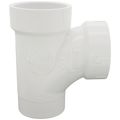


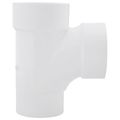


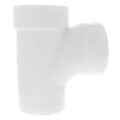
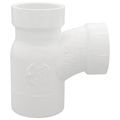
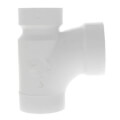
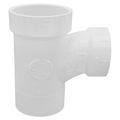
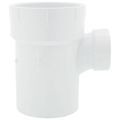
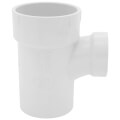
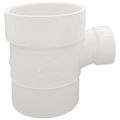
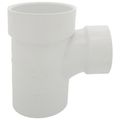

PVC DWV sanitary street tees are drain, waste, and vent fittings that combine a street, or spigot, end with two hub ends in a single tee body, letting a plumber connect three pipe runs without adding a separate coupling. The street end fits directly into the hub of another fitting or pipe, which saves space in a tight installation where a standard hub-by-hub-by-hub tee wouldn't leave enough room to make up the joint. Sanitary tees are designed with a specific interior pattern that directs waste flow downward at a controlled angle, which is why they're used for connecting a horizontal branch line to a vertical stack rather than for two horizontal runs. Plumbers rough-in drain systems with a mix of standard and street tees depending on how much clearance each connection point has. Choosing the street configuration in the right spot during rough-in avoids having to cut in an extra coupling later.
Subcategories
- Standard Sizes: PVC DWV sanitary street tees come in the common drain pipe sizes used in residential and light commercial plumbing, from smaller branch line diameters up to larger stack sizes. Matching the tee size to the pipe being connected is straightforward since PVC DWV fittings follow standard nominal sizing across manufacturers. Plumbers stock a range of sizes to cover typical rough-in work without needing a special order mid-job. Checking the stack and branch line sizes on the plans before ordering avoids buying the wrong size tee.
- Reducing Street Tees: Reducing sanitary street tees connect a smaller branch line to a larger main stack within the same fitting, combining the street-end space savings with a size transition in one part. Reducing street tees avoid needing a separate reducer coupling between the branch and the stack. Plumbers use reducing street tees most often where a bathroom or kitchen branch line ties into a larger building drain or stack. Confirming both the branch and stack diameters before ordering keeps the reducing tee sized correctly for both connections.
- Long-Turn vs. Standard Pattern: Some sanitary street tees are made with a long-turn interior pattern that creates a gentler bend for the waste flow entering the fitting, compared to a standard pattern with a tighter turn. Local plumbing code sometimes specifies which pattern is required depending on where the fitting sits in the drain system. Checking the applicable code before rough-in determines whether a long-turn pattern is required or a standard pattern is acceptable for the connection being made. Using the wrong pattern can result in a failed inspection even though the fitting otherwise fits the job.
Buying Guide
Selecting a PVC DWV sanitary street tee starts with confirming both the pipe sizes at each connection point and the clearance available at the joint. PVC DWV Sanitary Street Tees (Street x Hub x Hub) save space compared to an all-hub tee because the street end inserts directly into an adjacent fitting's hub, which matters most in tight wall cavities or where a stack and branch line meet close to framing. Before ordering, a plumber should check whether the branch and stack are the same diameter or whether a reducing tee is needed to transition between two sizes within the same fitting. Local plumbing code should also be checked for pattern requirements, since some jurisdictions require a long-turn interior pattern for certain connections rather than a standard pattern, and failing to match code can result in a failed rough-in inspection even if the fitting otherwise fits the space. Material compatibility is straightforward with PVC DWV systems since fittings, pipe, and cement are typically sourced from compatible product lines, but confirming solvent weld cement is rated for DWV applications avoids a weak joint. Dry-fitting a run before cementing helps confirm that a street tee's orientation and the direction of flow into the fitting are correct, since sanitary tees are directional and installing one backward can create a flow restriction that isn't obvious until the system is in use.
Frequently Asked Questions
What does the street end of a sanitary street tee connect to?
The street end is a spigot that inserts directly into the hub of an adjacent fitting or pipe, rather than requiring another fitting's spigot to insert into it. Inserting the street end directly into a hub this way saves space in a joint where clearance is tight, since it eliminates the need for a separate coupling between the tee and the next fitting in line. Confirming which end of the connection is the hub and which is the street end before dry-fitting avoids an assembly mistake.
When is a reducing sanitary street tee needed instead of a standard one?
A reducing tee is needed when the branch line and the main stack are different diameters, combining the size transition and the tee connection into a single fitting rather than requiring a separate reducer coupling. Standard street tees work when the branch and stack are the same size. Checking both pipe diameters against the plans before ordering determines which style fits the job.
Does local code require a long-turn pattern for a sanitary tee?
Pattern requirements vary by jurisdiction and by where the fitting sits in the drain system, with some codes requiring a long-turn interior pattern for specific connections and accepting a standard pattern elsewhere. Checking the local plumbing code before rough-in determines which pattern is required for a given connection. Installing the wrong pattern can result in a failed inspection even if the fitting is otherwise correctly sized.
Can a sanitary street tee be installed in any orientation?
Sanitary tees are directional fittings designed to guide waste flow at a controlled angle from a horizontal branch into a vertical stack, so orientation matters during installation. Installing one backward or in the wrong orientation can create a flow restriction that isn't obvious until the system is in use. Dry-fitting the connection before cementing helps confirm the correct orientation.
What's the difference between a sanitary tee and a standard DWV tee?
A sanitary tee has an interior pattern designed to direct waste flow downward at a controlled angle, making it suitable for connecting a horizontal branch to a vertical stack. A standard DWV tee without that pattern is typically used for venting connections rather than waste flow, since it doesn't control flow direction the same way. Using the correct tee type for the connection being made keeps the drain system functioning as designed.
