




Filters
SORT
Product Availability –
Size –
Review Score –
 --%3E %3Csvg version='1.1' id='Fill' xmlns='http://www.w3.org/2000/svg' xmlns:xlink='http://www.w3.org/1999/xlink' x='0px' y='0px' viewBox='0 0 100 100' enable-background='new 0 0 100 100' xml:space='preserve'%3E %3Cpath fill='%23F15C02' d='M79.44,0.95H20.56C9.78,0.95,0.95,9.78,0.95,20.56v58.87c0,10.79,8.82,19.61,19.61,19.61h58.87 c10.79,0,19.61-8.83,19.61-19.61V20.56C99.05,9.78,90.22,0.95,79.44,0.95z M65.38,58.24l9.38,29.58L49.69,69.78L24.5,87.82 l9.34-29.6L8.8,39.6l30.73-0.17c0,0,6.98-19.61,10-28.93c0.54,1.36,9.88,29.1,9.88,29.1H91.2L65.38,58.24z'/%3E %3C/svg%3E)
Price Range –
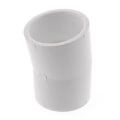
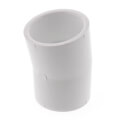
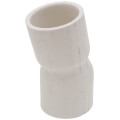
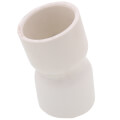
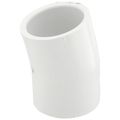
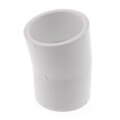
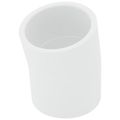
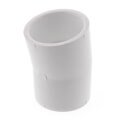
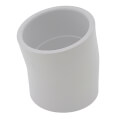
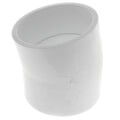
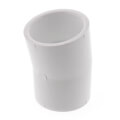
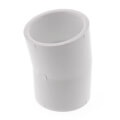
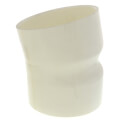
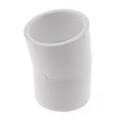
PVC Schedule 40 11.25° Elbows


 --%3E %3Csvg version='1.1' id='No-RB' xmlns='http://www.w3.org/2000/svg' xmlns:xlink='http://www.w3.org/1999/xlink' x='0px' y='0px' viewBox='0 0 100 100' enable-background='new 0 0 100 100' xml:space='preserve'%3E %3Cpath fill='%23CECECE' d='M79.44,0.95H20.56C9.78,0.95,0.95,9.78,0.95,20.56v58.87c0,10.79,8.82,19.61,19.61,19.61h58.87 c10.79,0,19.61-8.83,19.61-19.61V20.56C99.05,9.78,90.22,0.95,79.44,0.95z M65.38,58.24l9.38,29.58L49.69,69.78L24.5,87.82 l9.34-29.6L8.8,39.6l30.73-0.17c0,0,6.98-19.61,10-28.93c0.54,1.36,9.88,29.1,9.88,29.1H91.2L65.38,58.24z'/%3E %3C/svg%3E)
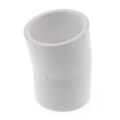
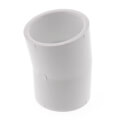
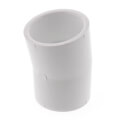
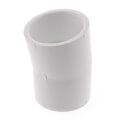
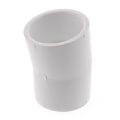

PVC Schedule 40 11.25 degree elbows are solvent weld pipe fittings that shift a drain, waste, or vent line's direction by a small angle instead of the sharp turn a 90 degree or 45 degree fitting produces. Plumbers reach for this fitting when a pipe run needs to step around a joist, footing, or another line without disrupting the gradual slope a DWV system depends on for proper drainage. Because the bend is gentle, water and waste keep moving through the joint with less turbulence than a sharper angle would create, which helps prevent solids from settling at the fitting. Solvent welding bonds the elbow to the pipe with a chemical weld rather than a mechanical seal, so a correctly primed and cemented joint cures into a single continuous piece of pipe. Using several shallow-angle elbows in sequence lets a line curve around an obstacle gradually, which keeps the overall pitch of a drain line closer to its design slope than one abrupt turn would allow.
Subcategories
- 1-1/2 Inch and 2 Inch Elbows: 1-1/2 inch and 2 inch elbows are the sizes most often used on branch drain lines running from sinks, tubs, and other fixtures toward a main waste stack. Plumbers use this size range when a fixture drain needs to change direction slightly before tying into a larger vertical or horizontal run. The smaller diameter makes these elbows easier to fit into tight spaces between joists or behind a wall, where a sharper fitting might not leave enough room for proper support. Matching the elbow size exactly to the branch line prevents a reduction in flow capacity at the joint.
- 3 Inch and 4 Inch Elbows: 3 inch and 4 inch elbows typically appear on main waste and soil lines that carry the combined flow from multiple fixtures toward the building's sewer connection. Because these lines carry more volume, a gradual direction change matters more here than on a small branch line, since a sharp turn on a main line is more likely to create a spot where solids can catch. Contractors often need several of these elbows on longer horizontal runs that must navigate around structural obstacles while keeping a consistent downward slope. Local plumbing codes typically set a minimum slope for these lines, so a shallow-angle elbow helps preserve that pitch over a longer run.
- 6 Inch and Larger Elbows: 6 inch and larger elbows serve commercial and heavier residential applications where a building's main drain or sewer line carries significant combined flow. Larger fittings like these are used less frequently than the smaller sizes but come into play on new construction or major sewer line replacements where the run must change direction without steepening the slope beyond what the site allows. Handling and support requirements increase with pipe diameter, so contractors typically plan hanger or bedding support near a large elbow joint. Confirming the exact size needed before ordering avoids delays, since larger PVC fittings are used less often and generally take more lead time to source than common smaller sizes.
Buying Guide
Choosing the right fitting starts with matching the diameter exactly to the pipe it connects, since DWV fittings are sized to the outside diameter of the pipe rather than a nominal size that leaves room for adjustment. The application matters as much as the size. A branch line from a single fixture calls for a smaller elbow, while a main waste or soil line carrying combined flow from several fixtures needs a larger diameter to avoid restricting flow at the joint. Local plumbing code typically sets a minimum slope for horizontal drain lines, and PVC Schedule 40 11.25° Elbows help preserve that pitch on runs that need to shift around framing, footings, or other pipes without a sharp turn that could disrupt the flow. Surface preparation matters just as much as fitting choice. Both the pipe and the fitting need to be clean, dry, and properly primed before cement is applied, since a rushed or under primed joint is one of the more common causes of a solvent weld failure later on. Contractors working in tight joist bays or crawlspaces often plan the elbow's orientation before cutting pipe, since a fitting installed with the wrong rotation can point the next section of pipe into an obstruction. Keeping a mix of elbow angles on hand for a job, rather than relying on 90 degree fittings alone, gives more flexibility to route a line efficiently around whatever the framing presents.
Frequently Asked Questions
What is the difference between an 11.25 degree elbow and a 45 degree elbow?
An 11.25 degree elbow changes a pipe's direction by a much smaller angle, which keeps water and waste moving with less turbulence than a sharper 45 degree turn produces. Plumbers use the shallower angle when a line needs to shift slightly around an obstacle while keeping the drain's overall slope closer to its design pitch.
Can these elbows be used on pressurized water lines?
Schedule 40 PVC solvent weld elbows in this style are built for drain, waste, and vent applications rather than pressurized water distribution. Pressure rated PVC fittings use a different connection method and are labeled separately for that purpose.
How many 11.25 degree elbows can be used in a single drain run?
Local plumbing code typically limits the total change in direction allowed on a drain line before a cleanout is required, so the number of elbows in a run depends on that cumulative angle rather than a fixed count. Checking the applicable code before finalizing a layout avoids having to add a cleanout later.
What causes a solvent welded joint to fail?
An under primed or contaminated surface is one of the most common causes, since the solvent weld depends on a clean, properly softened contact area to fuse pipe and fitting into one piece. Rushing the assembly before the primer has had time to work often leaves a joint that looks connected but has not fully bonded.
Are these elbows sized by inside or outside pipe diameter?
PVC DWV fittings are sized to match the outside diameter of the pipe, which is why matching the elbow to the exact pipe size specified for the run matters more than estimating based on a nominal size.
