




Filters
SORT
Product Availability –
Air Flow Capacity (CFM) –
Review Score –
 --%3E %3Csvg version='1.1' id='Fill' xmlns='http://www.w3.org/2000/svg' xmlns:xlink='http://www.w3.org/1999/xlink' x='0px' y='0px' viewBox='0 0 100 100' enable-background='new 0 0 100 100' xml:space='preserve'%3E %3Cpath fill='%23F15C02' d='M79.44,0.95H20.56C9.78,0.95,0.95,9.78,0.95,20.56v58.87c0,10.79,8.82,19.61,19.61,19.61h58.87 c10.79,0,19.61-8.83,19.61-19.61V20.56C99.05,9.78,90.22,0.95,79.44,0.95z M65.38,58.24l9.38,29.58L49.69,69.78L24.5,87.82 l9.34-29.6L8.8,39.6l30.73-0.17c0,0,6.98-19.61,10-28.93c0.54,1.36,9.88,29.1,9.88,29.1H91.2L65.38,58.24z'/%3E %3C/svg%3E)
 --%3E %3Csvg version='1.1' id='With-RB' xmlns='http://www.w3.org/2000/svg' xmlns:xlink='http://www.w3.org/1999/xlink' x='0px' y='0px' viewBox='0 0 100 100' enable-background='new 0 0 100 100' xml:space='preserve'%3E %3Cpath fill='%23FBC8B4' d='M79.44,0.95H20.56C9.78,0.95,0.95,9.78,0.95,20.56v58.87c0,10.79,8.82,19.61,19.61,19.61h58.87 c10.79,0,19.61-8.83,19.61-19.61V20.56C99.05,9.78,90.22,0.95,79.44,0.95z M65.38,58.24l9.38,29.58L49.69,69.78L24.5,87.82 l9.34-29.6L8.8,39.6l30.73-0.17c0,0,6.98-19.61,10-28.93c0.54,1.36,9.88,29.1,9.88,29.1H91.2L65.38,58.24z'/%3E %3C/svg%3E)
Price Range –
Panasonic WhisperWall & WhisperComfort Fans

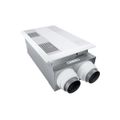



Panasonic WhisperWall and WhisperComfort fans are wall-mounted ventilation units designed to exhaust moisture and odors from bathrooms and other rooms where a ceiling-mounted fan is not practical. WhisperWall fans mount directly through an exterior or interior wall, making them a common retrofit option in rooms without attic access above the fan location or in additions where running ceiling ductwork is not feasible. WhisperComfort units are spot energy recovery ventilators built into a similar wall-mounted footprint, bringing in fresh outdoor air while recovering some of the conditioned indoor air's temperature and humidity before it exhausts, rather than simply exhausting air without any replacement airflow. Contractors specify WhisperWall fans for straightforward bathroom exhaust retrofits and WhisperComfort units in tighter, well-sealed homes where dedicated fresh-air ventilation is needed alongside moisture control. Panasonic's residential ventilation line is built around quiet operation and continuous-duty motors, both features contractors and homeowners weigh alongside airflow capacity when selecting a fan for a specific room size.
Subcategories
- WhisperWall Fans: WhisperWall fans install through an exterior wall rather than the ceiling, exhausting directly outside through a wall cap instead of routing ductwork through the attic, which makes them a practical retrofit choice in bathrooms without attic access, single-story additions, or rooms on an upper floor where running duct to the roof is impractical. Wall-mounted installation is typically more contained in scope than a ceiling fan retrofit, since it avoids attic work entirely. Grille finish and housing depth are the main variables to check against the specific wall thickness and interior finish before selecting a model.
- WhisperComfort Spot ERVs: WhisperComfort spot energy recovery ventilators bring outdoor air into a single room while exhausting indoor air, using a heat and moisture exchange core to recover part of the outgoing air's energy before it leaves the building, which helps rooms that need dedicated ventilation, such as a windowless bathroom or a tightly sealed addition, without simply exhausting conditioned air with no replacement airflow. Homes with high-efficiency, well-sealed envelopes benefit most from a spot ERV, since natural air infiltration alone may not provide enough fresh air exchange in those rooms. Installation still requires a clear path through the wall to the exterior for both the intake and exhaust ports.
- Replacement Grilles & Accessories: Replacement grilles, filters, and mounting accessories keep an installed WhisperWall or WhisperComfort unit running and looking finished after years of service. A grille swap is a straightforward way to refresh a fan's appearance or replace a damaged cover without removing the fan body itself. Filters on WhisperComfort units need periodic cleaning or replacement to keep airflow and energy recovery performance from degrading over time. Matching accessory part numbers to the specific fan model installed avoids ordering a component that does not fit the housing.
- Wall Caps & Ducting: Exterior wall caps terminate the fan's exhaust or intake path outside the building, and a properly sized, backdraft-damper-equipped cap keeps outside air and pests from entering when the fan is off. Ducting between the fan housing and the wall cap needs to be sized and run with minimal bends to avoid restricting airflow and reducing the fan's effective performance. Sealing the duct connections at both the fan and the wall cap prevents air leaks that can undercut ventilation efficiency and let moisture into the wall cavity. Selecting a cap style that matches the home's exterior finish is a common finishing consideration alongside the functional requirements.
Buying Guide
Deciding between a WhisperWall fan and a WhisperComfort spot ERV starts with whether the room needs simple exhaust or a balanced supply of fresh air along with exhaust. A standard bathroom with adequate makeup air from the rest of the house is typically well served by a WhisperWall fan alone, while a tightly sealed room, a windowless bathroom, or a home with a documented fresh-air requirement often calls for a WhisperComfort spot ERV instead. Wall thickness and available exterior access are the next constraints, since both product lines mount through the wall and need enough depth and a clear path to the outside for the housing and ducting. Panasonic WhisperWall & WhisperComfort Fans are built for continuous or intermittent operation depending on the model, so matching the fan's duty rating to how the room will actually be used, whether that is occasional bathroom exhaust or all-day operation in a heavily used space, avoids selecting an undersized unit. Noise level is a common priority in occupied rooms, and checking a specific model's rated sound output against the room's intended use helps set expectations before installation. Electrical requirements, including whether the unit needs a dedicated circuit, should be confirmed against the specific model's specifications and local code before rough-in begins.
Frequently Asked Questions
What is the difference between a WhisperWall fan and a WhisperComfort ERV?
A WhisperWall fan simply exhausts air from a room to the outside through a wall-mounted housing, while a WhisperComfort unit is a spot energy recovery ventilator that brings in fresh outdoor air while exhausting indoor air, recovering some of the outgoing air's energy in the process. WhisperComfort units are chosen when a room needs dedicated fresh-air ventilation, not just exhaust.
Can a WhisperWall fan be installed without attic access?
Yes, that is the main advantage of a wall-mounted design: it exhausts directly through an exterior wall rather than routing ductwork up through the attic and out the roof, which makes it a common choice for additions, upper-floor bathrooms, or rooms where attic access is limited or unavailable.
Does a WhisperComfort unit need a dedicated electrical circuit?
Electrical requirements vary by model, so checking the specific unit's rated amperage and the local code requirement before rough-in is the reliable way to confirm whether a dedicated circuit is needed. Many residential ventilation fans share a circuit with other bathroom fixtures, but that is not universal across every model.
How often do WhisperComfort filters need to be replaced?
Filter service intervals depend on the specific model and how much dust or debris the intake air carries, so checking the installed unit's documentation is the most reliable way to set a cleaning or replacement schedule. Regular filter maintenance keeps both airflow and energy recovery performance from declining over time.
Is a WhisperComfort ERV a substitute for a whole-house ventilation system?
A WhisperComfort spot ERV serves a single room rather than the whole house, so homes needing broader fresh-air ventilation across multiple rooms typically pair spot units with other ventilation strategies rather than relying on one unit alone. A mechanical ventilation contractor can evaluate whether a home's overall fresh-air needs are met by spot units or require a whole-house system.
