




Pre-Insulated PEX
Pre-insulated PEX combines PEX tubing with a factory-applied closed-cell foam insulation layer, reducing heat loss on runs between a boiler or water heater and its point of use. The category covers Uponor's AquaPEX pre-insulated tubing along with field-applied pipe insulation for other PEX runs.
Using pre-insulated tubing on longer runs, such as between an outdoor boiler and the building it serves, cuts down on heat loss compared to insulating standard PEX in the field. Field-applied foam sleeve insulation remains a practical option for shorter runs or retrofits where pre-insulated tubing is not already in place.

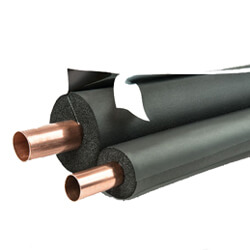

Pre-Insulated AquaPEX Tubing is Uponor AquaPEX cross-linked polyethylene tubing with a factory-applied closed-cell polyethylene foam insulation jacket. Available in coils for continuous runs without mid-run joints, the factory-applied insulation provides consistent coverage over the full length of the tube. Pre-insulated AquaPEX is compatible with standard Uponor ProPEX expansion fittings and tools, as the fitting connection is made at the cut end where the jacket has been trimmed back.
Pipe Insulation is field-applied foam sleeve insulation used to insulate PEX tubing and other pipe materials in existing installations or at transitions, fittings, and connections where pre-insulated tubing cannot be run. Pipe insulation sleeves are available in closed-cell polyethylene and neoprene foam in a range of inside diameters and wall thicknesses. Split-sleeve insulation can be applied over installed piping without cutting the pipe, using adhesive or tape to seal the longitudinal seam.
Pre-insulated tubing is the most efficient choice for new installations in exposed or unconditioned locations. The factory-applied insulation covers the full length of the run without gaps, which are common failure points in field-applied insulation. Insulation wall thickness determines thermal performance: a minimum of 1-inch wall thickness is generally recommended for PEX in unconditioned spaces in climates where sustained sub-freezing temperatures are possible.
The inside diameter of pipe insulation must match the outside diameter of the PEX tubing being insulated. In crawl spaces and humid environments, closed-cell foam insulation is preferred because it does not absorb moisture. Wet insulation loses most of its thermal performance and can promote corrosion of metal fittings in contact with the wet material.
Does PEX pipe need to be insulated?
PEX in unconditioned spaces where temperatures may drop below freezing should be insulated to reduce the risk of freeze damage. Insulation is also beneficial on hot water distribution piping to reduce heat loss and temperature drop over long distribution runs. While PEX can expand slightly when freezing water expands inside it, repeated freeze-thaw cycles stress fittings and can cause leaks over time.
What is the difference between pre-insulated PEX tubing and field-applied pipe insulation?
Pre-insulated PEX has the insulation jacket applied at the factory over the full length of the tube, providing continuous, consistent coverage without gaps. Field-applied pipe insulation is installed after the tubing is run using split-sleeve foam sections that must be cut to length and sealed at each joint. Field-applied insulation is more flexible at fittings and tight spaces but requires more labor and is more prone to installation gaps at seams.
What type of pipe insulation is best for PEX in a crawl space?
Closed-cell foam insulation, either polyethylene or neoprene foam, is preferred for crawl space applications because it is moisture-resistant and does not absorb water. Open-cell foam and fiberglass insulation absorb moisture in humid crawl space environments, losing most of their thermal performance when wet. Wall thickness should be selected based on climate and the temperature differential between the pipe and the ambient crawl space during the coldest expected conditions.
How do I insulate PEX pipe that is already installed?
Installed PEX tubing can be insulated with split-sleeve pipe insulation, which is pre-slit along its length so it can be opened and wrapped around the pipe without removing it from its supports. The split is sealed with insulation adhesive or foam tape. The insulation should be cut to fit snugly end-to-end, and joints between adjacent pieces should be staggered rather than aligned in the same plane to reduce heat loss at seams.
Can I use standard pipe insulation on pre-insulated PEX tubing?
Standard pipe insulation can be applied over pre-insulated PEX to increase total insulation thickness in applications requiring higher R-value. More commonly, field-applied insulation is used at fittings and connections where the pre-insulated tubing's jacket has been cut back. The insulation inside diameter for any section applied over pre-insulated tubing must be sized to fit over the outside of the jacket, not over the bare tubing.
Resources
Pre-Insulated AquaPEX Tubing is Uponor AquaPEX cross-linked polyethylene tubing with a factory-applied closed-cell polyethylene foam insulation jacket. Available in coils for continuous runs without mid-run joints, the factory-applied insulation provides consistent coverage over the full length of the tube. Pre-insulated AquaPEX is compatible with standard Uponor ProPEX expansion fittings and tools, as the fitting connection is made at the cut end where the jacket has been trimmed back.
Pipe Insulation is field-applied foam sleeve insulation used to insulate PEX tubing and other pipe materials in existing installations or at transitions, fittings, and connections where pre-insulated tubing cannot be run. Pipe insulation sleeves are available in closed-cell polyethylene and neoprene foam in a range of inside diameters and wall thicknesses. Split-sleeve insulation can be applied over installed piping without cutting the pipe, using adhesive or tape to seal the longitudinal seam.
Pre-insulated tubing is the most efficient choice for new installations in exposed or unconditioned locations. The factory-applied insulation covers the full length of the run without gaps, which are common failure points in field-applied insulation. Insulation wall thickness determines thermal performance: a minimum of 1-inch wall thickness is generally recommended for PEX in unconditioned spaces in climates where sustained sub-freezing temperatures are possible.
The inside diameter of pipe insulation must match the outside diameter of the PEX tubing being insulated. In crawl spaces and humid environments, closed-cell foam insulation is preferred because it does not absorb moisture. Wet insulation loses most of its thermal performance and can promote corrosion of metal fittings in contact with the wet material.
Does PEX pipe need to be insulated?
PEX in unconditioned spaces where temperatures may drop below freezing should be insulated to reduce the risk of freeze damage. Insulation is also beneficial on hot water distribution piping to reduce heat loss and temperature drop over long distribution runs. While PEX can expand slightly when freezing water expands inside it, repeated freeze-thaw cycles stress fittings and can cause leaks over time.
What is the difference between pre-insulated PEX tubing and field-applied pipe insulation?
Pre-insulated PEX has the insulation jacket applied at the factory over the full length of the tube, providing continuous, consistent coverage without gaps. Field-applied pipe insulation is installed after the tubing is run using split-sleeve foam sections that must be cut to length and sealed at each joint. Field-applied insulation is more flexible at fittings and tight spaces but requires more labor and is more prone to installation gaps at seams.
What type of pipe insulation is best for PEX in a crawl space?
Closed-cell foam insulation, either polyethylene or neoprene foam, is preferred for crawl space applications because it is moisture-resistant and does not absorb water. Open-cell foam and fiberglass insulation absorb moisture in humid crawl space environments, losing most of their thermal performance when wet. Wall thickness should be selected based on climate and the temperature differential between the pipe and the ambient crawl space during the coldest expected conditions.
How do I insulate PEX pipe that is already installed?
Installed PEX tubing can be insulated with split-sleeve pipe insulation, which is pre-slit along its length so it can be opened and wrapped around the pipe without removing it from its supports. The split is sealed with insulation adhesive or foam tape. The insulation should be cut to fit snugly end-to-end, and joints between adjacent pieces should be staggered rather than aligned in the same plane to reduce heat loss at seams.
Can I use standard pipe insulation on pre-insulated PEX tubing?
Standard pipe insulation can be applied over pre-insulated PEX to increase total insulation thickness in applications requiring higher R-value. More commonly, field-applied insulation is used at fittings and connections where the pre-insulated tubing's jacket has been cut back. The insulation inside diameter for any section applied over pre-insulated tubing must be sized to fit over the outside of the jacket, not over the bare tubing.