



Refrigerant Push-Fit Fittings
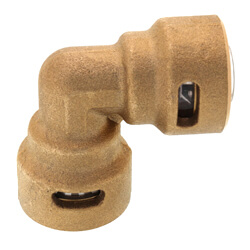
Refrigerant push-fit fittings join copper refrigerant lines without brazing, using an internal O-ring and gripping mechanism to create a leak-tight seal when tubing is pushed into the fitting. Technicians use them on mini-split installs, service repairs, and other refrigeration jobs where a torch is impractical or an open flame poses a fire risk.
Skipping the brazing step speeds up an install considerably and removes the need for nitrogen purging during the connection itself. Because these fittings rely on a mechanical seal rather than a soldered joint, tubing needs to be cut cleanly and deburred before insertion. This lets the O-ring seat properly and hold pressure over the life of the system.

.jpg)

Subcategories
- Mueller Streamline Refrigerant Brass Push Fittings: Mueller Streamline refrigerant brass push fittings connect copper refrigerant tubing without a torch. The brass body and internal seal are designed to hold system pressure on both suction and liquid lines. They cover common fitting types including couplings, elbows, and tees for straightforward line modifications. Copper tubing needs a clean, round, deburred end for the internal seal to engage properly.
- PRO-Fit Quick Connect HVAC Fittings: PRO-Fit quick connect HVAC fittings provide a torch-free way to join refrigerant lines during mini-split installs, line set replacements, and repair work. The push-to-connect design lets a technician complete a connection in the field without nitrogen purging or a brazing setup. This speeds up jobs in tight mechanical rooms or occupied spaces. Fittings are sized to match standard refrigerant tubing diameters used across residential and light commercial systems.
- ZoomLock PUSH Fittings: ZoomLock PUSH fittings use a permanent, torch-free connection method built around an internal seal rated for both HVAC and refrigeration line pressures. The fittings accept a range of common tubing sizes and fitting configurations, covering couplings, elbows, tees, and reducers for most line set layouts. A dedicated gauge tool confirms the fitting has fully engaged before a system is charged and put into service.
Buying Guide
Matching tubing diameter to the fitting is the first step in any push-fit connection. Refrigerant Push-Fit Fittings are sized to the outside diameter of standard refrigerant copper, so measuring the existing line before ordering avoids a fitting that will not seat correctly.
Pressure rating matters more on refrigeration jobs than on standard HVAC line sets, since refrigeration systems often run at higher operating pressures. Checking a fitting's rated working pressure against the system's refrigerant type and operating range keeps the connection safe under real conditions.
Tubing preparation affects long-term reliability as much as the fitting itself. A clean, round, deburred cut lets the internal seal engage fully. A scored or out-of-round cut end can lead to a slow leak that is difficult to trace after the system is charged.
Tool compatibility is worth checking before starting a job, since some push-fit systems call for a specific insertion or verification tool to confirm full engagement. Skipping that step on a system that requires it can leave a connection that looks complete but has not fully seated.
For repair work on an existing system, compatibility with the refrigerant already in the lines is essential. Confirming that a given push-fit fitting is rated for the refrigerant type in service, rather than assuming universal compatibility, avoids a seal failure down the road.
Frequently Asked Questions
Does tubing preparation affect the reliability of a push-fit refrigerant fitting?
Yes. A clean, round, deburred cut lets the internal seal engage fully. A scored or out-of-round cut end can lead to a slow leak that is difficult to trace after the system is charged.
Do push-fit fittings work on both suction and liquid lines?
Mueller Streamline brass push fittings are designed to hold system pressure on both suction and liquid lines. The specific pressure rating should still be checked against the system's operating range. Higher-pressure refrigeration applications may call for a fitting rated for that service.
Can push-fit fittings be removed and reused?
ZoomLock PUSH fittings use a permanent connection method, so they are not intended to be removed and reused. Because the connection is permanent, confirm that the tubing is cut cleanly and the fitting is fully engaged before the system is charged.
What tools are needed to install a push-fit refrigerant fitting?
A tubing cutter, deburring tool, and a way to clean the tubing end are the basic requirements for most installs. Some fitting systems also call for a dedicated insertion or verification tool to confirm the connection has fully engaged before the system is charged.
Do push-fit fittings need nitrogen purging during installation?
Because push-fit fittings do not involve an open flame, nitrogen purging is not required during the connection itself the way it is with brazing.
Resources
Subcategories
- Mueller Streamline Refrigerant Brass Push Fittings: Mueller Streamline refrigerant brass push fittings connect copper refrigerant tubing without a torch. The brass body and internal seal are designed to hold system pressure on both suction and liquid lines. They cover common fitting types including couplings, elbows, and tees for straightforward line modifications. Copper tubing needs a clean, round, deburred end for the internal seal to engage properly.
- PRO-Fit Quick Connect HVAC Fittings: PRO-Fit quick connect HVAC fittings provide a torch-free way to join refrigerant lines during mini-split installs, line set replacements, and repair work. The push-to-connect design lets a technician complete a connection in the field without nitrogen purging or a brazing setup. This speeds up jobs in tight mechanical rooms or occupied spaces. Fittings are sized to match standard refrigerant tubing diameters used across residential and light commercial systems.
- ZoomLock PUSH Fittings: ZoomLock PUSH fittings use a permanent, torch-free connection method built around an internal seal rated for both HVAC and refrigeration line pressures. The fittings accept a range of common tubing sizes and fitting configurations, covering couplings, elbows, tees, and reducers for most line set layouts. A dedicated gauge tool confirms the fitting has fully engaged before a system is charged and put into service.
Buying Guide
Matching tubing diameter to the fitting is the first step in any push-fit connection. Refrigerant Push-Fit Fittings are sized to the outside diameter of standard refrigerant copper, so measuring the existing line before ordering avoids a fitting that will not seat correctly.
Pressure rating matters more on refrigeration jobs than on standard HVAC line sets, since refrigeration systems often run at higher operating pressures. Checking a fitting's rated working pressure against the system's refrigerant type and operating range keeps the connection safe under real conditions.
Tubing preparation affects long-term reliability as much as the fitting itself. A clean, round, deburred cut lets the internal seal engage fully. A scored or out-of-round cut end can lead to a slow leak that is difficult to trace after the system is charged.
Tool compatibility is worth checking before starting a job, since some push-fit systems call for a specific insertion or verification tool to confirm full engagement. Skipping that step on a system that requires it can leave a connection that looks complete but has not fully seated.
For repair work on an existing system, compatibility with the refrigerant already in the lines is essential. Confirming that a given push-fit fitting is rated for the refrigerant type in service, rather than assuming universal compatibility, avoids a seal failure down the road.
Frequently Asked Questions
Does tubing preparation affect the reliability of a push-fit refrigerant fitting?
Yes. A clean, round, deburred cut lets the internal seal engage fully. A scored or out-of-round cut end can lead to a slow leak that is difficult to trace after the system is charged.
Do push-fit fittings work on both suction and liquid lines?
Mueller Streamline brass push fittings are designed to hold system pressure on both suction and liquid lines. The specific pressure rating should still be checked against the system's operating range. Higher-pressure refrigeration applications may call for a fitting rated for that service.
Can push-fit fittings be removed and reused?
ZoomLock PUSH fittings use a permanent connection method, so they are not intended to be removed and reused. Because the connection is permanent, confirm that the tubing is cut cleanly and the fitting is fully engaged before the system is charged.
What tools are needed to install a push-fit refrigerant fitting?
A tubing cutter, deburring tool, and a way to clean the tubing end are the basic requirements for most installs. Some fitting systems also call for a dedicated insertion or verification tool to confirm the connection has fully engaged before the system is charged.
Do push-fit fittings need nitrogen purging during installation?
Because push-fit fittings do not involve an open flame, nitrogen purging is not required during the connection itself the way it is with brazing.