




ZoomLock PUSH Fittings






 --%3E %3Csvg version='1.1' id='Fill' xmlns='http://www.w3.org/2000/svg' xmlns:xlink='http://www.w3.org/1999/xlink' x='0px' y='0px' viewBox='0 0 100 100' enable-background='new 0 0 100 100' xml:space='preserve'%3E %3Cpath fill='%23F15C02' d='M79.44,0.95H20.56C9.78,0.95,0.95,9.78,0.95,20.56v58.87c0,10.79,8.82,19.61,19.61,19.61h58.87 c10.79,0,19.61-8.83,19.61-19.61V20.56C99.05,9.78,90.22,0.95,79.44,0.95z M65.38,58.24l9.38,29.58L49.69,69.78L24.5,87.82 l9.34-29.6L8.8,39.6l30.73-0.17c0,0,6.98-19.61,10-28.93c0.54,1.36,9.88,29.1,9.88,29.1H91.2L65.38,58.24z'/%3E %3C/svg%3E)


 --%3E %3Csvg version='1.1' id='No-RB' xmlns='http://www.w3.org/2000/svg' xmlns:xlink='http://www.w3.org/1999/xlink' x='0px' y='0px' viewBox='0 0 100 100' enable-background='new 0 0 100 100' xml:space='preserve'%3E %3Cpath fill='%23CECECE' d='M79.44,0.95H20.56C9.78,0.95,0.95,9.78,0.95,20.56v58.87c0,10.79,8.82,19.61,19.61,19.61h58.87 c10.79,0,19.61-8.83,19.61-19.61V20.56C99.05,9.78,90.22,0.95,79.44,0.95z M65.38,58.24l9.38,29.58L49.69,69.78L24.5,87.82 l9.34-29.6L8.8,39.6l30.73-0.17c0,0,6.98-19.61,10-28.93c0.54,1.36,9.88,29.1,9.88,29.1H91.2L65.38,58.24z'/%3E %3C/svg%3E)


 --%3E %3Csvg version='1.1' id='With-RB' xmlns='http://www.w3.org/2000/svg' xmlns:xlink='http://www.w3.org/1999/xlink' x='0px' y='0px' viewBox='0 0 100 100' enable-background='new 0 0 100 100' xml:space='preserve'%3E %3Cpath fill='%23FBC8B4' d='M79.44,0.95H20.56C9.78,0.95,0.95,9.78,0.95,20.56v58.87c0,10.79,8.82,19.61,19.61,19.61h58.87 c10.79,0,19.61-8.83,19.61-19.61V20.56C99.05,9.78,90.22,0.95,79.44,0.95z M65.38,58.24l9.38,29.58L49.69,69.78L24.5,87.82 l9.34-29.6L8.8,39.6l30.73-0.17c0,0,6.98-19.61,10-28.93c0.54,1.36,9.88,29.1,9.88,29.1H91.2L65.38,58.24z'/%3E %3C/svg%3E)


 --%3E %3Csvg version='1.1' id='Half' xmlns='http://www.w3.org/2000/svg' xmlns:xlink='http://www.w3.org/1999/xlink' x='0px' y='0px' viewBox='0 0 100 100' enable-background='new 0 0 100 100' xml:space='preserve'%3E %3Cg%3E %3Cpath fill='%23F15C02' d='M30.05,70.23l3.79-12.01L8.8,39.6l30.73-0.17c0,0,6.98-19.61,10-28.93c0.54,1.36,9.88,29.1,9.88,29.1h1.58 L93.71,7.18c-3.58-3.82-8.66-6.23-14.28-6.23H20.56C9.78,0.95,0.95,9.78,0.95,20.56v58.87c0,5.41,2.22,10.32,5.79,13.88 L30.05,70.23z'/%3E %3C/g%3E %3Cpath fill='%23FBC8B4' d='M93.71,7.18L60.98,39.6H91.2L65.38,58.24l9.38,29.58L49.69,69.78L24.5,87.82l5.55-17.59L6.75,93.32 c3.55,3.54,8.44,5.73,13.82,5.73h58.87c10.79,0,19.61-8.83,19.61-19.61V20.56C99.05,15.4,97.01,10.69,93.71,7.18z'/%3E %3C/svg%3E)


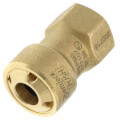

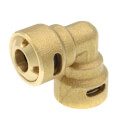


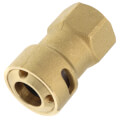

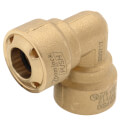
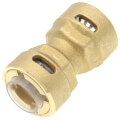

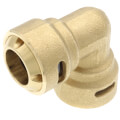
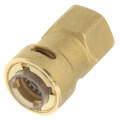

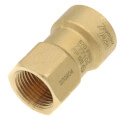


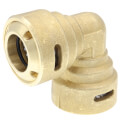
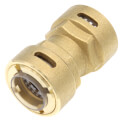


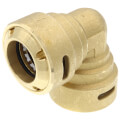

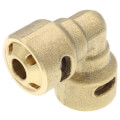
ZoomLock PUSH fittings are push-to-connect refrigerant fittings used to join HVAC refrigerant lines without brazing at the connection. Refrigerant push-fit fittings follow a simple prep flow: cut the line, deburr the ends, then push to connect.
Refrigerant Push-Fit Fittings overview:
https://www.supplyhouse.com/Refrigerant-Push-Fit-Fittings-32680000
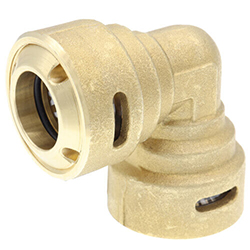
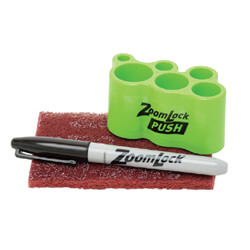
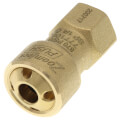
ZoomLock PUSH covers the core fitting styles used in refrigerant piping runs, including couplings for straight connections, 90-degree elbows for tight turns, and SAE flare adapters for tying into flare-style connection points. The lineup is organized into R410A Optimized options and removable options, plus a dedicated installation kit and a removal tool.
ZoomLock PUSH Fittings:
https://www.supplyhouse.com/ZoomLock-PUSH-Fittings-32365000
Connection sizes match common refrigerant tubing sizes, including 1/4", 3/8", 1/2", 5/8", 3/4", and 7/8".
Refrigerant line sets that pair naturally with those sizes live here:
https://www.supplyhouse.com/Refrigerant-Line-Sets-1690000
How to narrow the right ZoomLock PUSH fitting fast
Start with connection size.
Size does most of the heavy lifting in this category because each fitting style is offered across the common refrigerant tubing range.
Choose the fitting style based on the routing.
Couplings handle straight connections. 90-degree elbows clean up a tight bend without forcing the tube. SAE flare adapters make sense when the connection must land on a flare interface.
Pick removable or non-removable before comparing anything else.
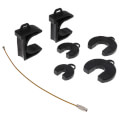
Removable fittings are grouped separately from the R410A Optimized fittings, and a matching removal tool sits in the same family.
Treat tubing prep like a real step, not a formality.
A square cut and clean deburr reduce seal damage risk during insertion.
Pipe and tubing cutters live here:
https://www.supplyhouse.com/Pipe-Tubing-Cutters-23120000
Deburring tools live here:
https://www.supplyhouse.com/Deburring-Tools-30402000
Related categories that pair well with ZoomLock PUSH work
Flare connections still show up in refrigerant work, especially at equipment connections and service interfaces.
Flaring and swaging tools live here:
https://www.supplyhouse.com/Flaring-Swaging-Tools-30389000
A broader view of the ZoomLock family, beyond PUSH, lives here:
https://www.supplyhouse.com/ZoomLock-Refrigerant-Fittings-28344000
General HVAC install and service tools live here:
https://www.supplyhouse.com/HVAC-Tools-10274000
FAQs
What is a push-to-connect refrigerant fitting?
A push-to-connect refrigerant fitting is a mechanical connection designed to join refrigerant tubing without an open flame, brazing, or swaging. Common prep is cut the line, deburr the ends, then push to connect.
What fitting types are most common in the ZoomLock PUSH lineup?
Three types cover most installs: couplings for straight runs, 90-degree elbows for turns, and SAE flare adapters for connecting into a flare interface.
What sizes are common for ZoomLock PUSH fittings?
Common sizes include 1/4", 3/8", 1/2", 5/8", 3/4", and 7/8". Those sizes align with many mini-split and conventional refrigerant line set sizes.
What is the practical difference between a coupling and a 90-degree elbow?
A coupling connects two tubes in a straight line. A 90-degree elbow changes direction when routing space is tight or a bend would be too aggressive for the tubing.
What is an SAE flare adapter used for?
An SAE flare adapter is used when part of the connection must terminate in a flare-style interface. Flare work still depends on proper flare formation and correct torque.
What does “R410A Optimized” mean in this category?
R410A Optimized is a labeled group used to organize a subset of elbows, couplings, and SAE flare adapters. The label makes sorting faster when that specific variant is required.
What does “removable” mean for push-fit refrigerant fittings?
Removable options are designed to be disconnected using a matching removal tool. Removal capability is useful when a fitting needs to be swapped during rework or service, rather than cutting the joint out.
What tools matter most for clean push-fit connections?
Two categories handle the basics: a tubing cutter for a square cut, and a deburring tool to remove sharp edges before insertion.
Cutters live here:
https://www.supplyhouse.com/Pipe-Tubing-Cutters-23120000
Deburring tools live here:
https://www.supplyhouse.com/Deburring-Tools-30402000
What checks help reduce leak risk after installation?
Refrigerant work still relies on proper pressure testing and leak checking after connections are made, followed by evacuation and charging based on equipment requirements. Procedure details vary by equipment and fitting requirements, so manufacturer documentation sets the target values and steps.
