




Filters
SORT
Product Availability –
Used With –
Review Score –
 --%3E %3Csvg version='1.1' id='Fill' xmlns='http://www.w3.org/2000/svg' xmlns:xlink='http://www.w3.org/1999/xlink' x='0px' y='0px' viewBox='0 0 100 100' enable-background='new 0 0 100 100' xml:space='preserve'%3E %3Cpath fill='%23F15C02' d='M79.44,0.95H20.56C9.78,0.95,0.95,9.78,0.95,20.56v58.87c0,10.79,8.82,19.61,19.61,19.61h58.87 c10.79,0,19.61-8.83,19.61-19.61V20.56C99.05,9.78,90.22,0.95,79.44,0.95z M65.38,58.24l9.38,29.58L49.69,69.78L24.5,87.82 l9.34-29.6L8.8,39.6l30.73-0.17c0,0,6.98-19.61,10-28.93c0.54,1.36,9.88,29.1,9.88,29.1H91.2L65.38,58.24z'/%3E %3C/svg%3E)
 --%3E %3Csvg version='1.1' id='With-RB' xmlns='http://www.w3.org/2000/svg' xmlns:xlink='http://www.w3.org/1999/xlink' x='0px' y='0px' viewBox='0 0 100 100' enable-background='new 0 0 100 100' xml:space='preserve'%3E %3Cpath fill='%23FBC8B4' d='M79.44,0.95H20.56C9.78,0.95,0.95,9.78,0.95,20.56v58.87c0,10.79,8.82,19.61,19.61,19.61h58.87 c10.79,0,19.61-8.83,19.61-19.61V20.56C99.05,9.78,90.22,0.95,79.44,0.95z M65.38,58.24l9.38,29.58L49.69,69.78L24.5,87.82 l9.34-29.6L8.8,39.6l30.73-0.17c0,0,6.98-19.61,10-28.93c0.54,1.36,9.88,29.1,9.88,29.1H91.2L65.38,58.24z'/%3E %3C/svg%3E)
Price Range –
Revolution Boiler Parts


 --%3E %3Csvg version='1.1' id='No-RB' xmlns='http://www.w3.org/2000/svg' xmlns:xlink='http://www.w3.org/1999/xlink' x='0px' y='0px' viewBox='0 0 100 100' enable-background='new 0 0 100 100' xml:space='preserve'%3E %3Cpath fill='%23CECECE' d='M79.44,0.95H20.56C9.78,0.95,0.95,9.78,0.95,20.56v58.87c0,10.79,8.82,19.61,19.61,19.61h58.87 c10.79,0,19.61-8.83,19.61-19.61V20.56C99.05,9.78,90.22,0.95,79.44,0.95z M65.38,58.24l9.38,29.58L49.69,69.78L24.5,87.82 l9.34-29.6L8.8,39.6l30.73-0.17c0,0,6.98-19.61,10-28.93c0.54,1.36,9.88,29.1,9.88,29.1H91.2L65.38,58.24z'/%3E %3C/svg%3E)


Revolution boiler parts are the replacement components used to service and repair condensing gas boilers in this product line, covering everything from ignition and control components to circulation and venting hardware. Because a condensing boiler manages combustion, water flow, and exhaust condensate together in one sealed system, parts across these functions need to match the original equipment closely to keep the unit operating safely and efficiently. Heating technicians pull from this category for routine maintenance, warranty repairs, and troubleshooting calls where a specific component has failed rather than the whole appliance.
Working on a sealed combustion condensing boiler means confirming the exact model and revision before ordering a part, since control boards, gaskets, and sensors are often specific to a production run. A mismatched part can affect combustion safety interlocks or void a manufacturer warranty, so verifying compatibility against the unit's data plate matters more here than it does with simpler atmospheric boilers.
Subcategories
- Ignition and Control Boards: Ignition modules and control boards manage burner sequencing, flame proving, and safety interlocks on a condensing boiler. A failed control board is a common cause of a no-heat call, since the board manages lockout conditions that stop the burner if a safety input is out of range. These components are typically specific to a model line and firmware revision, so confirming the exact board part number against the boiler's data plate avoids a wrong-part return.
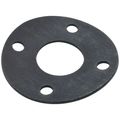
- Heat Exchangers and Gaskets: The heat exchanger transfers combustion heat into the system water, and its gaskets seal the joints between the exchanger and adjacent sections against both water and flue gas. Gasket material needs to withstand condensate, which is mildly acidic in a condensing boiler, so using the correct gasket compound matters for long-term sealing. Replacement is typically driven by a water or flue leak found during routine inspection.
- Blower and Draft Components: The combustion air blower and associated draft components maintain the airflow ratio a condensing boiler needs for safe, efficient burning. A worn blower motor or bearing typically shows up as unusual noise, a fault code, or reduced efficiency before it fails outright. Because blower speed is tied to the control board's combustion tuning, replacement parts need to match the original specification rather than a generic equivalent.
- Sensors and Safety Switches: Sensors and safety switches, including flow, pressure, and flue temperature devices, feed the data the control board uses to keep the boiler operating within safe limits. A single failed sensor can trigger a lockout even when the rest of the boiler is functioning normally, which makes correct diagnosis before ordering a replacement worth the extra time. These components are generally low-cost relative to a full board or heat exchanger, but downtime from a wrong diagnosis is not.
Buying Guide
Confirm the exact model number and, where available, the serial or revision information on the boiler's data plate before ordering Revolution boiler parts. Condensing boiler components, particularly control boards and gaskets, are often specific to a production run rather than universal across an entire model line.
Diagnose the actual failure before replacing a part. A control board lockout, for example, can be caused by a failed sensor feeding it bad data rather than a fault in the board itself, and replacing the wrong component leads to a repeat service call.
Pay attention to gasket and seal materials specifically. Condensate in a modern condensing boiler is mildly acidic, so gaskets rated for that environment hold up longer than a generic equivalent not designed for condensing service.
Keep commonly failed parts, such as ignition components and sensors, on hand for service routes that regularly cover this equipment. Stocking board-level and sensor-level parts separately, rather than only full assemblies, keeps repair costs proportional to the actual failure.
When in doubt about compatibility, verify against the manufacturer's parts documentation for the specific model rather than assuming a part that fits a similar-looking boiler will interchange directly.
Frequently Asked Questions
Why do condensing boiler parts need to match the exact model number?
Condensing boilers manage combustion, water flow, and condensate handling as a tightly integrated system, so control boards, gaskets, and sensors are often specific to a production run. Using a part built for a different revision can affect safety interlocks or combustion tuning even if it appears to fit.
What commonly causes a no-heat lockout on a condensing boiler?
A failed ignition module, control board, or a sensor feeding incorrect data to the control board are common causes of a lockout. Diagnosing which component triggered the fault before ordering a replacement part avoids paying for a part that was not the actual problem.
Why do heat exchanger gaskets need a specific material rating?
Condensate produced by a condensing boiler is mildly acidic, so gaskets in that environment need a material rated to resist that chemistry over time. A generic gasket not rated for condensing service can fail sooner than expected.
How often do blower or draft components typically need replacement?
Replacement timing depends on run hours, maintenance history, and environment rather than a fixed schedule. Unusual noise, a fault code, or a drop in efficiency are the usual signs that a blower or draft component needs attention.
Can a sensor issue be mistaken for a control board failure?
Yes, a single failed sensor can trigger the same lockout code a control board fault would produce, since the board is only reacting to the data it receives. Testing the sensor first is generally faster and less costly than replacing the board on assumption.
