




Filters
SORT
Product Availability –
MFD –
Voltage –
Shape –
Review Score –
 --%3E %3Csvg version='1.1' id='Fill' xmlns='http://www.w3.org/2000/svg' xmlns:xlink='http://www.w3.org/1999/xlink' x='0px' y='0px' viewBox='0 0 100 100' enable-background='new 0 0 100 100' xml:space='preserve'%3E %3Cpath fill='%23F15C02' d='M79.44,0.95H20.56C9.78,0.95,0.95,9.78,0.95,20.56v58.87c0,10.79,8.82,19.61,19.61,19.61h58.87 c10.79,0,19.61-8.83,19.61-19.61V20.56C99.05,9.78,90.22,0.95,79.44,0.95z M65.38,58.24l9.38,29.58L49.69,69.78L24.5,87.82 l9.34-29.6L8.8,39.6l30.73-0.17c0,0,6.98-19.61,10-28.93c0.54,1.36,9.88,29.1,9.88,29.1H91.2L65.38,58.24z'/%3E %3C/svg%3E)
 --%3E %3Csvg version='1.1' id='With-RB' xmlns='http://www.w3.org/2000/svg' xmlns:xlink='http://www.w3.org/1999/xlink' x='0px' y='0px' viewBox='0 0 100 100' enable-background='new 0 0 100 100' xml:space='preserve'%3E %3Cpath fill='%23FBC8B4' d='M79.44,0.95H20.56C9.78,0.95,0.95,9.78,0.95,20.56v58.87c0,10.79,8.82,19.61,19.61,19.61h58.87 c10.79,0,19.61-8.83,19.61-19.61V20.56C99.05,9.78,90.22,0.95,79.44,0.95z M65.38,58.24l9.38,29.58L49.69,69.78L24.5,87.82 l9.34-29.6L8.8,39.6l30.73-0.17c0,0,6.98-19.61,10-28.93c0.54,1.36,9.88,29.1,9.88,29.1H91.2L65.38,58.24z'/%3E %3C/svg%3E)
Price Range –
Rheem Capacitors

 --%3E %3Csvg version='1.1' id='No-RB' xmlns='http://www.w3.org/2000/svg' xmlns:xlink='http://www.w3.org/1999/xlink' x='0px' y='0px' viewBox='0 0 100 100' enable-background='new 0 0 100 100' xml:space='preserve'%3E %3Cpath fill='%23CECECE' d='M79.44,0.95H20.56C9.78,0.95,0.95,9.78,0.95,20.56v58.87c0,10.79,8.82,19.61,19.61,19.61h58.87 c10.79,0,19.61-8.83,19.61-19.61V20.56C99.05,9.78,90.22,0.95,79.44,0.95z M65.38,58.24l9.38,29.58L49.69,69.78L24.5,87.82 l9.34-29.6L8.8,39.6l30.73-0.17c0,0,6.98-19.61,10-28.93c0.54,1.36,9.88,29.1,9.88,29.1H91.2L65.38,58.24z'/%3E %3C/svg%3E)
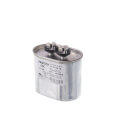
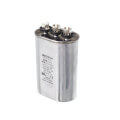
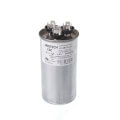
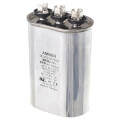
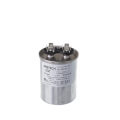
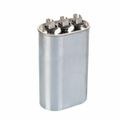
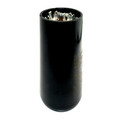
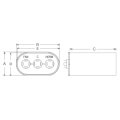
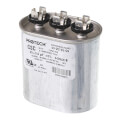
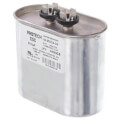
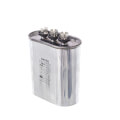
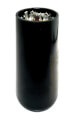

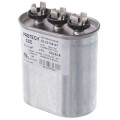
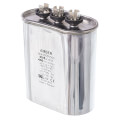
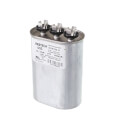
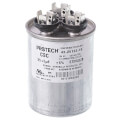
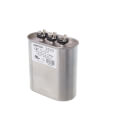
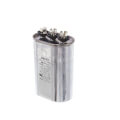
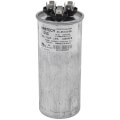
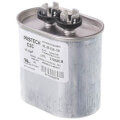
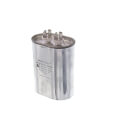
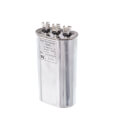
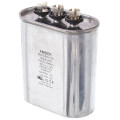
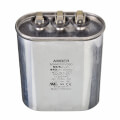

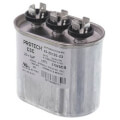
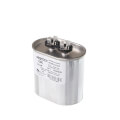
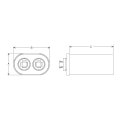
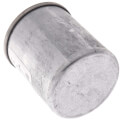
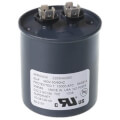
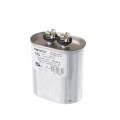
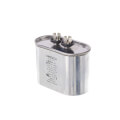
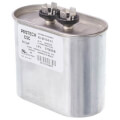
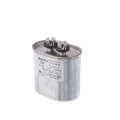

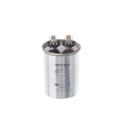
Rheem capacitors are the run and start capacitors used to service Rheem air conditioners, heat pumps, and furnaces, storing an electrical charge that helps a compressor or fan motor start and keeps it running efficiently once it is up to speed. A technician replaces one when a system hums but the outdoor fan or compressor fails to start, or when a capacitor tests outside its rated microfarad range on a meter. Capacitors are rated by microfarad (MFD) capacity and voltage, and matching both figures to the original part is necessary for the motor to receive the correct charge. A capacitor that is even slightly out of range can shorten motor life or cause a hard start that trips a breaker. Because capacitors are a common failure point in AC systems, especially after a lightning strike or during peak summer heat, keeping the common ratings in stock for a specific equipment line cuts down on return visits and gets a system running again the same day.
Subcategories
- Run Capacitors: Run capacitors stay in the circuit the entire time a motor operates, maintaining the phase shift that keeps a single-phase compressor or fan motor turning smoothly. They are typically cylindrical, oil-filled, and rated in microfarads and voltage that must match the motor's nameplate specification. A failing run capacitor often shows up as a motor that hums, runs hot, or draws higher amperage than normal.
- Start Capacitors: Start capacitors deliver a short, high-capacity boost of energy to help a motor overcome initial resistance and begin turning, then drop out of the circuit once the motor reaches running speed. They are used alongside a relay or potential relay that senses when to disconnect the capacitor. Start capacitors are rated for a wider microfarad range than run capacitors but are only in the circuit for a fraction of a second.
- Dual Run Capacitors: Dual run capacitors combine two separate capacitor values in a single case, most often to run both the compressor and the condenser fan motor from one part. They simplify replacement on equipment where both motors were originally wired to separate capacitors, cutting down on the number of parts a technician needs to stock for a given unit.
Buying Guide
Matching a Rheem capacitor to the equipment starts with the two numbers printed on the original part: microfarad (MFD) rating and voltage. Both need to match the replacement closely, since a capacitor with too little capacity will not deliver enough starting torque and one with too much can overheat the motor windings over time. Most capacitors carry a manufacturing tolerance, commonly plus or minus a small percentage, so a replacement within that range is acceptable even if it is not an exact numeric match.
Run and start capacitors serve different jobs and are not interchangeable. A run capacitor handles continuous duty and needs a case and dielectric rated for that kind of service life, while a start capacitor is built for a brief, high-capacity burst and would fail quickly if left in a continuous-duty circuit.
For equipment with both a compressor and a condenser fan motor, checking whether the original setup uses a single dual run capacitor or two separate capacitors avoids ordering the wrong configuration. A dual capacitor combines two values in one case and only fits equipment designed around that specific combined rating.
Finally, voltage rating should meet or exceed the system's operating voltage. A capacitor rated below the system voltage is a common cause of premature failure, even when the microfarad rating is otherwise correct.
Frequently Asked Questions
What are the signs that a Rheem capacitor has failed?
A failed capacitor often shows up as an outdoor fan or compressor that hums without starting, a system that trips the breaker on startup, or a capacitor that reads outside its rated microfarad range when tested with a meter. A capacitor that is bulging, leaking, or visibly swollen has failed and should be replaced regardless of what it reads.
Can a capacitor be replaced with a different microfarad rating?
A replacement capacitor should match the original microfarad rating as closely as possible, and manufacturers generally allow a small tolerance range printed on the capacitor label. Installing a capacitor well outside that tolerance can shorten motor life or cause a hard start.
What is the difference between a run capacitor and a start capacitor?
A run capacitor stays in the circuit for as long as the motor operates, while a start capacitor only provides a brief boost during startup before a relay disconnects it. Run capacitors are rated for continuous duty; start capacitors are not.
Why do capacitors fail more often in summer?
Heat and continuous run time both shorten a capacitor's service life, and summer combines both as equipment cycles longer to keep up with cooling demand. A power surge from a lightning strike or grid fluctuation can also damage a capacitor instantly regardless of the season.
Do dual run capacitors work on any Rheem unit with two motors?
A dual run capacitor has to match both the compressor's and the fan motor's individual microfarad ratings, so it only fits units originally designed for that specific combined value. Checking the equipment's nameplate or original capacitor confirms the correct dual rating before ordering a replacement.
