




Filters
SORT
Product Availability –
Brand –
Voltage –
Action –
Review Score –
 --%3E %3Csvg version='1.1' id='Fill' xmlns='http://www.w3.org/2000/svg' xmlns:xlink='http://www.w3.org/1999/xlink' x='0px' y='0px' viewBox='0 0 100 100' enable-background='new 0 0 100 100' xml:space='preserve'%3E %3Cpath fill='%23F15C02' d='M79.44,0.95H20.56C9.78,0.95,0.95,9.78,0.95,20.56v58.87c0,10.79,8.82,19.61,19.61,19.61h58.87 c10.79,0,19.61-8.83,19.61-19.61V20.56C99.05,9.78,90.22,0.95,79.44,0.95z M65.38,58.24l9.38,29.58L49.69,69.78L24.5,87.82 l9.34-29.6L8.8,39.6l30.73-0.17c0,0,6.98-19.61,10-28.93c0.54,1.36,9.88,29.1,9.88,29.1H91.2L65.38,58.24z'/%3E %3C/svg%3E)
 --%3E %3Csvg version='1.1' id='With-RB' xmlns='http://www.w3.org/2000/svg' xmlns:xlink='http://www.w3.org/1999/xlink' x='0px' y='0px' viewBox='0 0 100 100' enable-background='new 0 0 100 100' xml:space='preserve'%3E %3Cpath fill='%23FBC8B4' d='M79.44,0.95H20.56C9.78,0.95,0.95,9.78,0.95,20.56v58.87c0,10.79,8.82,19.61,19.61,19.61h58.87 c10.79,0,19.61-8.83,19.61-19.61V20.56C99.05,9.78,90.22,0.95,79.44,0.95z M65.38,58.24l9.38,29.58L49.69,69.78L24.5,87.82 l9.34-29.6L8.8,39.6l30.73-0.17c0,0,6.98-19.61,10-28.93c0.54,1.36,9.88,29.1,9.88,29.1H91.2L65.38,58.24z'/%3E %3C/svg%3E)
Price Range –
Rheem Relays

 --%3E %3Csvg version='1.1' id='No-RB' xmlns='http://www.w3.org/2000/svg' xmlns:xlink='http://www.w3.org/1999/xlink' x='0px' y='0px' viewBox='0 0 100 100' enable-background='new 0 0 100 100' xml:space='preserve'%3E %3Cpath fill='%23CECECE' d='M79.44,0.95H20.56C9.78,0.95,0.95,9.78,0.95,20.56v58.87c0,10.79,8.82,19.61,19.61,19.61h58.87 c10.79,0,19.61-8.83,19.61-19.61V20.56C99.05,9.78,90.22,0.95,79.44,0.95z M65.38,58.24l9.38,29.58L49.69,69.78L24.5,87.82 l9.34-29.6L8.8,39.6l30.73-0.17c0,0,6.98-19.61,10-28.93c0.54,1.36,9.88,29.1,9.88,29.1H91.2L65.38,58.24z'/%3E %3C/svg%3E)
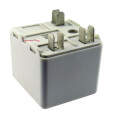
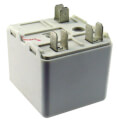
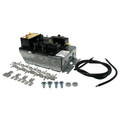
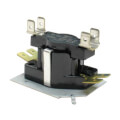
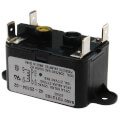
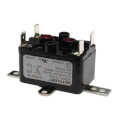
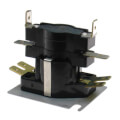
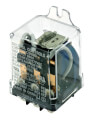
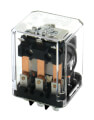
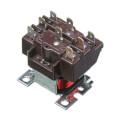

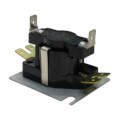
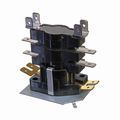
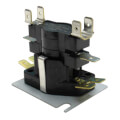
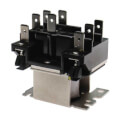
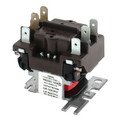
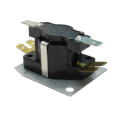
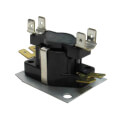
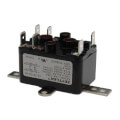
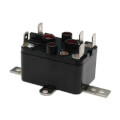
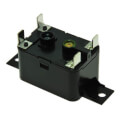
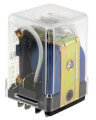

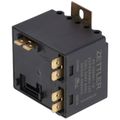
Rheem relays are electrical switching components installed in Rheem furnaces, air handlers, and water heaters to control power to blower motors, igniters, and other high-current loads. A relay accepts a low-voltage signal from a thermostat or control board and uses it to open or close a separate set of contacts, allowing that control circuit to manage equipment without carrying the full load current itself. Technicians replace these parts when a piece of equipment fails to start, runs intermittently, or trips a breaker without an obvious cause, since a stuck or burned relay contact is a common failure point in gas furnace and heat pump control systems. A correct replacement has to match the original relay's coil voltage, pole configuration, and terminal layout, which varies across Rheem furnace and water heater platforms. Keeping the right relays on hand for common Rheem equipment shortens diagnostic time on a service call and lowers the odds of a repeat visit caused by a mismatched part.
Subcategories
- Fan Relays: Fan relays switch power to the indoor blower motor once the control board calls for airflow, whether that call comes from a heating cycle, a cooling cycle, or a standalone fan setting on the thermostat. A failed fan relay typically shows up as a unit that heats or cools without moving air, or a blower that runs continuously and will not shut off. Contractors check the relay coil and contacts with a multimeter before condemning the blower motor itself, since a bad relay is a cheaper and faster fix.
- Ignition Control Relays: Ignition control relays sit between the furnace control board and the igniter or gas valve circuit, energizing those components in the correct sequence during a normal ignition cycle. A relay that fails in the open position prevents the furnace from lighting at all, while one that sticks closed can keep the igniter powered longer than intended. These relays are often built into a larger ignition control module rather than sold as a standalone part, so identifying whether a fault lies in the relay or the surrounding board is part of the diagnostic process.
- Time Delay Relays: Time delay relays stage the startup or shutdown of blower motors and auxiliary heat elements so components do not all energize at once, which reduces inrush current and mechanical stress on the system. In electric furnace and heat pump applications, a time delay relay commonly controls when heating elements sequence on after a call for heat, or when the blower continues running briefly after the burner or compressor shuts off. A relay stuck in a delayed state can cause a system to feel sluggish to respond or to blow cool air for longer than expected.
- Defrost Relays: Defrost relays are used on Rheem heat pump outdoor units to switch the system into defrost mode when a control board detects ice buildup on the outdoor coil, reversing the refrigerant cycle briefly to melt frost. A failed defrost relay can leave a heat pump unable to complete a defrost cycle, leading to a frozen outdoor coil and reduced heating capacity in cold weather. Technicians typically test this relay alongside the defrost control board and outdoor coil sensor as part of a single diagnostic sequence.
Buying Guide
Start by identifying the exact Rheem equipment model and pulling the wiring diagram from the unit's control panel or installation manual, since relay part numbers are tied to specific furnace, air handler, and water heater platforms rather than shared across the entire product line. Matching the original relay's coil voltage is the first checkpoint. Most residential HVAC control circuits run on 24 volts, but some blower and compressor circuits switch line voltage directly, and installing the wrong voltage relay will either fail to energize or damage the control board. Pole and throw configuration matters just as much: a single-pole single-throw relay cannot substitute for a double-pole design if the original circuit needs to switch two separate loads simultaneously.
When shopping for Rheem Relays, compare the terminal style and mounting orientation against the failed part, since spade terminals, plug-in bases, and PC-mount pins are not interchangeable without also swapping the mounting bracket or socket. An OEM replacement guarantees a physical and electrical match, but a universal relay with equivalent voltage, pole count, and current rating can work as a substitute when an exact OEM part is not readily available, as long as the wiring is adapted correctly. Confirm the amperage rating of the relay's contacts meets or exceeds the load it will switch, since undersized contacts wear out faster and can arc or weld shut over time. Keeping a small stock of the most common relay types used across a service area's Rheem equipment reduces the number of return trips needed to complete a repair.
Frequently Asked Questions
How can I tell if a Rheem relay has failed?
Common symptoms include a blower or igniter that will not energize, equipment that runs continuously without shutting off, or intermittent operation that comes and goes. Testing the relay coil resistance and contact continuity with a multimeter while the unit is de-energized confirms whether the relay itself is the problem.
Can a universal relay replace a Rheem-specific relay?
In many cases a universal relay with matching coil voltage, pole configuration, and contact rating will work, provided the wiring terminals are adapted to fit. For control board-integrated relays, an OEM replacement board is usually the more reliable option.
What voltage do most Rheem HVAC relays use?
Most control circuit relays in Rheem furnaces and air handlers run on 24 volts, since that matches standard low-voltage thermostat wiring. Some blower or compressor contactor circuits switch line voltage directly, so checking the wiring diagram before ordering is worth the time.
Where is the relay typically located in a Rheem furnace?
Relays are usually mounted on or near the integrated furnace control board inside the blower compartment. Some functions, like ignition sequencing, are built into the control board itself rather than existing as a separate plug-in relay.
Do I need to replace the whole control board if only a relay fails?
Not always. If the relay is a separate plug-in or socketed component, replacing just that part is usually possible. When the relay function is built directly into the control board circuitry, the entire board typically needs to be replaced.
